environment-and-policy1 min read
Iowa Court Halts Army’s Plan to Detonate Unstable Lead Azide Amid Lead Exposure Fears
23 minutes ago•Source: The New York Times
View original source
The latest environment and policy stories, each synthesized from multiple sources with added background and context.

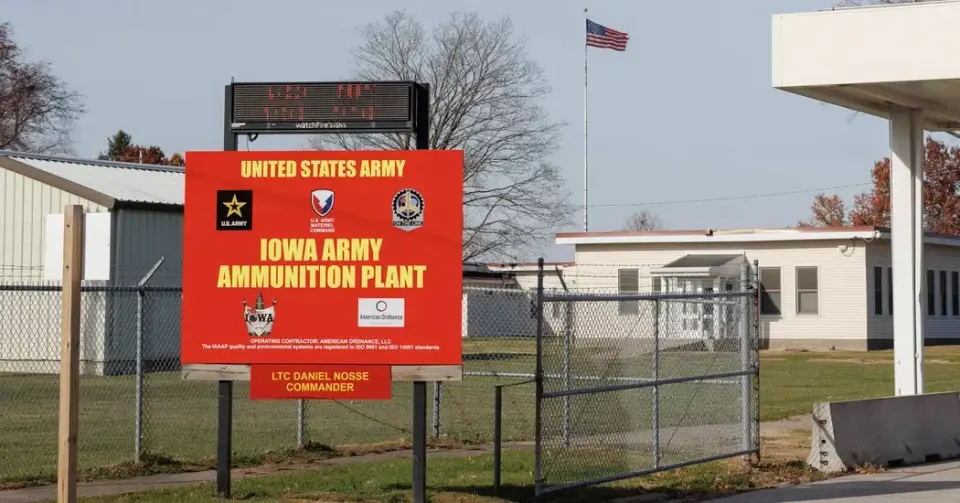
A federal appeals court has indefinitely paused the U.S. Army’s plan to detonate five tons of unstable lead azide at the Iowa Army Ammunition Plant in Middletown. The halt follows an emergency lawsuit filed by environmental groups challenging the validity of an EPA emergency permit. While the Army argues the material is too volatile to transport, critics contend the public was given insufficient notice and that safer alternatives were not adequately explored. The decision leaves the disposal of the hazardous material unresolved pending further judicial review.


New Jersey fined DataOne $1.07 million for operating 62 unpermitted natural gas generators at its Vineland data center. The penalty, the largest of its kind in the state, follows a July inspection that found the equipment running without required air permits. Governor Mikie Sherrill called the action a necessary step to hold the industry accountable, while DataOne disputes the ruling and cites a transition to cleaner fuel cells.

The US Fish and Wildlife Service has issued a memo reinterpreting the Endangered Species Act to exclude accidental deaths of protected animals, effectively nullating habitat protections. This move, based on a 1995 Supreme Court dissent, allows landowners to harm species if the action was not specifically intended to kill them, sparking legal challenges and conservationist outrage.

A new report by the Institute for Policy Studies (IPS) reveals that private jet travel in the US is surging, with emissions rising 50% since 2019. Despite accounting for 16% of flight operations, private jets contribute less than 0.6% of aviation taxes. The report highlights that private jet owners have a median wealth of $190 million and that these flights produce 10 to 14 times the carbon emissions of commercial flights per passenger. IPS argues that the ultra-wealthy are subsidizing their luxury travel through public infrastructure and tax breaks, while commercial passengers bear the costs of increased congestion and delays.
Delaware’s Department of Natural Resources and Environmental Control (DNREC) met with hunters in Georgetown to discuss new regulations aimed at containing chronic wasting disease (CWD) after a third positive case was confirmed in a white-tailed deer. The new rules focus on restricting baiting in specific zones and require hunters to leave deer heads at designated freezers for testing. While officials emphasize prevention, many attendees reported that the current guidelines lack specific definitions, leaving key questions unanswered.
Delaware’s Department of Natural Resources and Environmental Control (DNREC) met with hunters in Georgetown to discuss new regulations aimed at containing chronic wasting disease (CWD) after a third positive case was confirmed in white-tailed deer. While the agency emphasized preventive measures, attendees reported that the new rules lacked specific details, leaving many questions unanswered.

North Carolina Attorney General Jeff Jackson announced a historic settlement with Chemours, DuPont, and Corteva to address decades of PFAS contamination in the Cape Fear River. The agreement, valued at $590 million, includes $455 million in direct payments and a $135 million reserve fund to ensure cleanup continues if Chemours faces financial instability. The funds will primarily support drinking water infrastructure for 11 local entities and the state, addressing concerns that roughly 3.5 million residents currently drink water exceeding federal PFAS safety standards.

The Bureau of Reclamation has imposed mandatory two-year water cuts on Arizona, California, and Nevada, with Arizona facing the largest reduction of approximately 30% of its supply. These cuts, effective in 2027 and 2028, threaten Yuma County’s status as the source of 90% of the nation’s winter leafy greens. While senior water rights may protect some farms initially, the broader crisis risks disrupting national food supplies and exacerbating water shortages for tribal nations and urban areas.

U.S. District Judge Michael Simon ruled that Oregon's Plastic Pollution and Recycling Modernization Act does not violate the U.S. Constitution, rejecting claims by the National Association of Wholesaler-Distributors that the law unfairly burdens out-of-state businesses. The decision lifts a preliminary injunction, allowing the state to continue charging producers fees to fund recycling infrastructure. While the judge praised Oregon's 'innovative leadership' in shifting waste costs away from taxpayers, the plaintiff association stated it is considering an appeal to the Ninth Circuit. This ruling is significant as Oregon was the first state to implement such a system, and similar laws face legal challenges in California and Colorado.
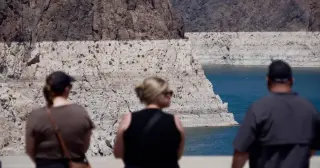
Nevada has filed the first lawsuit challenging the Trump administration’s new Colorado River operating plan, which mandates 20% water cuts for downstream states while sparing upstream regions. The state argues the plan violates environmental laws and would devastate Las Vegas, which relies on 90% of its water from the river. As reservoirs hit record lows, Arizona and California are evaluating similar legal challenges, signaling a potential multi-year court battle over water allocation.
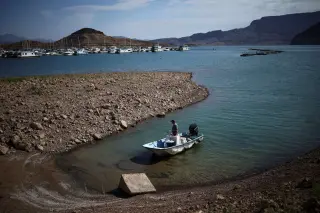
Nevada has filed the first legal challenge against the Trump administration’s new federal plan to reduce Colorado River water use. The state argues the plan unlawfully imposes severe cuts on lower-basin states while sparing upper-basin states, threatening its economy and water supply.