
Army to Detonate Unstable Lead Azide in Iowa by Tuesday, Bypassing Court Stay
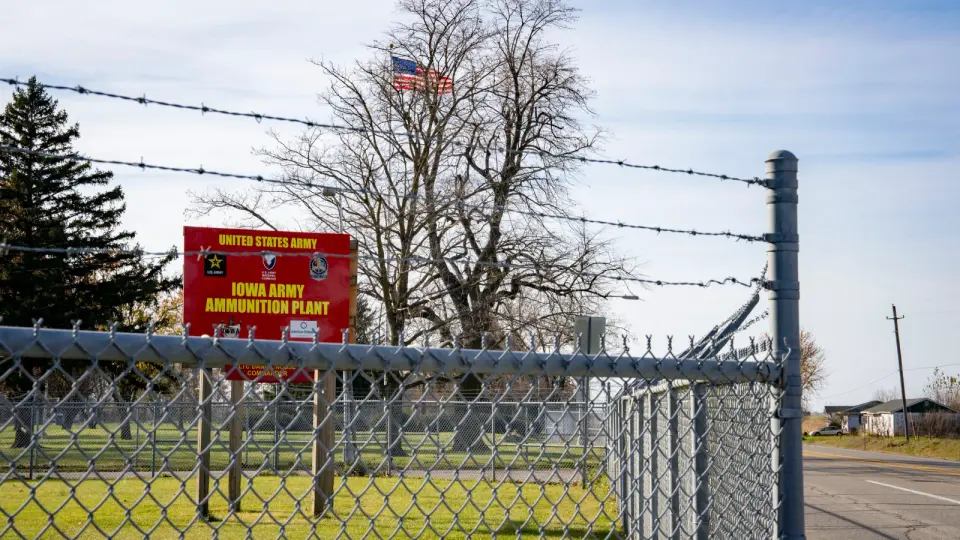
The U.S. Army plans to detonate 68 barrels of unstable lead azide at the Iowa Army Ammunition Plant in Middletown by November 24, despite a federal court stay on its environmental permit. The Department of Justice argues that freezing temperatures pose an immediate risk of accidental explosion, allowing the Army to invoke emergency exemptions. Environmental groups and local officials oppose the blast, citing inadequate public notice, ignored safer alternatives, and potential toxic contamination across 100 miles.
Key points
- The Army intends to detonate the stockpile by Tuesday, Nov. 24, using emergency exclusions to bypass the EPA permit suspended by the Eighth Circuit Court of Appeals.
- Federal officials warn that temperatures dropping below 30 degrees could fracture lead azide crystals, causing an uncontrolled explosion, especially since blast doors were removed from storage bunkers.
- The Iowa Environmental Council and Sierra Club argue the EPA skipped necessary review steps and that the Army ignored chemical neutralization options, including a canceled contract with MuniRem Environmental.
- Experts warn the blast may release toxic gases like hydrazoic acid and hydrogen cyanide, not just lead dust, which could travel over 100 miles and harm vulnerable populations.
- Iowa City Manager Geoff Fruin stated the city learned of the blast from media reports on Nov. 17, highlighting a lack of official communication from federal authorities.
Background
The issue stems from 68 barrels of lead azide discovered in unstable condition at the Iowa Army Ammunition Plant in March 2026. The Army initially sought a contractor to chemically neutralize the material but canceled the contract in May, opting for detonation. A federal court halted the original Nov. 20 blast after environmental groups challenged the EPA’s emergency permit, citing health risks and procedural failures. The Army has since delayed the operation twice, moving it from Friday to Monday, and now to Tuesday, while arguing that the material’s volatility necessitates immediate action.
How outlets are covering it
The U.S. Army and Department of Justice emphasize that a controlled detonation is safer than an uncontrolled explosion, which could occur without warning if temperatures drop. They argue that the material is too degraded to transport or neutralize safely. Conversely, the Iowa Environmental Council and Sierra Club’s Iowa chapter contend that the Army mishandled the situation by allowing the explosives to deteriorate and failing to adequately assess alternatives. They criticize the lack of updated plume maps and public notice, with Iowa City Manager Geoff Fruin noting that local officials only learned of the blast through media reports. Environmental experts also argue that the EPA’s risk assessment focused solely on lead, ignoring other toxic byproducts like hydrazoic acid.
Why it matters
The detonation poses significant health risks, as lead is a neurotoxin with no safe exposure level, particularly dangerous for children and pregnant women. The blast could contaminate soil, water, and air across a wide area, potentially affecting livestock and drinking water sources. The legal and public dispute highlights tensions between federal emergency powers and environmental safeguards, raising concerns about transparency and community preparedness in hazardous operations.
What to watch
The Army plans to conduct the detonation by Tuesday, Nov. 24, using sand-filled barriers and water mist to limit dust spread. The Eighth Circuit Court of Appeals will review the plaintiffs’ emergency motion to lift the stay on the EPA permit. Residents in the potential plume area are advised to test for lead before and after the blast, keep outdoor air out of homes, and consult health professionals for exposure concerns. The EPA is assessing potential impacts on drinking water and may provide filters if contamination exceeds action levels.
- Army says it will explode lead azide in Iowa without EPA permit The Des Moines Register
- Noon Sunday deadline set in Iowa Army blast challenge; Fort Madison says detonation could come Monday or Tuesday WQAD
- US Army plans to invoke emergency provisions to detonate bomb-making chemicals in Iowa AP News
- Army plans to detonate toxic explosives in Iowa by Tuesday without EPA permit Iowa Public Radio
- The Army Rejected a Cleaner Option to Destroy Lead-Laced Explosives in Iowa The New York Times
Want the full story? Read the original reporting
Read on The Des Moines Register