
Durham’s Water Supply Drops to 31% Capacity as Drought Intensifies
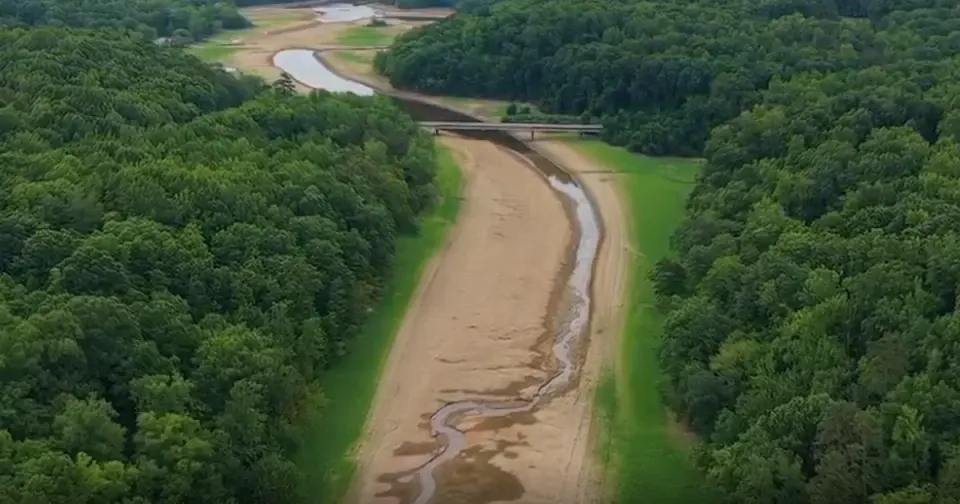
Durham, North Carolina, faces a critical water shortage with only 81 days of supply remaining as its primary reservoirs fall to 31% capacity. The city is currently under Stage 2 restrictions but is closely monitoring conditions that could trigger stricter Stage 3 rules. To mitigate the crisis, Durham is purchasing treated water from neighboring utilities, including Cary and the Orange Water and Sewer Authority, while relying on supplemental sources like Teer Quarry. Although recent rainfall offers temporary relief, officials warn that the region’s driest season is approaching, and water usage in October exceeded the previous year despite existing conservation mandates.
Key points
- Durham’s combined reservoir storage stands at 31%, with Lake Michie 12.71 feet below full and Little River Reservoir 19.08 feet below full.
- The city estimates it has 81 days of water supply remaining under current conditions.
- Durham is currently under Stage 2 restrictions, which ban sprinkler irrigation, vehicle washing with city water, and adding water to decorative features.
- Stage 3 restrictions would be triggered if forecasts show a 10% chance of combined storage dropping to 25% within eight weeks.
- Durham is buying water from Cary (for Jordan Lake allocation) and OWASA to supplement its dwindling local supply.
- October water usage in Durham exceeded 33 million gallons per day, higher than the 31 million gallons per day recorded in October 2025.
Background
This crisis follows a period of recovery in the summer of 2026, when rainfall temporarily alleviated some drought conditions. However, the current decline marks the lowest water levels for the Triangle region’s major reservoirs in 2026. The situation mirrors broader water scarcity issues seen in other parts of the United States, such as Arizona, where water policy has become a dominant political issue in 2026 midterms due to severe drought and infrastructure strain. While international crises like Kabul’s projected 'Day Zero' by 2030 highlight extreme long-term risks, Durham’s situation reflects immediate, acute supply constraints driven by seasonal dryness and increased demand.
How outlets are covering it
WRAL.com emphasizes the immediate urgency of the 81-day supply limit and the specific mechanics of Durham’s water purchasing agreements with Cary and OWASA, highlighting the lack of direct infrastructure for Jordan Lake water. The Raleigh News & Observer provides a broader regional context, noting that Durham’s reservoirs are lower than they were in July (33% vs. 38%) and that the Flat River beneath Lake Michie has less than one foot of water. The N&O also points out that despite Stage 2 restrictions, water usage actually increased in October compared to the previous year, suggesting that current conservation measures may not be sufficient to prevent further restrictions. Both sources agree that the situation is serious, but WRAL focuses on the technical thresholds for Stage 3, while the N&O highlights the regional disparity between Durham’s severe drought and the slightly better conditions in Raleigh and Cary.
Why it matters
The decline in Durham’s water supply threatens the stability of the city’s infrastructure and could lead to more restrictive mandates that impact daily life for residents and businesses. If Stage 3 restrictions are enacted, further limitations on water use could strain local economies, particularly for large water users and restaurants. The reliance on external water sources highlights the vulnerability of local utilities to regional drought conditions and the importance of inter-utility cooperation. As the driest time of the year approaches, the lack of significant rainfall increases the risk of a prolonged water crisis, potentially affecting public health and safety if water becomes scarce for essential uses.
What to watch
Durham is monitoring weather forecasts for the next two days, where rain is expected to provide some relief. City officials are closely watching the 10% probability threshold for Stage 3 restrictions, which would be triggered if combined reservoir storage is forecast to drop to 25% within eight weeks. If Stage 3 is enacted, more stringent water use limits will likely be imposed. The city continues to purchase water from Cary and OWASA to supplement its supply, aiming to avoid tighter restrictions. Residents are encouraged to continue adhering to Stage 2 restrictions, including avoiding sprinkler use and vehicle washing with city water, to help preserve the remaining supply.
- Durham has 81 days of water remaining as drought continues, Stage 3 restrictions possible WRAL
- Drought worsens: Parts of Triangle now in extreme drought, NC's severe drought expands WRAL
- Triangle reservoirs see lowest water levels of 2026 as drought intensifies Raleigh News & Observer
- Greensboro to use smart meter data to enforce water restrictions as drought continues Yahoo
- Extreme drought returns to parts of Triangle after little rainfall Axios
Want the full story? Read the original reporting
Read on WRAL