
Hawaii's 550-year-old Hōlei Sea Arch collapses into Pacific
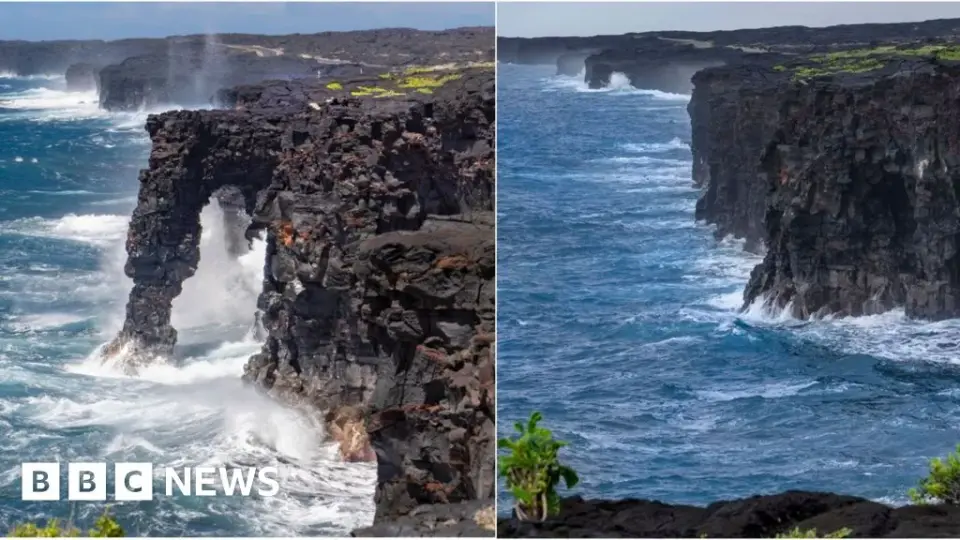
Hawaii's iconic 90-foot Hōlei Sea Arch, a natural lava formation roughly 550 years old, has collapsed into the Pacific Ocean. The structure was confirmed standing on September 23 but was gone by September 27, 2026, during a park closure for Tropical Storm Nolo. Officials attribute the loss to long-term differential erosion and damage from the 2018 Kīlauea eruption.
Key points
- The Hōlei Sea Arch, located in Hawaiʻi Volcanoes National Park, collapsed between September 23 and September 27, 2026.
- The 90-foot (27.4m) structure was formed approximately 550 years ago by ancient lava flows and ocean erosion.
- The collapse occurred while the park was closed due to Tropical Storm Nolo, which intensified into a hurricane on September 24.
- The National Park Service (NPS) confirmed the arch was standing on September 23 but missing when the park reopened on September 28.
- Officials cited differential erosion, 2018 earthquake damage, and 2020 storm impacts as contributing factors to the eventual collapse.
Background
The Hōlei Sea Arch was a major tourist destination on the southern coast of the Big Island. In 2020, the park closed the original viewing area due to new cracks and opened a safer location further from the cliff edge. The 2018 Kīlauea eruption and summit collapse had previously damaged the surrounding cliffs, accelerating the erosion process that park officials had warned would eventually destroy the arch.
How outlets are covering it
The National Park Service (NPS) emphasized that the collapse was a long-expected result of natural erosion and warned visitors to stay away from unstable cliff edges. CNN highlighted the role of differential erosion and noted that the arch's lifespan was limited by the constant battering of waves. The Guardian connected the collapse to a broader pattern of severe storms in Hawaii, including hurricanes Lala and Lowell, and noted that the current El Niño conditions may be intensifying storm activity. All sources agreed that the exact time of the collapse is unknown but occurred during the park's closure for Tropical Storm Nolo.
Why it matters
The collapse of the Hōlei Sea Arch marks a significant change to the coastline of Hawaiʻi Volcanoes National Park and serves as a tangible example of the ongoing effects of coastal erosion and climate-related storm intensity. It underscores the temporary nature of natural landmarks and the need for visitor safety in unstable areas.
What to watch
The NPS has urged visitors to stay away from the cliff edges and out of closed areas to avoid the risk of falling or drowning. The park continues to monitor the coastline for further instability, and officials expect that new formations may eventually replace the arch as the cliff migrates inland.
- Hawaii's iconic 500-year-old Hōlei Sea Arch has collapsed into the sea BBC
- Hawaii’s famed Hōlei Sea Arch has collapsed CNN
- Hawaii’s centuries-old sea arch collapses into Pacific after series of rough storms The Guardian
- The Holei Sea Arch, a Centuries-Old Hawaii Wonder, Crumbles Into the Pacific The New York Times
- Hōlei Sea Arch Collapses in Hawaiʻi Volcanoes National Park National Park Service (.gov)
Want the full story? Read the original reporting
Read on BBC