
Hawaii's 550-Year-Old Hōlei Sea Arch Vanishes After Storm
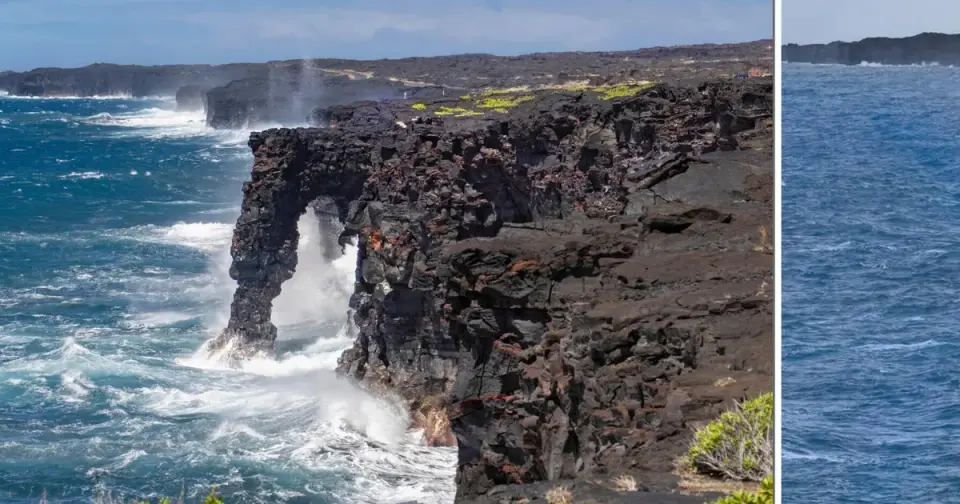
The Hōlei Sea Arch, a 90-foot natural landmark in Hawai'i Volcanoes National Park, collapsed into the Pacific Ocean between September 23 and 27, 2026. The structure, which had stood for approximately 550 years, disappeared during a park closure caused by Tropical Storm Nolo. Officials attribute the loss to long-term differential erosion, noting that such coastal changes are expected but unpredictable.
Key points
- The Hōlei Sea Arch, located on the Big Island of Hawaii, stood 90 feet high before collapsing into the Pacific Ocean.
- The collapse occurred between September 23 and September 27, 2026, while the park was closed due to Tropical Storm Nolo, which reached 155 mph winds.
- The formation was approximately 550 years old, created by ancient lava flows hitting cliff edges.
- The National Park Service confirmed the loss via social media, stating the arch was still standing on September 23 but gone by September 27.
- Officials warned visitors to stay away from the unstable site, citing risks of falling and drowning for those entering the closed area.
- The collapse is attributed to differential erosion, a process where softer rock erodes faster than harder rock, a phenomenon that also formed the arch centuries ago.
Background
The Hōlei Sea Arch was a popular tourist destination in Hawai'i Volcanoes National Park, named after a small endemic plant in the milkweed family. Its collapse follows a period of intense storm activity in the Pacific, including Hurricane Lala in August 2026, which caused widespread damage to Hawaii. The loss of the arch marks the latest transformation of the park's rugged coastline, a process that officials have long acknowledged as inevitable due to natural erosion.
How outlets are covering it
CBS News and The New York Times both reported the collapse as a significant loss of a cherished geological marvel, emphasizing the emotional response from visitors and the tragic nature of the event. CNN focused more on the scientific explanation, highlighting differential erosion as the primary cause and noting that the collapse was expected, though its timing was unpredictable. All sources agreed that the collapse occurred during the park's closure for Tropical Storm Nolo, but differed in their emphasis on the storm's role versus long-term erosion. CBS and NYT highlighted the human impact and public reaction, while CNN stressed the natural process and the inevitability of such changes.
Why it matters
The collapse of the Hōlei Sea Arch underscores the dynamic and unpredictable nature of Hawaii's coastline, shaped by volcanic activity and erosion. It serves as a reminder of the impermanence of natural landmarks and the ongoing impact of extreme weather events on the environment. The incident also highlights the challenges faced by park officials in managing visitor safety and preserving natural sites in the face of climate change and natural forces.
What to watch
The National Park Service is expected to continue monitoring the coastline for further changes and to enforce safety measures around the collapsed site. Visitors are advised to stay away from the unstable area. The park may also consider measures to protect other vulnerable formations from similar erosion. The collapse may also prompt discussions about the long-term impacts of climate change on Hawaii's natural landmarks and the need for adaptive management strategies.
- Hawaii sea arch collapses into Pacific Ocean 550 years after its formation CBS News
- The Holei Sea Arch, a Centuries-Old Hawaii Wonder, Crumbles Into the Pacific The New York Times
- Hawaii’s famed Hōlei Sea Arch has collapsed CNN
- Centuries-old lava rock arch in Hawai'i Volcanoes National Park collapses into ocean following Hurricane Nolo FOX Weather
- A famed Hawaii sea arch collapses, prompting NPS warnings of unstable cliffs bostonglobe.com
Want the full story? Read the original reporting
Read on CBS News