
Bessent calls Zelenskyy 'reckless' over Starlink restrictions as Ukraine tests satellite limits
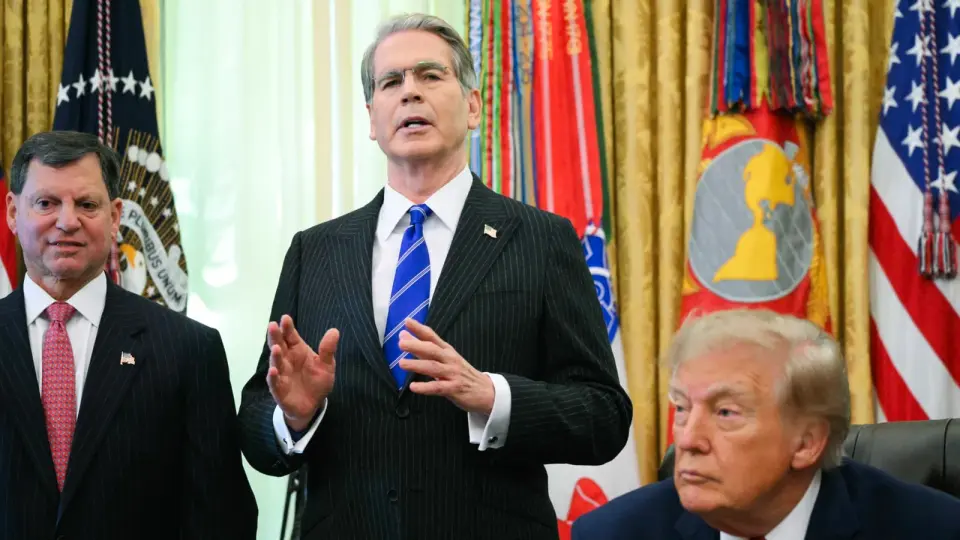
U.S. Treasury Secretary Scott Bessent warned Ukrainian President Volodymyr Zelenskyy to be 'very careful' with public claims that Washington is restricting military satellite internet. Zelenskyy accused the U.S. of throttling Starshield speeds, hindering drone defense, while Bessent denied administration involvement. The dispute highlights a widening rift between Kyiv and Washington over support levels and peace negotiations.
Key points
- Bessent called Zelenskyy's claims about U.S. interference 'reckless' and 'not true' on Meet the Press.
- Zelenskyy stated that Starshield speeds are capped at 161 km/h in Ukraine, compared to 400 km/h previously, limiting drone operations.
- Elon Musk posted that the U.S. government controls Starshield and is ultimately responsible for any speed limits.
- Trump denied responsibility, claiming the issue is not his and not Musk's, while Bessent described the situation as a 60-day pause rather than a full sanction lift.
- Ukrainian officials reported conflicting information, with some sources blaming the White House and others blaming SpaceX.
Background
This tension follows a period of strained U.S.-Ukraine relations in Trump's second term, where the president has pushed for a peace deal while facing domestic pressure over high energy prices. Recent U.S. actions include waiving parts of a bipartisan Russia sanctions package to import Russian diesel, a move criticized by lawmakers as capitulating to Moscow. The current Starlink dispute adds a new layer of friction to these existing diplomatic and economic tensions.
How outlets are covering it
CNBC and NBC News emphasize Bessent's direct confrontation with Zelenskyy, highlighting the Treasury Secretary's refusal to confirm Ukraine's ally status and his accusation that Zelenskyy presented a 'false binary' about the war. Axios provides technical detail on the speed restrictions, noting that Ukrainian tests showed the limits apply only within Ukraine, not in the EU, suggesting a targeted 'planned operation.' The Telegraph, though inaccessible, was cited by Axios as reporting that Musk proposed the throttling to Trump, a claim the White House denied. Perspectives diverge on the cause: Zelenskyy and Musk point to U.S. government control, while the White House denies involvement, and Ukrainian officials remain confused by conflicting messages from both sides.
Why it matters
The reliability of satellite internet is critical for Ukraine's ability to defend against Russian drone attacks. If the U.S. is indeed restricting access, it could significantly weaken Ukraine's defensive capabilities and signal a shift in American support. This dispute also reflects broader disagreements over the pace and terms of any potential peace settlement, with the U.S. pushing for a negotiated end to the war and Ukraine insisting on continued military support to secure its position.
What to watch
Ukraine's chief negotiator, Rustem Umerov, has spoken with Jared Kushner to discuss the Starlink issue and potential U.S.-Ukrainian meetings next week. The outcome of these discussions will likely determine whether the restrictions are lifted or if the diplomatic rift deepens. Additionally, the U.S. midterm elections are approaching, and the administration's handling of energy prices and foreign policy may influence voter sentiment.
- Bessent warns Zelenskyy to 'be very careful' about claims U.S. is throttling Starlink CNBC
- Treasury secretary refuses to say if the U.S. sees Ukraine as an ally NBC News
- Trump says neither he nor Musk responsible for Ukraine loss of Starlink access Reuters
- Zelensky says Musk-owned satellite system still restricted in Ukraine Axios
- Rubio: Nobody ordered Starlink slowdown in Ukraine The Telegraph
Want the full story? Read the original reporting
Read on CNBC