
Bessent Extends China Trade Truce to January Amid AI and Iran Tensions
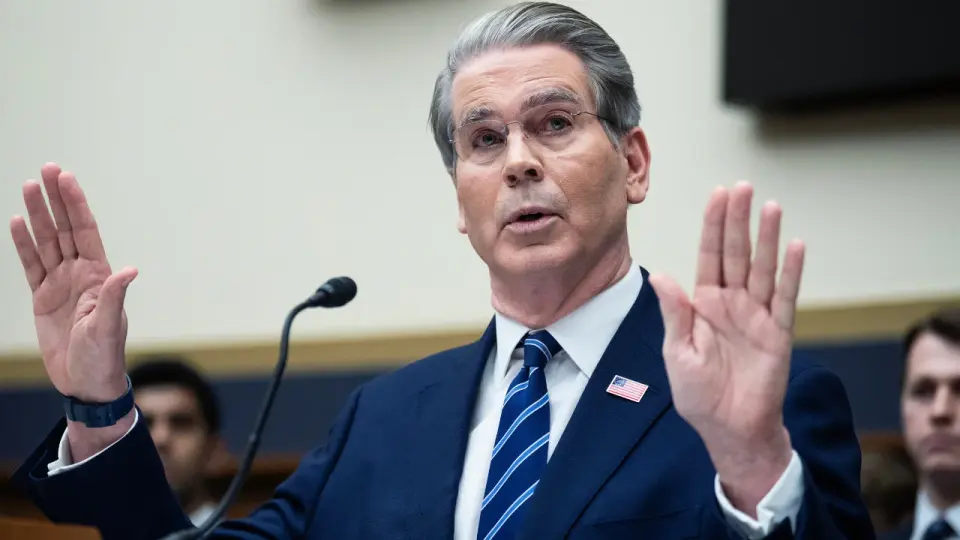
Treasury Secretary Scott Bessent announced that the United States and China have agreed to extend their bilateral trade truce, known as the Busan agreement, from November 10 to January 10. The extension follows recent talks between Bessent and Chinese Vice Premier He Lifeng and precedes a state visit by Chinese President Xi Jinping to Washington. While the trade truce aims to ease economic tensions, the two nations remain sharply divided on artificial intelligence regulation, with the U.S. rejecting global governance frameworks in favor of national sovereignty. Simultaneously, the U.S. Treasury is intensifying economic pressure on Iran through Operation Economic Outcast, with Bessent outlining three potential scenarios for the end of the ongoing conflict.
Key points
- The Busan agreement, a trade truce established in October 2025, has been extended by two months to January 10 to allow for further economic negotiations.
- Bessent stated that the U.S. and China are working on an AI notification mechanism to address safety incidents, noting that the U.S. currently leads in AI development.
- The U.S. Treasury launched Operation Economic Outcast in August to cut off Iran's financial lifelines, with Bessent predicting the regime will eventually capitulate.
- Bessent identified three possible endings to the U.S.-Iran conflict: internal regime collapse, popular uprising, or a negotiated deal.
- The U.S. has restricted over 80% of external flights from Iran, raising concerns about how Iranian delegates will return home from the UN General Assembly.
Background
The Busan agreement was originally signed by Presidents Donald Trump and Xi Jinping in October 2025 to ease trade tensions. Recent extensions have been linked to Xi's upcoming state visit to Washington, his first since 2015, where leaders are expected to discuss trade, AI, and geopolitical issues. The current extension follows an unscheduled meeting between Bessent and He Lifeng, reflecting Washington's desire to test Beijing's compliance with agricultural commitments before granting further predictability.
How outlets are covering it
Fox News emphasizes the extension of the trade truce and Bessent's aggressive stance against Iran, highlighting the Treasury's 'Operation Economic Outcast' and the potential for regime collapse. In contrast, Politico focuses on the stark divergence in AI policy between the U.S. and China at the UN, noting that while the U.S. rejects global AI governance to maintain its technological edge, China advocates for a consensus-based global framework. Fox News portrays the U.S. as leading in AI, while Politico highlights the U.S. stance as a rejection of international control, contrasting with calls from tech executives for global guardrails.
Why it matters
The extension of the trade truce provides a temporary reprieve from economic tensions between the world's two largest economies, but the underlying disagreements on AI regulation and geopolitical strategies remain unresolved. The intensification of economic pressure on Iran signals a shift toward financial warfare as a tool of foreign policy, with potential implications for global stability and the Iranian regime's survival. The divergence in AI policy between the U.S. and China could hinder international cooperation on AI safety, posing risks for global security and technological development.
What to watch
The U.S. and China are expected to continue negotiations on AI safety mechanisms and trade issues ahead of Xi's state visit to Washington. The U.S. Treasury will likely maintain its economic pressure on Iran, with Bessent predicting that the regime will eventually capitulate to the financial constraints. The outcome of the U.S.-Iran conflict will depend on whether the regime collapses, a popular uprising occurs, or a negotiated deal is reached.
- Bessent reveals extension to Busan agreement with China until January Fox News
- Where Is the U.S. Beating China on A.I., and Where Is It Lagging? The New York Times
- US-China Truce Extended as Xi Gets Rare Welcome From Trump Bloomberg.com
- US, Chinese visions for AI regulation differ sharply at UN meeting Politico
- US, China agree to extend 'the Busan agreement' until January, Bessent says Reuters
Want the full story? Read the original reporting
Read on Fox News