
Pezeshkian’s UN Balancing Act Faces Test as Iran Proposes Seven-Day Hormuz Deal
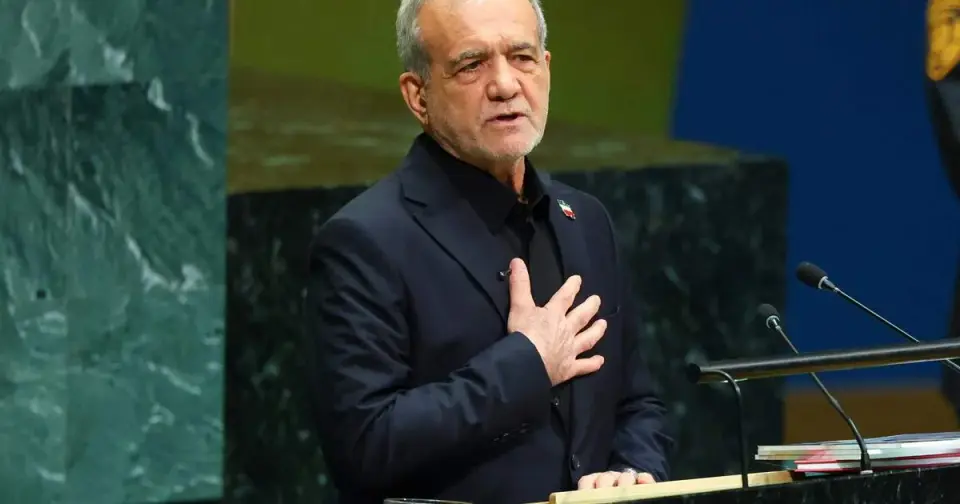
Iranian President Masoud Pezeshkian’s UN speech drew rare cross-factional praise in Tehran, but emerging details of a phased deal to reopen the Strait of Hormuz threaten to expose deep domestic divisions. While hardliners celebrated his defiant rhetoric, reformists highlighted his openness to diplomacy. Negotiations remain stalled as neither side wishes to relinquish leverage first, with Iran seeking a deal before US midterm elections.
Key points
- Pezeshkian’s UN address received unusual praise from both conservative and reformist factions in Iran, with hardliners focusing on his defiant tone and reformists noting his willingness to negotiate.
- US and Iranian negotiators are exploring a phased agreement to reopen the Strait of Hormuz in exchange for lifting the US economic blockade, a proposal that mirrors a collapsed June ceasefire.
- Iran’s Foreign Minister Abbas Araghchi stated that Tehran has presented a seven-day plan to reopen the strait, contingent on US acceptance of conditions similar to the previous memorandum of understanding.
- Domestic tensions are rising over Araghchi’s direct contact with US envoy Steve Witkoff, with hardline MPs questioning his authorization and some calling for his impeachment.
- Pezeshkian denied plots to assassinate US President Donald Trump and confirmed he had recently met with Supreme Leader Mojtaba Khamenei, who remains largely out of public view.
Background
This development follows a series of escalating tensions since the February 2026 conflict, which began with US-Israeli strikes on Iran and led to the closure of the Strait of Hormuz. A previous ceasefire agreement reached in June collapsed shortly after, leaving both sides wary of temporary arrangements. Recent oil price fluctuations and international calls for the strait’s reopening have heightened the urgency of diplomatic resolution.
How outlets are covering it
Iran International highlights the internal political balancing act Pezeshkian is performing, noting that while his speech satisfied hardliners with its defiance, it may soon face backlash if negotiations progress. CNN emphasizes the unprecedented nature of Pezeshkian’s media access in New York and his denial of assassination plots, contrasting this with White House accusations. NBC News focuses on the timing of the deal, noting Pezeshkian’s desire to reach an agreement before the US midterm elections, while the White House insists on addressing nuclear concerns first. Outlets differ on the nature of the talks: Iran International and Reuters describe a phased leverage exchange, while NBC and CNN highlight the seven-day timeline and the conditions tied to the previous June agreement.
Why it matters
The potential reopening of the Strait of Hormuz is critical for global energy markets, as the waterway handles approximately 20% of the world’s oil supply. A successful deal could stabilize oil prices and reduce geopolitical tensions, while a failure may lead to further military escalation. The domestic political struggle in Iran over the authorization of these talks also signals the fragility of the current diplomatic track.
What to watch
Negotiators will likely continue to debate the sequence of concessions, with Iran demanding the lifting of the blockade before reopening the strait. The US may maintain its stance on addressing nuclear issues first. Domestic pressure in Tehran could intensify if hardliners view the talks as a betrayal of national sovereignty, potentially leading to further political instability or a breakdown in the diplomatic process.
- Pezeshkian straddles Iran’s divide at UN as US talks test balance Iran International
- We aren’t trying to kill Trump, Iran’s president insists to reporters at New York hotel CNN
- Iran’s president says Tehran wants a deal with U.S. before midterm elections nbcnews.com
- Iran’s president tells Fox anchor the war was ‘imposed on us’ The Hill
- Iran’s president laid out Tehran’s demands to the world, from a podium in New York Yahoo
Want the full story? Read the original reporting
Read on Iran International