
Trump Warns of China’s Rapid Nuclear Expansion After Shenzhen Summit
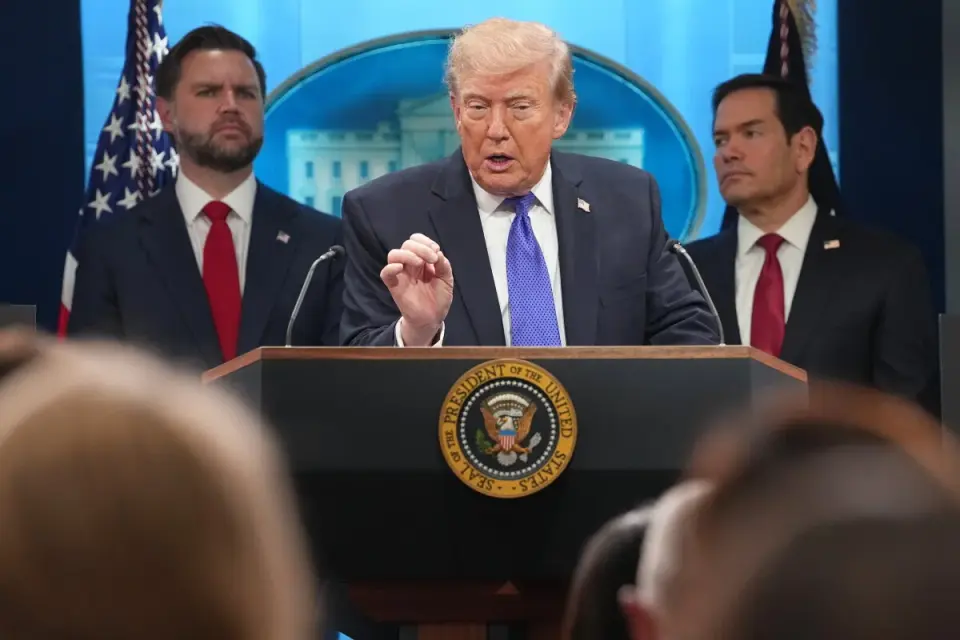
President Donald Trump stated that China is expanding its nuclear arsenal at a 'hot and heavy' pace, warning that Beijing could match US capabilities within a decade. This comment followed a trilateral summit in Shenzhen with Chinese President Xi Jinping and Russian President Vladimir Putin, where the three leaders agreed to dialogue on nuclear risk reduction. While the US and Russia possess thousands of warheads, China’s stockpile is projected to exceed 1,000 by 2030. The summit produced a joint statement affirming that nuclear war cannot be won, but critics note the lack of concrete arms control measures. Trump also discussed AI safeguards with Xi and suggested a second chance for Nvidia co-founder Jensen Huang, whose resignation followed allegations of chip diversion to China.
Key points
- Trump characterized China’s nuclear buildup as 'hot and heavy,' predicting parity with the US within ten years.
- The US, China, and Russia agreed to a dialogue on reducing nuclear risks and preventing proliferation following the Shenzhen summit.
- The Pentagon estimates China’s nuclear warhead stockpile is in the low 600s, with projections exceeding 1,000 by 2030.
- Trump and Xi agreed to establish 'joint guardrails' for artificial intelligence, though no specific details were provided.
- Trump suggested Nvidia co-founder Jensen Huang should be reinstated, citing his brilliance despite recent controversies regarding chip exports to China.
Background
The Shenzhen summit marked the first trilateral meeting between the leaders of the US, China, and Russia. Previous coverage noted that the summit produced vague declarations on nuclear risks and UN reforms but failed to address conflicts in Ukraine or Iran. Critics argued the meeting boosted the international standing of Xi and Putin while yielding no tangible concessions for the US. The event occurred amid concerns that the US-Russia New START treaty had lapsed, leaving no formal arms control framework in place.
How outlets are covering it
AP News highlights Trump’s public remarks as his first since the summit, emphasizing his warning about China’s rapid nuclear expansion and his positive assessment of the 'great electricity' between the three leaders. Secretary of State Marco Rubio supported the engagement, arguing that regular dialogue between the three nuclear powers is essential to prevent danger. In contrast, Arms Control Wonk offers a technical critique, suggesting that while the summit’s joint statement is symbolic, a specific limit on delivery vehicles could serve as a practical next step. The outlet proposes a 700-launcher cap, mirroring the expired New START treaty, which would be verifiable via satellite and currently within the capabilities of all three nations. While AP focuses on the political dynamics and Trump’s rhetoric, Arms Control Wonk emphasizes the structural challenges of arms control, noting that China’s smaller arsenal makes traditional parity-based agreements difficult. The two sources differ in their focus: AP centers on the immediate diplomatic outcomes and Trump’s stance, while Arms Control Wonk analyzes the feasibility of future agreements and the technical hurdles of verifying compliance.
Why it matters
The summit signals a shift in nuclear diplomacy, with China agreeing to engage in risk reduction talks for the first time. However, the lack of concrete limits raises concerns about an accelerating arms race. Trump’s comments on AI and chip exports highlight the intersection of nuclear security and technological competition, suggesting that future US-China relations will be defined by both military and economic pressures. The proposed 700-launcher cap, if adopted, could provide a temporary stabilizing measure, but its success depends on political will and technical verification.
What to watch
The three nations are expected to begin dialogue on nuclear risk reduction, though the agenda remains undefined. Trump’s administration has issued new rules to restrict remote access to advanced chips, potentially affecting AI development. The outcome of the Huang situation and the implementation of AI guardrails will be closely watched. Arms Control Wonk suggests that a political commitment to a 700-launcher cap could be a near-term step, but it remains uncertain whether China will agree to such a measure. The next few months will likely see further discussions on nuclear and AI issues, with the potential for increased tensions if no concrete agreements are reached.
- China’s nuclear buildup is ‘hot and heavy,’ Trump says a day after meeting with Xi AP News
- WATCH: Trump hosts news conference after meeting with Xi, Putin PBS
- Trump says China agreed to trilateral despite reluctance, notes nuclear gap South China Morning Post
- U.S. Enters Unprecedented Three-Way Nuclear Rivalry With China and Russia WSJ
- The 700 Club Arms Control Wonk
Want the full story? Read the original reporting
Read on AP News