
U.S. Expands Arctic Military Footprint in Greenland Amid Mineral and Missile Defense Push
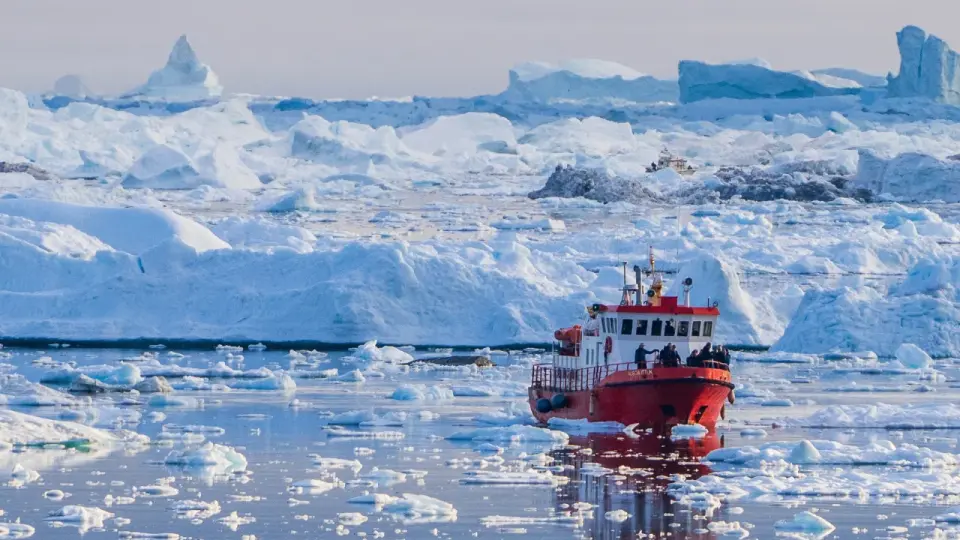
President Donald Trump signed a new security agreement with Denmark and Greenland at the United Nations General Assembly, expanding U.S. military presence while preserving Danish sovereignty. The deal grants Washington authority to establish bases at Mestersvig and Narsarsuaq and integrate Greenland into the 'Golden Dome' missile defense network. Strategic motivations include securing rare earth minerals, potential oil reserves, and countering Russian and Chinese influence in the Arctic, though specific operational details remain limited.
Key points
- Trump signed the agreement on the sidelines of the UN General Assembly, confirming a permanent U.S. security role in Greenland without altering its status under Danish sovereignty.
- The pact allows the U.S. to build new military facilities at Mestersvig in eastern Greenland and Narsarsuaq in the south, marking the first major U.S. expansion in the region in decades.
- SpaceNews reports the U.S. has secured authority to deploy 'Golden Dome' missile defense capabilities around Pituffik Space Base, enhancing ballistic missile warning and defense networks.
- Robert Price of Greenland Energy Company cited the deal as a catalyst for long-term investment in unproven oil and mineral deposits, including nickel, copper, and palladium, aimed at reducing reliance on China and Russia.
- Military Times notes that Mestersvig, currently staffed by only three soldiers, overlooks the GIUK gap, a critical chokepoint for containing Russian naval power in the Atlantic.
Background
This development follows earlier announcements in September 2026 regarding a U.S.-Denmark pact that screens investments to block adversaries and grants overflight rights. Previous coverage highlighted a significant rally in Greenland-linked mining stocks, with Critical Metals rising 38%, reflecting market optimism about U.S. access to Arctic resources. The current agreement formalizes these strategic interests, building on the U.S. presence at Pituffik Space Base, which has served as a northernmost defense installation for decades.
How outlets are covering it
Fox News emphasizes the economic and resource-driven aspects, highlighting the potential for rare earth minerals and oil to reduce U.S. dependence on foreign powers, with industry leaders viewing the deal as a boost for investor confidence. Military Times focuses on the logistical and strategic military implications, detailing the extreme conditions at Mestersvig and its role in NATO’s containment of Russian naval power. SpaceNews centers on the technological dimension, specifically the authorization for 'Golden Dome' missile defense systems, framing the move as an expansion of homeland defense infrastructure. While all outlets agree on the expansion of U.S. presence, they differ in emphasis: Fox News on economic security, Military Times on tactical positioning, and SpaceNews on defense technology integration.
Why it matters
The agreement reshapes Arctic geopolitics by solidifying U.S. control over critical resources and strategic chokepoints, directly countering Russian and Chinese ambitions in the region. It signals a shift from diplomatic pressure to concrete military and economic integration, potentially altering global supply chains for rare earth minerals and energy. The expansion of missile defense capabilities in the Arctic also raises questions about NATO’s evolving defense posture and the long-term sustainability of U.S. commitments in extreme environments.
What to watch
The U.S. is expected to begin construction or expansion of facilities at Mestersvig and Narsarsuaq, though no public timeline has been released. Greenland Energy Company plans an exploratory oil well in 2027, pending permits. The Pentagon will likely proceed with integrating Golden Dome systems at Pituffik Space Base. Market reactions may continue as investors assess the viability of long-term resource extraction in the Arctic, while diplomatic tensions with Russia and China may escalate over Arctic sovereignty and resource access.
- Trump's Greenland obsession isn’t random. Here’s what’s at stake Fox News
- Desolate Arctic outpost likely to host US troops under new Greenland deal Military Times
- U.S. secures authority for Golden Dome missile defense in Greenland SpaceNews
- Keep out: why Greenland is the US military’s new eyes in the Arctic on China South China Morning Post
- Trump Once Vowed to ‘Own’ Greenland. He Settled for Something Much Less. The New York Times
Want the full story? Read the original reporting
Read on Fox News