
DHS Acquires Minnesota Prison for $495M After State Declined $75M Offer
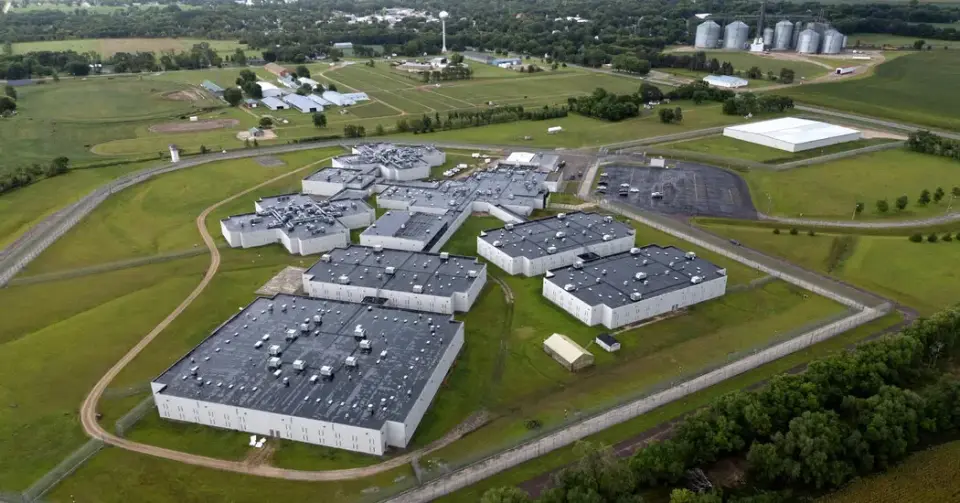
The Department of Homeland Security (DHS) purchased the 1,600-bed Prairie Correctional Facility in western Minnesota for $495 million last summer. This acquisition followed the Minnesota Department of Corrections' decision to decline a $75 million offer from private prison operator CoreCivic the previous year, citing lack of funds and staffing capacity. The purchase coincides with a major federal fraud crackdown in Minnesota, where Treasury Secretary Scott Bessent and FBI Director Kash Patel announced the recovery of billions in stolen funds and the identification of $8 billion in suspicious foreign wire payments.
Key points
- DHS paid $495 million for the Prairie Correctional Facility, a 1,600-bed prison in western Minnesota that had been shuttered for a long time.
- Minnesota officials previously rejected a $75 million sale offer from CoreCivic, stating they lacked the budget, space, and staff to operate the facility.
- Federal officials, including Treasury Secretary Scott Bessent and FBI Director Kash Patel, held a press conference in St. Cloud to detail a 'War on Fraud' in Minnesota.
- The Financial Crimes Enforcement Network (FinCEN) identified $8 billion in suspicious cross-border wire payments from 2021 to 2025 linked to foreign agents.
- Federal agencies claim to have stopped nearly $190 million in fraudulent funds and recovered over $100 million for victims in the state.
Background
This development occurs amid heightened federal scrutiny of nonprofit funding and fraud in Minnesota. Recent actions include raids on autism centers and the sentencing of leaders in the Feeding Our Future scheme, which prosecutors described as the largest pandemic-era fraud case in the nation, involving $250 million in stolen funds. The archive notes that federal enforcement actions in the state have previously sparked local tensions, including clashes between residents and federal agents following deployments related to suspected fraud networks.
How outlets are covering it
The New York Times highlights the stark contrast between the state's refusal to buy the prison for $75 million and the federal government's willingness to pay $495 million, framing it as a surprising transaction. KNSI emphasizes the collaborative effort among federal agencies, with Treasury Under Secretary Erin Browne stressing that the fraud cases diverted resources from vulnerable populations like children and those facing food insecurity. Fox News focuses on the scale of the financial crimes, citing FinCEN's identification of $8 billion in suspicious payments and linking the fraud to potential terrorist financing and money laundering, while praising the administration's aggressive enforcement tactics.
Why it matters
The acquisition of the Prairie Correctional Facility by DHS signals a significant shift in federal detention capacity and priorities. Coupled with the massive fraud crackdown, it suggests a broader federal strategy to secure assets and enforce financial integrity in Minnesota. The $495 million price tag, nearly seven times the previous offer, raises questions about the federal government's valuation of the facility and its intended use, potentially impacting local infrastructure and federal-state relations.
What to watch
The Department of Homeland Security is expected to utilize the Prairie Correctional Facility for federal detention purposes. Federal agencies will continue their investigations into the $8 billion in suspicious wire payments and the broader fraud network in Minnesota. Treasury Secretary Bessent is expected to provide further details on recovered funds and specific investigation results during ongoing press conferences. The White House Task Force to Eliminate Fraud will likely expand its efforts to prevent similar abuses in other states.
- Minnesota Declined to Buy a Prison for $75 Million. D.H.S. Paid $495 Million. The New York Times
- JD Vance cancels Friday trip to St. Cloud Star Tribune
- Top Trump Officials Bring War on Fraud Announcement to St. Cloud KNSI
- Treasury flags $8B in suspicious foreign-directed transfers through US money services firms Fox News
- Federal officials make ‘War on Fraud’ announcement in St. Cloud after Minnesota raids 5 EYEWITNESS NEWS
Want the full story? Read the original reporting
Read on The New York Times