
Jefferson's Hair: New Genomic Study Settles 200-Year Paternity Debate
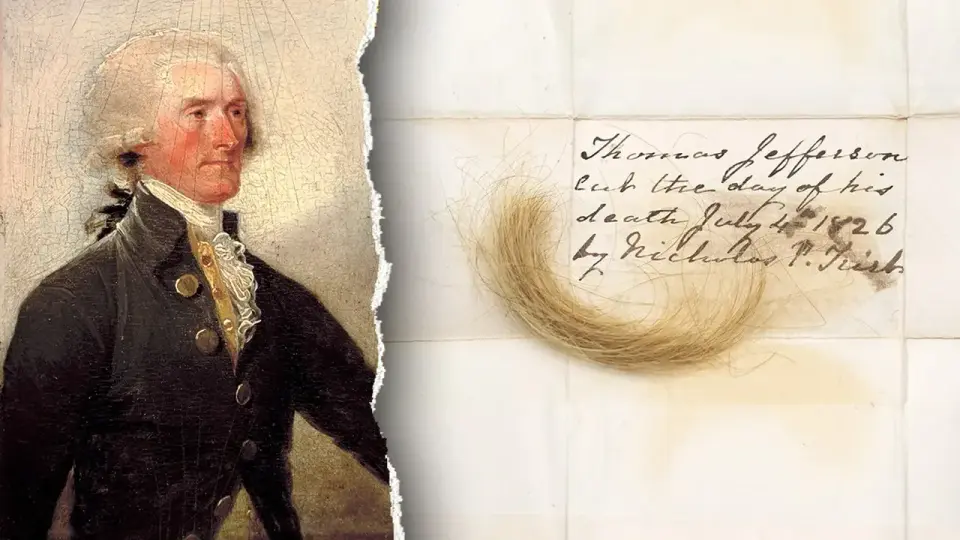
A 15-year Smithsonian-led study has provided definitive genetic proof that Thomas Jefferson fathered children with Sally Hemings. By sequencing DNA from Jefferson’s preserved hair and comparing it to living descendants, researchers ruled out alternative theories involving his brother Randolph. The findings, detailed in anthropologist Richard Kurin’s book 'History by a Hair,' reinforce historical consensus and offer closure to a long-standing national controversy.
Key points
- Anthropologist Richard Kurin led a 15-year project at the Smithsonian to sequence Thomas Jefferson’s genome using hair samples found in his Bible and at Monticello.
- The study compared Jefferson’s DNA with that of living descendants of Sally Hemings, finding less than a 1-in-1,000 chance that his brother Randolph was the father.
- Historian Leigh Fought stated the new evidence 'closes the case with a lock,' reinforcing conclusions from a 1998 Y-chromosome study and Annette Gordon-Reed’s 2002 book.
- The Thomas Jefferson Foundation noted the findings reinforce, rather than rewrite, the historical record regarding Jefferson and Hemings.
- Advances in ancient-DNA sequencing, previously used for Neanderthal research, allowed scientists to extract viable genetic data from 200-year-old hair strands.
Background
Debates over Jefferson’s relationship with Sally Hemings have persisted since his lifetime, fueled by political scandals and historical speculation. A 1998 DNA study by Eugene Foster provided initial genetic evidence linking Jefferson’s male line to Hemings’ descendants, but skeptics argued the brother Randolph could have been the father. Historian Annette Gordon-Reed’s 2002 book 'The Hemingses of Monticello' argued for Jefferson’s paternity based on historical records, but definitive genetic proof remained elusive until the recent Smithsonian project.
How outlets are covering it
Fox News emphasizes the conclusive nature of the new DNA evidence, quoting historian Leigh Fought as saying the case is now closed. The New Yorker highlights the complexity of the research, noting that while the science is robust, some Hemings descendants withdrew from the study due to concerns about the commercialization of the findings. Smithsonian Magazine details the technical challenges of extracting DNA from old hair and the rigorous comparison of genetic markers to rule out other Jefferson family members. All sources agree that the findings validate historical consensus but differ in emphasis: Fox News focuses on the finality of the proof, The New Yorker on the human impact on descendants, and Smithsonian Magazine on the scientific methodology.
Why it matters
This study resolves one of America’s longest-running historical disputes, providing definitive genetic evidence that supports the narrative of Jefferson’s personal life and the complexities of slavery in the founding era. It also demonstrates the power of modern genomic techniques to solve historical questions, potentially opening doors for similar research on other historical figures. For the descendants of Sally Hemings, the findings offer a sense of closure and validation of their family history.
What to watch
The full scientific paper is expected to be published in the Proceedings of the National Academy of Sciences, with a preprint released alongside Kurin’s book. Researchers hope to make Jefferson’s genome publicly available, which could help identify other Hemings descendants who left the family and passed as white. The Thomas Jefferson Foundation may use the findings to update exhibits at Monticello, further integrating the history of Sally Hemings into the narrative of the founding era.
- DNA from Thomas Jefferson's hair delivers compelling new evidence in centuries-old paternity mystery Fox News
- The Lost Descendants of Thomas Jefferson The New Yorker
- One Strand of Hair Trapped in Thomas Jefferson’s Bible Helps Solve Rumor from Over 200 Years Ago People.com
- Two Centuries On, Smithsonian Connects Jefferson’s Hair to Hemings’s Children The New York Times
- Did Thomas Jefferson Father Sally Hemings' Children? After More Than a Decade of Research, the Answer Is Finally Firmly in Hand Smithsonian Magazine
Want the full story? Read the original reporting
Read on Fox News