
Trump Unveils $22.5B Dulles Overhaul: Gold Accents, No People Movers
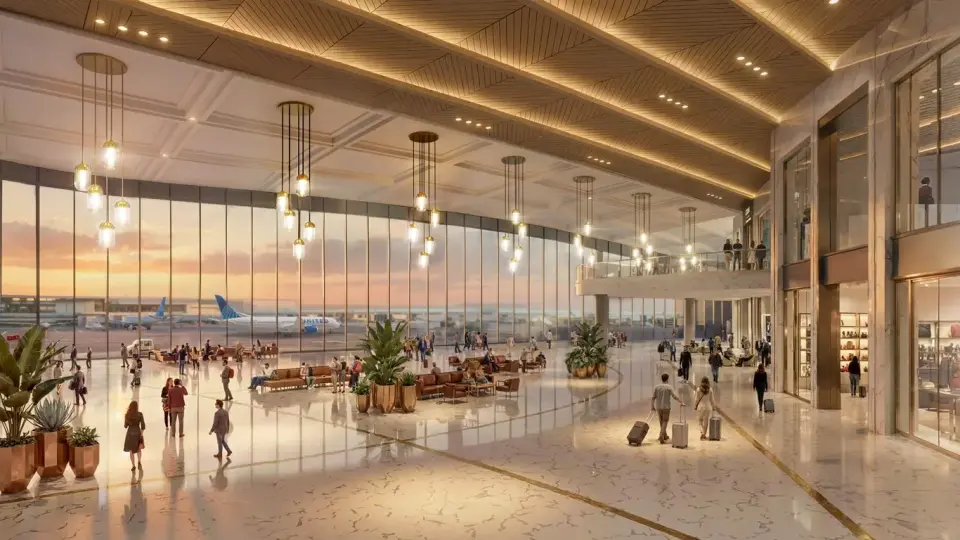
President Trump announced a $22.5 billion modernization plan for Washington Dulles International Airport, featuring a new underground transit system, expanded concourses, and the elimination of the airport's iconic 'people movers.' The project, which retains the original main terminal but adds gold-accented interiors and a massive parking structure, is being financed through a partnership between the Metropolitan Washington Airports Authority and United Airlines.
Key points
- The $22.5 billion plan replaces aging Concourses C and D with new linear structures and adds millions of square feet of capacity.
- The controversial 'people movers' (mobile lounges) will be replaced by a new underground U-shaped aerotrain and moving sidewalks.
- The iconic main terminal designed by Eero Saarinen will be preserved, but its interior will be renovated with gold accents and modern chandeliers.
- A new parking structure will hold 32,000 cars, located just 15 yards from the terminal entrance via glass tunnels.
- Financing involves tax-free bonds from the Metropolitan Washington Airports Authority, with United Airlines contracting for the build and repaying costs through operations.
Background
This announcement follows a year-long bidding process where the Transportation Department received 21 submissions to redesign the airport, which officials described as being in a 'state of disrepair.' The project fits into a broader pattern of Trump's involvement in Washington-area infrastructure, including the White House East Wing and Kennedy Center renovations. Earlier reports estimated the cost at $20 billion, but the final figure is $22.5 billion. The plan also aligns with Trump's previous criticisms of the airport's design and his desire to modernize federal facilities.
How outlets are covering it
Axios highlights the aesthetic changes, noting Trump's preference for 'gold accents' and 'marble-looking flooring,' while emphasizing the removal of the people movers. The Washington Post focuses on the cultural impact of retiring the mobile lounges, with travel reporters debating whether the change is a loss of a unique experience or a necessary improvement for efficiency. CBS News provides behind-the-scenes details, revealing that Trump personally reviewed 3D models from multiple firms, rejecting designs from Ferrovial and Jacobs, and ultimately choosing a plan that works with United Airlines rather than a BlackRock-led takeover. While Axios and CBS agree on the financial structure, the Post emphasizes the user experience, noting that travelers prefer seamless, intuitive transit systems over the current confusing mobile lounge setup.
Why it matters
The overhaul aims to transform Dulles from a criticized 'impossible airport' into a world-class hub, potentially improving passenger experience and international competitiveness. The project's success will depend on the public-private partnership model and the ability to execute a multi-year construction plan without disrupting air traffic. It also signals a shift in federal infrastructure policy, with the White House taking a more active role in design and financing decisions.
What to watch
Construction on Concourse A is expected to begin next spring, with the overall project spanning several years. Separate requests for proposals will be issued for public-private partnerships to develop land-side renovations, including a convention center and new parking lots. The exact timeline and final costs remain to be determined, but the administration aims to move quickly to implement the changes.
- Gold is in, people movers are out: Inside Trump's flashy plan for Dulles Airport Axios
- Virginia lawmakers react to Dulles Airport improvements proposed by President Trump WUSA9
- Are we ready to say goodbye to the Dulles people movers? Let’s discuss. The Washington Post
- How Trump drafted upcoming renovations for Washington Dulles, a "terrible airport" CBS News
- Trump Unveils Plans for Dulles Airport Overhaul LoudounNow.com
Want the full story? Read the original reporting
Read on Axios