
U.S. secures expanded military footprint in Greenland via new trilateral pact
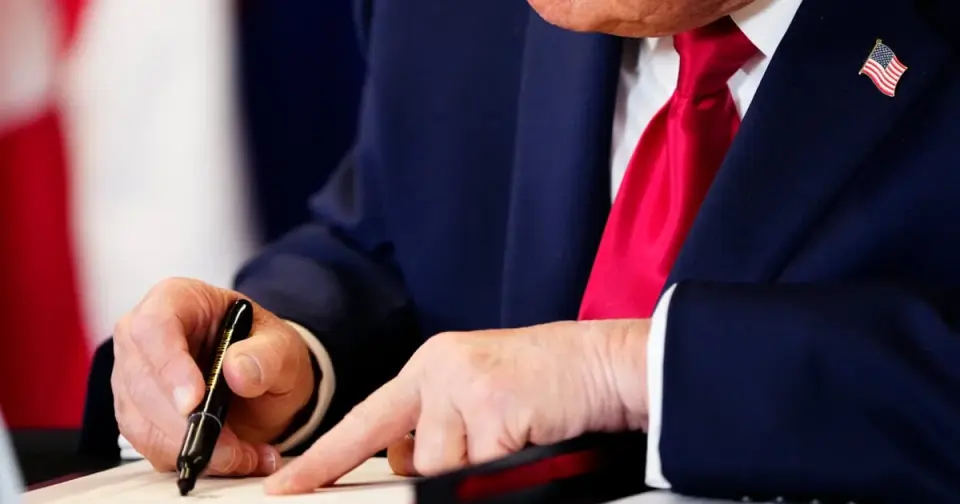
On September 22, 2026, U.S. President Donald Trump, Danish Prime Minister Mette Frederiksen, and Greenlandic Prime Minister Jens-Frederik Nielsen signed a trilateral security agreement in New York. The deal grants the U.S. permanent control over security matters in Greenland, including the construction of two new major military bases in Narsarsuaq and Mestersvig. While the agreement bars non-NATO nations from establishing military presence or sensitive investments, it explicitly reaffirms Danish sovereignty and Greenlandic self-determination, resolving months of transatlantic tension over U.S. annexation threats.
Key points
- The agreement amends the 1951 defense pact, granting the U.S. 'permanent control' over security and the right to build two new bases: one at the former Bluie West One site in Narsarsuaq and another at Mestersvig, currently used by Denmark's Sirius Patrol.
- The U.S. will have free access to air, land, and sea routes between the bases, while Denmark and Greenland retain approval power over the establishment of new unmanned military installations.
- The pact prohibits non-NATO nations from opening bases or mining for critical minerals and rare earths in Greenland without the consent of all three signatories.
- The agreement explicitly reaffirms Danish sovereignty and the right of Greenlanders to self-determination, a key concession that distinguishes it from earlier U.S. annexation demands.
- The deal was signed on the sidelines of the UN General Assembly, with Trump describing it as a 'fantastic' long-term relationship that protects both the American continent and Europe.
Background
This signing concludes a period of intense diplomatic friction that began in early 2026, when President Trump demanded U.S. ownership of Greenland, threatening to use force and destabilizing NATO relations. Prior to the signing, the U.S. and Denmark had announced the framework of the deal on September 19, with officials noting it would have 'infinite life' and remain in effect even if Greenland became independent. European leaders, including UK Prime Minister Burnham and EU Council President António Costa, had expressed cautious support for the resolution, emphasizing the importance of respecting sovereignty while addressing Arctic security concerns. The deal also follows a rally in Greenland-linked mining stocks, reflecting investor anticipation of U.S. access to Arctic resources.
How outlets are covering it
Politico emphasizes the strategic shift in U.S. military infrastructure, highlighting the construction of two new bases and the 'permanent control' language used by Trump. CNBC focuses on the economic and geopolitical implications, noting the deal's role in blocking Chinese and Russian influence in the Arctic and the subsequent rally in mining stocks. Vox frames the event as a peaceful resolution to a crisis that had previously threatened NATO cohesion, stressing that while the U.S. gains expanded military access, the deal preserves Danish sovereignty. There is a notable discrepancy in the assessment of threats: Trump cited Russian and Chinese military activity as justification for the deal, while NATO officials quietly pushed back, stating they saw little to no Chinese activity and no significant change in Russian presence near Greenland.
Why it matters
The agreement reshapes the security architecture of the Arctic and North Atlantic, solidifying a U.S. military presence that rivals or exceeds previous levels without triggering a sovereignty crisis. By barring non-NATO nations from sensitive investments and bases, the pact creates a new geopolitical barrier against Chinese and Russian expansion in the region. For NATO, it resolves a major internal rift, demonstrating that the alliance can manage U.S. security demands without fracturing transatlantic ties. The deal also sets a precedent for how great powers may negotiate access to resource-rich, strategically located territories in the High North, balancing military necessity with international law and self-determination.
What to watch
The agreement now requires parliamentary approval to take effect, as noted in earlier reports. The U.S. is expected to begin construction or refurbishment of the bases at Narsarsuaq and Mestersvig. Denmark and Greenland will review requests for new unmanned military installations under accelerated approval procedures. The market reaction to the deal, particularly in mining stocks, may continue as investors assess the long-term implications for critical mineral access. The U.S. and its allies will likely monitor compliance with the restrictions on non-NATO military presence and sensitive investments in the Arctic.
- Trump signs ‘fantastic’ Greenland security deal with Denmark politico.eu
- Trump gets a Greenland deal vox.com
- U.S. strikes Greenland deal at UN to expand military presence at Arctic outposts cnbc.com
- Trump signs Greenland deal and tells UN he expects one with Iran after midterms - as it happened Reuters
- Trump Set to Sign Deal on U.S. Presence in Greenland The New York Times
Want the full story? Read the original reporting
Read on politico.eu