
Irish national indicted for destroying $60M US military C-130 at Shannon Airport
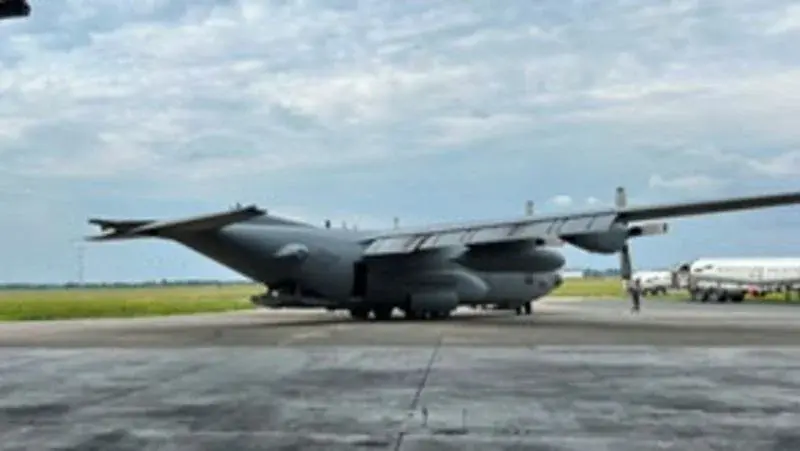
A grand jury in New York has indicted Daithi O’Corrain, a 48-year-old Irish national, for allegedly destroying a US Air National Guard C-130 Hercules aircraft at Shannon Airport in Ireland. Prosecutors allege O’Corrain spent months planning the attack, breaching the airport’s security perimeter on April 11, 2026, and causing approximately $60 million in damage by cutting wires, using corrosive gallium, and damaging fuel tanks. The aircraft is deemed unsalvageable. O’Corrain faces up to 10 years in prison if convicted and remains in Irish custody.
Key points
- O’Corrain is charged with one count of destruction of government property, carrying a maximum sentence of 10 years.
- The indictment alleges he breached Shannon Airport’s security fence at 4:30 am on April 11, 2026, and barricaded himself inside the C-130.
- Inside the aircraft, he allegedly cut hydraulic lines, destroyed cockpit gauges, and introduced gallium capsules, which rapidly corrode aluminum.
- After being discovered by the flight crew at 9:40 am, he escaped via a roof hatch, struck the exterior with an axe, and poured ball bearings into fuel tanks.
- The aircraft, valued at $60 million, was rendered inoperable and will not return to active flight status.
- O’Corrain was arrested by Irish authorities in April 2026 and has not yet been extradited to the US.
Background
Shannon Airport in County Clare, Ireland, serves as a major transatlantic hub for US military personnel and equipment. The indictment notes a pattern of security breaches at the facility, including three incidents in 2025 involving unauthorized access to the perimeter or runway, two of which targeted US military aircraft. These prior incidents included van breaches and spray-painting of a military plane, but the April 2026 attack is described as significantly more sophisticated and damaging.
How outlets are covering it
CNN and the Department of Justice emphasize the meticulous planning involved, citing O’Corrain’s online research into aircraft construction, security perimeters, and flight tracking apps. The DOJ press release highlights the threat to national security and US service members, while CNN notes the lack of a stated motive in court documents. ABC News and Barron’s focus on the immediate aftermath, including the arrest by Irish police and the unsealing of the indictment in New York. All sources agree on the $60 million damage estimate and the 10-year maximum sentence, but the DOJ explicitly names the FBI’s Joint Terrorism Task Force and international partners in the investigation, a detail omitted by the other outlets.
Why it matters
The case underscores vulnerabilities in the security of US military assets stationed abroad, particularly at key transatlantic hubs like Shannon Airport. The use of specialized corrosive materials and detailed pre-attack research suggests a level of sophistication beyond typical vandalism, raising concerns about potential threats to US military logistics and personnel safety in foreign jurisdictions.
What to watch
US authorities are expected to pursue extradition of O’Corrain from Ireland to face trial in the Southern District of New York. The case will likely involve coordination between US and Irish law enforcement, with the DOJ’s National Security and International Narcotics Unit leading the prosecution. No trial date has been announced, and O’Corrain’s legal representation has not yet been identified.
- Man accessed US military plane at Ireland airport and destroyed it, DOJ says CNN
- Irish National Indicted For Destroying $60 Million U.S. Military C-130H Aircraft At Shannon Airport, Ireland Department of Justice (.gov)
- A man destroyed a $60 million US military plane at an Irish airport, prosecutors say AP News
- Man charged for allegedly destroying US military plane parked in Irish airport: Feds ABC News - Breaking News, Latest News and Videos
- Irish Man Charged With Destroying US Military C-130 Aircraft Barron's
Want the full story? Read the original reporting
Read on CNN