
Canada-US trade talks collapse over French language protections
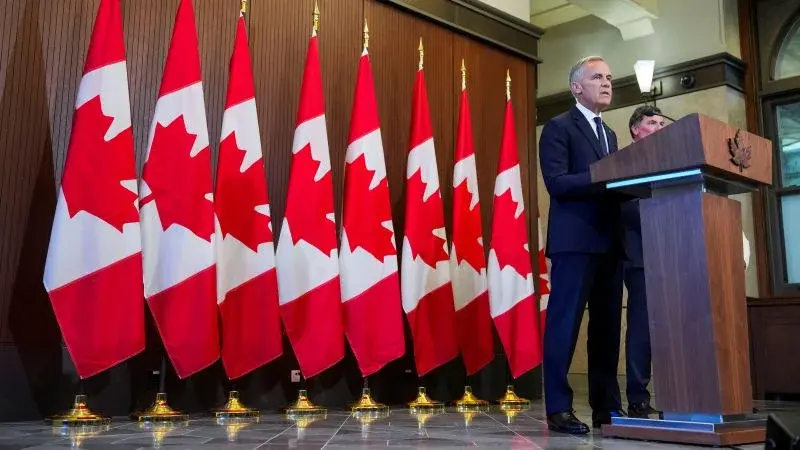
Canada and the United States have entered a trade war after negotiations collapsed over disputes regarding French language protections. Prime Minister Mark Carney rejected a US deal that he claimed would undermine Quebec's cultural rights, leading to 50% tariffs on Canadian goods. While the US argues these are trade barriers, Canada views them as core national identity issues.
Key points
- Negotiations collapsed last week after Canada rejected a US proposal that would have weakened French language protections.
- The US imposed 50% tariffs on approximately $20 billion worth of Canadian goods, affecting about 5% of Canadian exports.
- Prime Minister Mark Carney stated Canada 'could not accept' the deal, emphasizing that French language rights are central to Canadian identity.
- US Trade Representative Jamieson Greer dismissed the language issue as a 'funny, fake story,' arguing the real dispute is over streaming subsidies.
- Donald Trump denied interfering with French language, calling the claim a 'stupid thing' and labeling Carney 'weak and ineffective.'
- Canada is considering targeted retaliatory measures rather than matching tariffs dollar-for-dollar, with Finance Minister François-Philippe Champagne set to announce details.
Background
This dispute follows a series of escalating tensions between the US and Canada, including previous 50% tariffs on key goods like wine and cement in July 2026. The current conflict centers on Quebec's language laws, specifically Bill 96 (product labeling) and Bill 109 (streaming content discoverability), which the US has flagged as trade barriers. Canada's constitution protects both English and French, with French being the first language for roughly 22% of the population, particularly in Quebec.
How outlets are covering it
CNN and The Guardian emphasize the cultural significance of the dispute, highlighting Carney's stance that French language rights are non-negotiable. CBC focuses on the political implications, noting the upcoming Quebec provincial election and the surge in support for separatist parties. Politico and The Guardian highlight the US perspective, with Greer and Trump dismissing the language issue as a pretext for trade protectionism, arguing the real conflict is over financial subsidies for Canadian content. There is a clear divergence: Canada frames it as a sovereignty and identity issue, while the US frames it as a trade barrier and economic interference.
Why it matters
The collapse of trade talks signals a deepening rift between two longstanding allies, with potential economic repercussions for both nations. The dispute highlights the tension between trade liberalization and cultural sovereignty, setting a precedent for how nations may prioritize identity over economic agreements. The upcoming tariffs and retaliatory measures could impact consumers and businesses in both countries, affecting everything from everyday goods to digital services.
What to watch
Canada is expected to announce its retaliatory measures on Tuesday, potentially including targeted tariffs and support for domestic workers and businesses. The US has threatened further tariffs on cars, trucks, and steel starting January 1, 2027. The political fallout in Canada, particularly in Quebec, will be closely watched, with federal by-elections on August 31 and a provincial election in October serving as key indicators of public sentiment.
- French has become a sticking point in the Canada-US trade dispute. Here’s why CNN
- Trump denies US pushed Canada on French language Politico
- Mark Carney says Canada can’t accept US trade deal that would weaken French language The Guardian
- Trump: French language not a factor in Canada trade talks The Hill
- Trump says idea of him interfering with Canadians speaking French is a 'stupid thing' CBC
Want the full story? Read the original reporting
Read on CNN