
Ukraine’s Front-Line Drone Operations Stumble as Starlink Restrictions Persist Despite Trump’s Claims
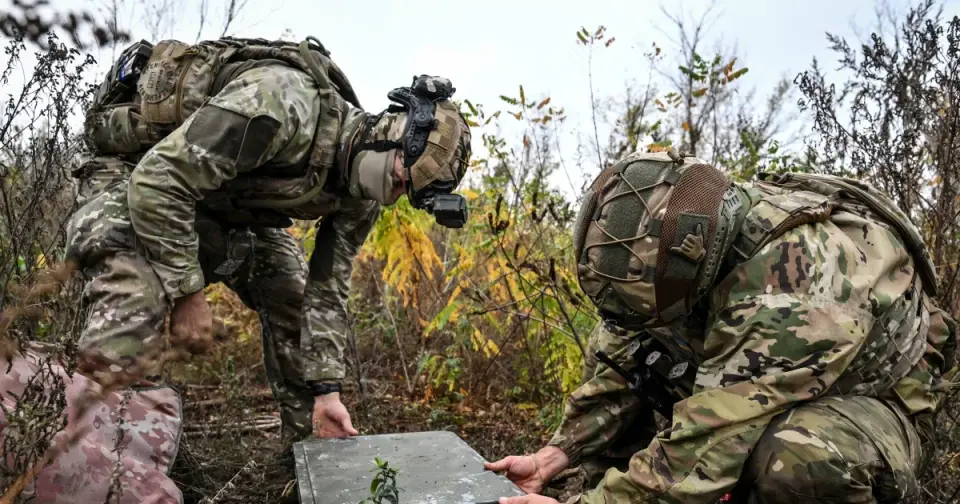
Ukrainian drone units report severe disruptions to battlefield operations due to unexplained speed limits on Starshield, the military variant of Starlink. While President Trump claimed Elon Musk restored full service, Kyiv and front-line soldiers insist restrictions remain, hindering critical counter-offensives in the Donbas region.
Key points
- Ukrainian drone commander 'Flint' reported that a drone lost connection mid-flight in the Donetsk-Zaporizhzhia border area, attributing the failure to Starlink speed limits rather than technical error.
- President Trump stated on Thursday that Musk had restored service, but Ukrainian President Zelensky confirmed on Friday that restrictions were still in place, with State Secretary Marco Rubio promising full restoration within 48 to 72 hours.
- The restrictions have hampered 'Operation Vivaldi,' a Ukrainian counter-offensive that reclaimed over 100 square miles and 16 settlements in Donetsk, disrupting Russian plans to encircle key strongholds like Sloviansk and Kramatorsk.
- Front-line soldiers, including pilot 'Dovbush,' noted that slow connections force them to drive slowly to maintain signal, increasing vulnerability to enemy drones, while others rely on radio as a fallback.
- Analysts warn that prolonged restrictions could allow Russia to restore logistics and regain operational tempo, potentially reversing Ukrainian gains in the Donbas.
Background
This development follows earlier reports in October 2026 of sudden speed caps on Starlink services, which coincided with Russian strikes on Ukrainian energy infrastructure. Previous coverage noted that these disruptions, alongside intelligence sharing gaps, severely hampered Ukraine’s ability to intercept Russian drones and sustain its counter-offensive in the Donbas region.
How outlets are covering it
NBC News highlights the direct impact on front-line soldiers, quoting commanders who describe the restrictions as a 'knife in the back' and a betrayal by the U.S. The New York Times focuses on the political dimension, reporting that Trump personally called Musk to reverse the limits, though Trump declined to confirm the call publicly. BBC emphasizes the ambiguity over who controls the restrictions, noting conflicting accounts from U.S. officials and Musk. While NBC and BBC agree on the operational impact, they differ on the narrative of intent: NBC frames it as a withdrawal of support, while NYT suggests it was a deliberate policy move by the administration. Some soldiers interviewed by NBC noted that not all units experienced uniform slowdowns, adding nuance to the broader disruption narrative.
Why it matters
The reliability of Starlink is critical for Ukraine’s drone-based warfare, which has been central to its recent successes against Russia. Prolonged restrictions could shift the battlefield balance, allowing Russia to recover from Ukrainian gains and potentially achieve a breakthrough in the Donbas. The incident also underscores the fragility of U.S.-Ukraine military cooperation and the risks of relying on private technology for national defense.
What to watch
Ukraine awaits the promised restoration of full Starlink service within 72 hours. If restrictions persist, Ukrainian forces may face increased vulnerability to Russian drone attacks and a slowdown in their counter-offensive. U.S. officials continue to deny any change in posture toward Ukraine, while Kyiv monitors the situation for further intelligence or communication gaps.
- How Starlink slowdown hit Ukraine’s front line soldiers pushing Russia back NBC News
- Exclusive | Trump Called Musk and Asked Him to Lift Ukraine Starlink Restrictions WSJ
- Pressure mounts on Trump administration over Starlink slowdown The Hill
- Trump Asked Musk to Reverse Limits on Ukraine’s Military Internet Use The New York Times
- Who controls Ukraine's access to Starlink? BBC
Want the full story? Read the original reporting
Read on NBC News