
U.S. and China finalize $30 billion trade framework after White House summit
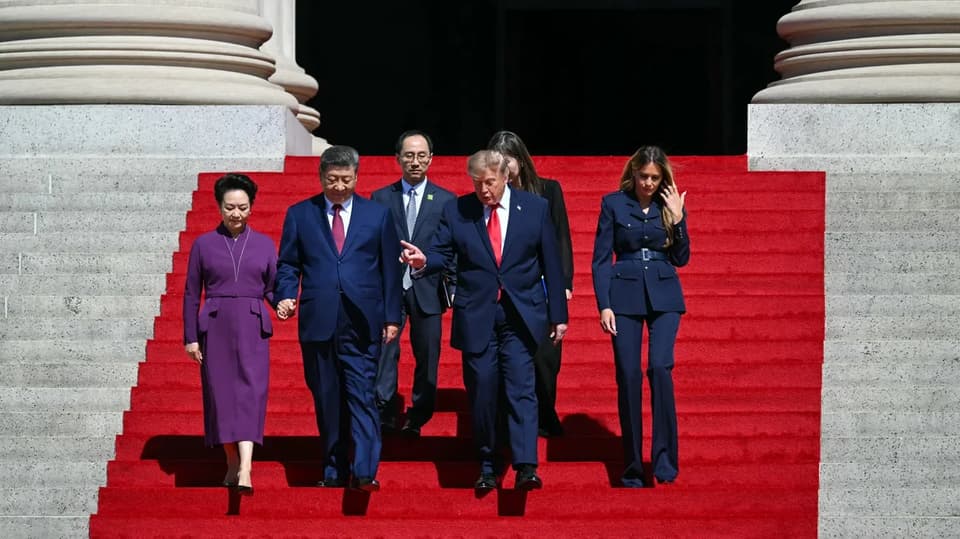
Following a summit at the White House, the United States and China have reached a preliminary agreement to manage approximately $30 billion in trade for non-sensitive goods. U.S. Trade Representative Jamieson Greer confirmed that the two nations have agreed to favorable terms for specific categories, including U.S. agricultural products, medical devices, and Chinese consumer goods. The administration plans to release detailed specifications on Monday. This deal operates under a new 'Board of Trade' mechanism designed to isolate commercial flows from broader geopolitical disputes and national security export controls. Concurrently, the two countries have extended their existing tariff truce by two months, allowing time for the U.S. to assess Chinese compliance with previous commitments regarding soybean purchases and rare earth access.
Key points
- U.S. Trade Representative Jamieson Greer confirmed that Washington and Beijing have reached agreements on a subset of non-sensitive goods, including U.S. agriculture, medical devices, and Chinese consumer products.
- The new framework, known as the 'Board of Trade,' aims to keep specific commercial flows insulated from future tariff disputes and national security restrictions on advanced technology.
- The U.S. and China have extended their broader trade truce by two months, which Greer described as a 'compliance period' to evaluate whether Beijing is honoring previous commitments.
- Greer noted that the U.S. goods trade deficit with China has fallen by nearly 40% due to tariff adjustments, though some supply chains have shifted to other nations like Mexico.
- President Trump described the meeting with President Xi as 'very productive,' while Beijing released a more detailed public account of the discussions, including Xi's comments on AI cooperation.
Background
This development follows a series of high-level diplomatic engagements in late September 2026. In early September, Treasury Secretary Scott Bessent and Chinese Vice Premier He Lifeng met in New York to prepare for the summit, focusing on AI, tariffs, and rare earths. Prior to the White House visit, Xi Jinping conducted state visits to Egypt and India to broaden China's international outreach. The current agreement builds on a previous tariff truce that was extended to January 10, 2026, following an unscheduled meeting between Bessent and He Lifeng. That earlier extension was shorter than the six-month period many analysts anticipated, reflecting U.S. dissatisfaction with Chinese offers at the time.
How outlets are covering it
Axios reports that the U.S. and China have reached a specific $30 billion tariff deal, emphasizing the financial scale of the agreement. CNBC, citing U.S. Trade Representative Jamieson Greer, focuses on the structural details of the 'Board of Trade' mechanism and the two-month extension of the tariff truce as a compliance period. While both outlets confirm progress, CNBC highlights that Greer did not specify exact products or tariff changes on Friday, whereas Axios provides a concrete dollar figure. Additionally, CNBC notes that Beijing has released a more detailed public account of the summit than Washington, with Xi emphasizing AI cooperation, while Trump focused on the term 'super intelligence' in his public remarks.
Why it matters
This agreement establishes a new framework for managing trade between the world's two largest economies by separating non-sensitive commercial goods from national security concerns. By creating a 'Board of Trade,' the U.S. and China aim to reduce the risk of broader tariff disputes spilling into specific product categories. The two-month compliance period provides a critical window for the U.S. to assess whether China is honoring previous commitments, which could determine the future trajectory of the bilateral relationship. Furthermore, the significant reduction in the U.S. trade deficit with China, alongside shifts in supply chains to Mexico, indicates that tariffs are actively reshaping global trade flows and corporate strategies.
What to watch
The Trump administration is scheduled to release detailed specifications of the agreement on Monday, including the specific products covered, potential tariff changes, and implementation timelines. The two-month compliance period will allow the U.S. to reassess China's adherence to previous commitments, such as soybean purchases and rare earth access. If compliance is deemed insufficient, the U.S. may choose not to continue the period of relative economic peace. Additionally, the 'Board of Trade' mechanism will serve as the primary channel for managing non-sensitive trade, while national security export controls remain outside these negotiations.
- U.S., China reach $30 billion tariff deal after Trump-Xi summit Axios
- China, US agree to $30 billion tariff cut, AI dialogue during Xi visit, Beijing says Reuters
- US, China agree to cut tariffs on $30 billion worth of goods, set up channel for AI incidents The Hill
- Details on U.S.-China trade negotiations coming Monday, USTR Greer says CNBC
- US Says China to Buy 10 Million Tons of Coal in 2027 and 2028 bloomberg.com
Want the full story? Read the original reporting
Read on Axios