
Xi-Trump Summit Yields $30B Tariff Cut and AI Dialogue Framework
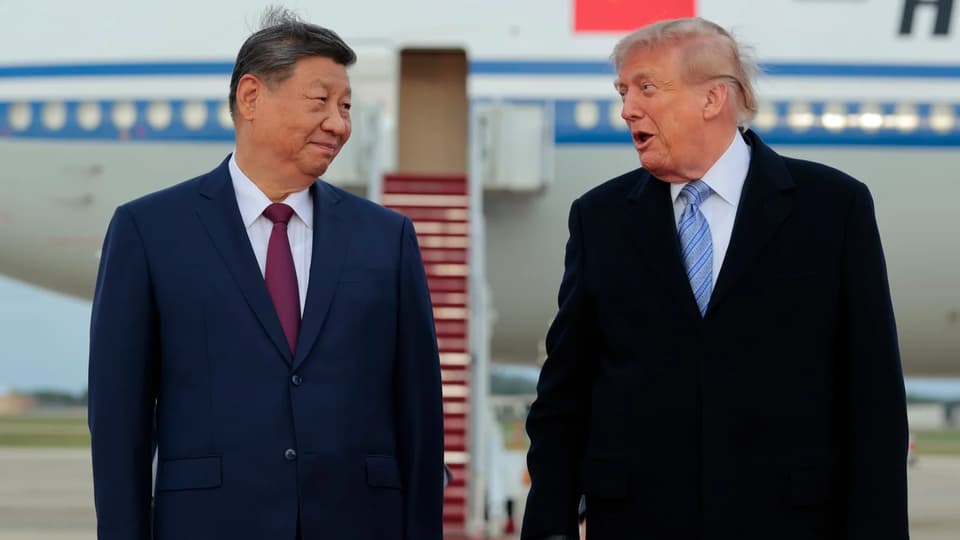
China and the United States have formalized a $30 billion reciprocal tariff reduction and established an AI dialogue mechanism following President Xi Jinping’s three-day visit to Washington. The agreement, part of an eight-point consensus, includes the creation of a trade council and extends a previous trade truce by two months. While the summit emphasized personal diplomacy over major public breakthroughs, it sets the stage for continued economic engagement and technical discussions on AI risks.
Key points
- China and the U.S. agreed to a $30 billion reciprocal tariff-reduction arrangement, as stated by the Chinese Foreign Ministry.
- The two nations will launch a dialogue on artificial intelligence, with the next round of discussions scheduled for November, and establish a communication channel for AI-related incidents.
- A new trade council has been set up to manage commercial flows, extending the outcomes of earlier talks in Kuala Lumpur.
- The existing trade truce, which was due to expire on November 10, has been extended by two months to allow time for a potentially larger deal.
- Beyond economics, the leaders agreed to support each other in hosting the APEC and G20 summits and agreed that Iran should not develop nuclear weapons.
Background
This development follows recent tensions regarding AI, where the U.S. accused China of 'industrial-scale distillation' of American models, and disputes over global transshipping practices that allegedly allowed China to evade U.S. tariffs. Earlier this month, a preliminary $30 billion trade framework for non-sensitive goods was confirmed, focusing on agricultural products and medical devices. The current agreement builds on these prior negotiations, aiming to isolate commercial flows from broader geopolitical disputes while addressing compliance issues related to soybean purchases and rare earth access.
How outlets are covering it
CNBC reports that the summit showcased personal diplomacy rather than large public breakthroughs, highlighting the eight-point consensus and specific agreements on AI and trade councils. The Chinese Foreign Ministry emphasized the reciprocal nature of the tariff cuts and the establishment of an AI dialogue. In contrast, the U.S. Treasury Secretary Scott Bessent focused on the extension of the trade truce as a mechanism to secure a potentially bigger deal. While CNBC notes the U.S. Embassy did not immediately comment, the Chinese side provided detailed specifics on the AI communication channel and the trade council, suggesting a divergence in public emphasis between the two governments regarding the immediate outcomes of the summit.
Why it matters
The agreement stabilizes U.S.-China economic relations by reducing $30 billion in tariffs and creating structured channels for AI governance, which is critical given recent accusations of AI model copying. The extension of the trade truce provides a window for deeper negotiations, potentially influencing global supply chains and technology competition. The diplomatic coordination on APEC and G20 hosting signals a temporary de-escalation in broader geopolitical tensions, allowing for continued engagement despite underlying strategic rivalries.
What to watch
The next round of AI discussions is scheduled for November. The U.S. administration plans to release detailed specifications of the trade framework on Monday. The two-month extension of the trade truce will allow for further assessment of Chinese compliance with previous commitments, potentially leading to a larger trade deal before the original expiration date.
- China, U.S. agree to $30 billion tariff cut, AI dialogue during Xi visit, Beijing says CNBC
- U.S., China reach $30 billion tariff deal after Trump-Xi summit Axios
- Details on U.S.-China trade negotiations coming Monday, USTR Greer says CNBC
- US, China agree to cut tariffs on $30 billion worth of goods, set up channel for AI incidents The Hill
- China, US agree to $30 billion tariff cut, AI dialogue during Xi visit, Beijing says Reuters
Want the full story? Read the original reporting
Read on CNBC