
Supreme Court Divided on Whether Federal Law Blocks Boulder’s Climate Suit Against Oil Giants
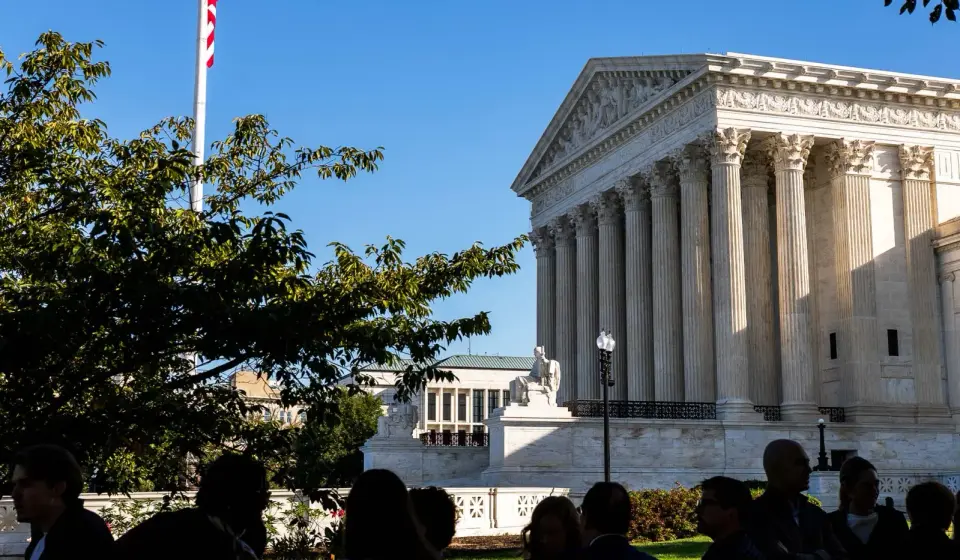
The Supreme Court heard oral arguments in Suncor Energy Inc. v. County Commissioners of Boulder County, a case determining whether federal law preempts state tort suits against fossil fuel companies for climate damages. With Justice Alito recused, a 4-4 split could leave the Colorado Supreme Court’s ruling intact, allowing the case to proceed. Justices signaled deep divisions, with conservatives emphasizing federal preemption and liberals questioning the legal basis for dismissing the suit.
Key points
- The case involves Boulder County’s lawsuit against Suncor and ExxonMobil for climate-related damages, seeking compensation for costs incurred due to alleged effects of climate change.
- The energy companies argue that federal law, including the Clean Air Act, preempts state tort claims, while Boulder contends that state law can apply to injuries within its borders even if the conduct occurred elsewhere.
- Justice Barrett questioned whether Colorado could pass a law capping emissions in other states, to which Boulder’s lawyer conceded it could not, but argued the tort suit is different.
- Justice Kavanaugh emphasized that federal law governs interstate pollution, while Justice Kagan questioned the legal basis for the energy companies’ preemption argument.
- A 4-4 split due to Alito’s recusal could leave the lower court’s ruling in place, allowing Boulder’s case to move forward without setting a national precedent.
Background
This case is part of a broader trend of climate litigation against fossil fuel companies, with dozens of similar suits pending in state courts. The Supreme Court’s decision could impact the viability of these lawsuits and the role of federal law in regulating climate-related damages. Previous cases, such as American Electric Power Co. v. Connecticut, have established that federal common law governs interstate pollution, but the application to climate change remains contested.
How outlets are covering it
The National Review argues that Boulder’s suit is an attempt to regulate interstate emissions through state tort law, which is constitutionally impermissible. The New York Times highlights the potential for a 'get-out-of-jail-free card' for fossil fuel companies if the court rules in their favor, emphasizing the political implications. SCOTUSblog notes the mixed signals from the justices, with some skeptical of the energy companies’ arguments and others concerned about the potential flood of lawsuits if the case proceeds. The outlets differ in their emphasis: National Review focuses on constitutional principles, the New York Times on the political and environmental impact, and SCOTUSblog on the legal and procedural uncertainties.
Why it matters
The outcome of this case could determine the viability of state-level climate lawsuits against fossil fuel companies, potentially impacting billions of dollars in damages claims and shaping the legal landscape for climate litigation. A 4-4 split could leave the lower court’s ruling intact, allowing Boulder’s case to proceed without setting a national precedent, while a ruling in favor of the energy companies could dismiss similar suits nationwide.
What to watch
The Supreme Court is expected to issue a decision in the coming months, which could either dismiss the case or allow it to proceed. If the court rules in favor of the energy companies, it could set a precedent that preempts similar state tort suits. If the case proceeds, it could lead to a flood of similar lawsuits in other states, potentially impacting the fossil fuel industry and climate policy.
- The Supreme Court Asked the Question Boulder Can’t Answer National Review
- Opinion | The Science That Has Oil Companies Running Scared The New York Times
- Opinion | If Boulder County Is So Eager to Sue, Why Not Sue Us All? WSJ
- Court sends mixed signals on whether it will allow state-tort suits seeking to hold energy companies liable for climate change to go forward SCOTUSblog
- Supreme Court wrestles with Boulder’s climate lawsuit against fossil fuel companies The Hill
Want the full story? Read the original reporting
Read on National Review