
St. Johns County freezes hiring and pauses $100M in projects after Amendment 3 tax cuts
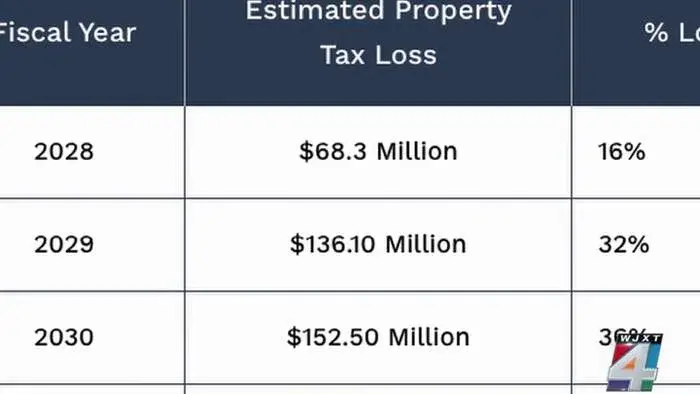
St. Johns County is implementing immediate budget reductions following the approval of Amendment 3, a property tax reform that will significantly reduce ad valorem revenue. The county has paused approximately $100 million in capital projects, including a new fire station, and imposed an indefinite hiring freeze. Officials project revenue losses of up to 45% by 2032, forcing potential cuts to non-mandated services like parks and libraries. While some smaller municipalities report minimal impact due to lower homestead rates, state-wide estimates suggest billions in lost revenue, prompting concerns about service reductions across Florida.
Key points
- St. Johns County faces projected revenue reductions of $68.3 million in 2028, $136.1 million in 2029, and $191.6 million by 2032.
- The county has placed roughly $100 million in capital improvement projects on hold, including a planned fire station in the Beachwalk area.
- An indefinite hiring freeze is in effect, and the county has set aside $31.2 million in emergency reserves and $30 million in general fund reserves.
- Non-mandated services such as parks, recreation, libraries, and Health and Human Services are under review for potential elimination.
- Florida voters approved Amendment 3 on November 3, expanding the homestead exemption from $50,000 to $150,000 in 2027 and $250,000 in 2028.
- Statewide estimates project local governments could lose $4.9 billion in the first year, rising to over $11 billion annually by 2031-32.
Background
Amendment 3 was approved by Florida voters on November 3, 2026, following a special legislative session called by Governor Ron DeSantis. The measure expands the homestead exemption for non-school property taxes, aiming to reduce tax burdens on homeowners. Previous coverage of local government budget adjustments, such as those in California and corporate restructuring in tech, highlights broader trends of financial pressure and efficiency measures, but Amendment 3 represents a unique, state-wide fiscal shift affecting local services directly.
How outlets are covering it
WJXT reports on St. Johns County’s proactive measures, including reserve allocations and service reviews, emphasizing the 'painful' nature of the cuts. Bay News 9 highlights that some Pinellas County beach cities, like Treasure Island and Indian Rocks Beach, may face less severe impacts due to lower homestead rates and existing reserve funds. The Sarasota Herald-Tribune offers a mixed view, noting that while voters approved the amendment, local officials must now decide whether to honor fiscal restraint or impose new fees. Prism provides a critical perspective, citing opponents who argue the amendment will shift costs to renters and small businesses, potentially leading to service cuts in areas like emergency response and public works. DeSantis has promised a 'taxpayer bill of rights' and state grants to mitigate impacts, but critics remain skeptical of the long-term consequences.
Why it matters
The implementation of Amendment 3 will directly impact the availability and quality of local public services across Florida, including emergency response, parks, libraries, and infrastructure maintenance. As local governments face significant revenue shortfalls, residents may experience reduced services or increased fees, affecting daily life and community well-being. The outcome will also influence future state and local fiscal policies, potentially setting precedents for how governments manage budget constraints in the face of tax reforms.
What to watch
St. Johns County plans to hold a public discussion in December to finalize budget cuts and service adjustments. Statewide, local governments will continue to prepare budgets for the coming fiscal years, with revenue losses increasing as the homestead exemption expands. The Florida Legislature is expected to establish procedures for further exemption adjustments, and state grants may be allocated to support core services. Ongoing debates will focus on whether the financial burden shifts to other taxpayers or results in reduced public services.
- ‘It’s going to be painful’: St. Johns County puts fire station on hold, plans staff cuts amid Amendment 3 fallout News4JAX
- Amendment 3 may hit Pinellas County's beach cities differently, officials say Bay News 9
- I lost my Sarasota race. Amendment 3 gave me reason to cheer | Opinion Sarasota Herald-Tribune
- Florida votes for massive property tax cuts, raising fears of local service cuts Prism
- Sanford commissioners review potential layoffs and service cuts WFTV
Want the full story? Read the original reporting
Read on News4JAX