
2026 Minnesota State Fair Sets Early Attendance Records Amid Weather and Transit Strains
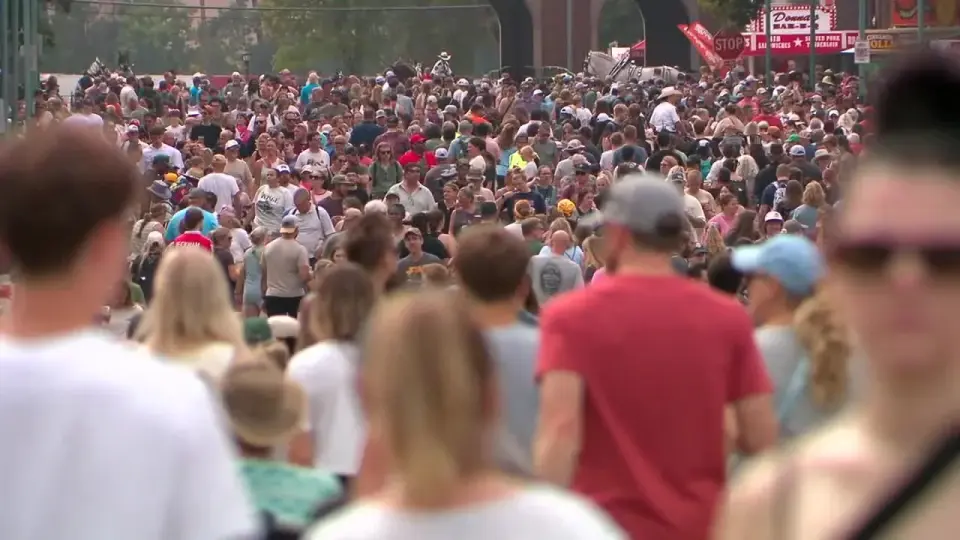
The 2026 Minnesota State Fair has recorded its highest attendance in the first four days of its history, drawing over 729,000 visitors. While the fair faces logistical challenges, including shuttle delays and potential late-week storms, public health officials report low mosquito activity. Current projections suggest the event may approach, but likely not surpass, the 2019 all-time attendance record due to expected weekend dips.
Key points
- 729,146 people attended the fair from Thursday through Sunday, exceeding all previous four-day totals.
- Daily averages reached over 182,000 visitors, with the first two days setting individual daily records.
- If the current pace continues, the fair could reach 2.9 million total visitors, far exceeding the 2019 record of 2.1 million.
- However, attendance typically declines after the initial weekend, making the current pace unlikely to sustain through the final eight days.
- Metro Transit is adjusting routes and adding capacity to manage record crowds and shuttle delays.
- Late Tuesday night storms are forecast for southern Minnesota, though minimal impact is expected at the fairgrounds.
Background
The 2026 fair has already broken opening-day and Friday attendance records, with 155,185 and 204,065 visitors respectively. Record crop art submissions and sunny weather have contributed to the surge. The fair runs through September 7, with the 2019 record of 2,126,551 total visitors serving as the benchmark for all-time attendance.
How outlets are covering it
KSTP emphasizes the unprecedented scale of early attendance, using comparisons to city populations and per-second visitor rates to highlight the record-breaking nature of the event. MPR News focuses on the immediate weather and public health implications, noting that while late-week storms may affect southern Minnesota, the fairgrounds will remain largely dry, and mosquito-borne disease risks remain low due to mild conditions. The two outlets complement each other by addressing both the quantitative success of the fair and the logistical and environmental factors affecting attendees.
Why it matters
Record attendance strains infrastructure, including transit and public health systems, while setting new benchmarks for future events. Understanding these dynamics helps attendees plan visits and local authorities manage resources effectively.
What to watch
Attendance is expected to dip after the initial weekend, but the fair will continue through September 7. Metro Transit will maintain adjusted routes to manage crowds, and weather forecasts will be monitored for potential late-week storms. Public health officials will continue to monitor mosquito activity, though current levels are low.
Want the full story? Read the original reporting
Read on 5 EYEWITNESS NEWS