
Texas Guard F-16 crashes in Michigan during training, pilot ejects safely
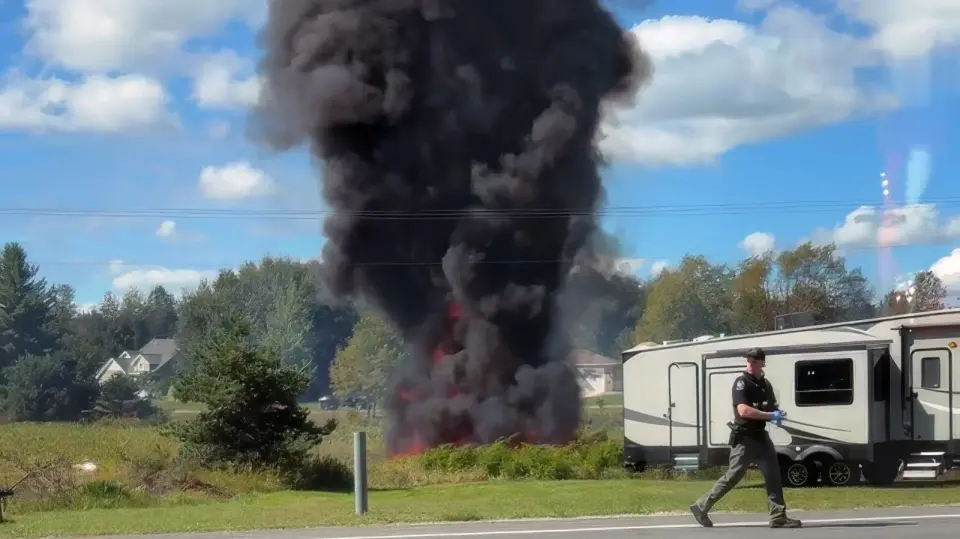
An F-16 Fighting Falcon from the Texas Air National Guard crashed in a field near Traverse City, Michigan, on September 17, 2026. The pilot ejected safely and was hospitalized in stable condition. The incident occurred during a routine training mission, triggering a one-mile evacuation due to a hazardous chemical spill. No civilians were injured, and the cause remains under investigation.
Key points
- The aircraft belonged to the 149th Fighter Wing, based in Texas, and was participating in Operation Northern Cactus.
- The pilot ejected before impact and was transported to Munson Medical Center in stable condition.
- Emergency officials ordered a one-mile evacuation due to a chemical spill, likely involving hydrazine.
- Witnesses reported seeing the jet fly low and slow before the crash, with some hearing a loud bang.
- No civilian injuries or property damage were reported, though the area was cordoned off.
Background
This incident follows a pattern of recent military aircraft mishaps during training exercises, including a Marine F/A-18 crash in Washington in August 2026. The 149th Fighter Wing had announced its participation in Operation Northern Cactus just one day prior to the crash. The F-16 has experienced at least 14 'Class A mishaps' since 2000, according to the Air Force Safety Center.
How outlets are covering it
The Detroit News and Fox News emphasize the routine nature of the training mission and the pilot's safe ejection. CNN and NDTV highlight a potential bird strike, citing audio from a wingman who reported a 'possible Mayday' and suspected bird impact. The Texas Military Department confirmed the incident but declined to release details on the cause or the pilot's identity, citing military policy. All sources agree on the evacuation order due to a chemical spill, though NDTV specifically notes the use of hydrazine in F-16 emergency power units.
Why it matters
The crash underscores the risks associated with military training exercises in populated areas and the immediate response required for hazardous material spills. It also highlights the ongoing investigation into potential causes, such as bird strikes, which are a known hazard in aviation. The safe ejection of the pilot is a positive outcome, but the incident raises questions about safety protocols and environmental impact.
What to watch
Investigators from the Grand Traverse County Sheriff's Office and military personnel are working to determine the cause of the crash. The military has not released the pilot's identity or specific injury details. Further updates on the investigation and the nature of the chemical spill are expected as the inquiry progresses.
- F-16 crashes in Grand Traverse Co. in fiery wreck The Detroit News
- Military F-16 fighter jet crashes and bursts into flames in Michigan during training exercise CNN
- "We Have A Possible Mayday": Pilot Reported Bird Strike Before US F-16 Crash NDTV
- Texas Air National Guard pilot ejects safely before F-16 crash in Michigan Fox News
- UPDATE: Evacuation order lifted, County Road 633 now open 9and10News.com
Want the full story? Read the original reporting
Read on The Detroit News