
USS Abraham Lincoln Crew Faces Prolonged Deployment, Supply Chain Strain, and Mental Health Concerns
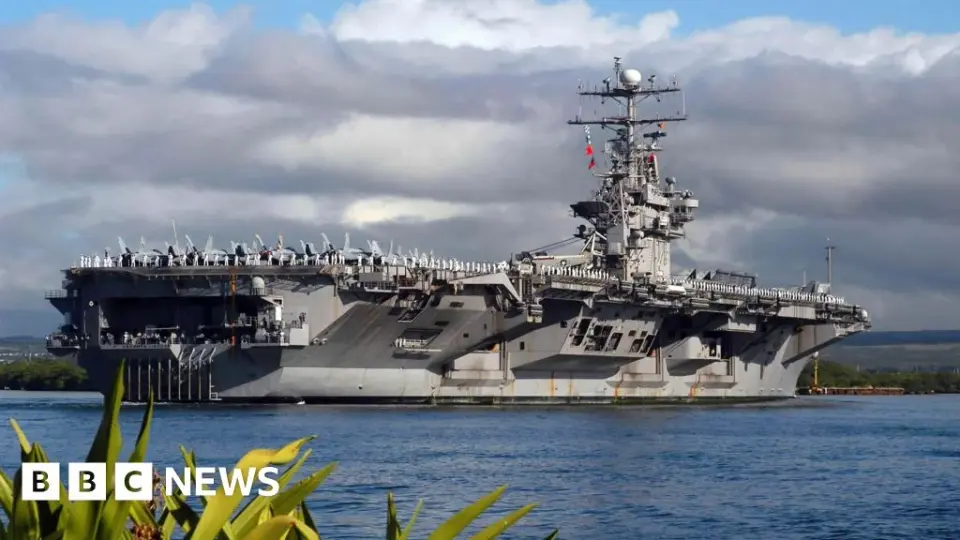
The USS Abraham Lincoln has been deployed for over nine months in the Middle East as part of the US-Iran conflict, leading to reports of food shortages, plumbing issues, and mental health struggles among its 5,000 crew members. While military officials dispute the severity of these issues, family members and some veterans express concern about the crew's well-being. The ship is being relieved by the USS George Washington, which is expected to arrive in the region within a week.
Key points
- The USS Abraham Lincoln has been deployed since December 2025, exceeding the typical deployment length and leading to reports of food shortages, broken plumbing, and exhaustion.
- Family members of sailors have expressed concern about their mental health, with some sailors reportedly attempting to jump overboard.
- Military officials, including Admiral Brad Cooper and retired Navy Lt Commander Steve Rogers, have disputed the severity of the issues, calling media reports '99% hype' and 'completely misrepresented.'
- The USS George Washington is being deployed to relieve the USS Abraham Lincoln, which is expected to return to its homeport of San Diego.
- The change in supply bases from Bahrain to Diego Garcia, which is 2,100 miles away, has contributed to supply chain issues and the loss of 'liberty ports' for crew rest and recreation.
Background
The USS Abraham Lincoln's deployment is part of the broader US-Iran conflict, which began in December 2025. The ship has been serving as a floating base for aerial combat operations in the Arabian Sea. Previous deployments, such as the USS Carl Vinson during the 2001 Afghanistan war, have shown similar patterns of crew exhaustion and mental health struggles over extended periods. The US Navy has an 11-carrier fleet, which allows for continuous deployment but requires careful management to avoid burning out crews.
How outlets are covering it
BBC and CNN report on the harsh conditions and mental health struggles aboard the USS Abraham Lincoln, with CNN noting a mix of hardship and resilience among the crew. Military officials, including Admiral Brad Cooper and retired Navy Lt Commander Steve Rogers, dispute the severity of the issues, calling media reports '99% hype' and 'completely misrepresented.' Axios highlights the strategic implications of the carrier's absence from the Pacific, noting that China could exploit the gap to increase its presence in the region. USA Today focuses on the supply chain issues, noting the 2,100-mile distance between the ship and its nearest resupply hub, which has contributed to shortages and the loss of 'liberty ports' for crew rest and recreation.
Why it matters
The situation aboard the USS Abraham Lincoln highlights the challenges of prolonged naval deployments and the impact on crew well-being. It also raises questions about the US military's ability to manage its carrier fleet effectively, particularly in the context of multiple simultaneous conflicts. The strategic implications of the carrier's absence from the Pacific could affect US alliances and China's regional influence.
What to watch
The USS George Washington is expected to arrive in the Middle East within a week to relieve the USS Abraham Lincoln. The Lincoln is expected to return to its homeport of San Diego. The US military will need to manage its carrier fleet carefully to avoid similar issues in the future, particularly in the context of the ongoing US-Iran conflict and the strategic importance of the Pacific region.
- What is it like to be on a warship for months? BBC
- Sen. Mark Kelly says USS Lincoln sailors ‘can’t get basic needs met’ NPR
- Middle East demands are testing America's Pacific presence Axios
- Aboard the USS Abraham Lincoln, where hardship and resilience share quarters CNN
- Maps capture the travel strain on USS Abraham Lincoln aircraft carrier USA Today
Want the full story? Read the original reporting
Read on BBC