
25 Years After 9/11, Unresolved Questions Linger Over FBI’s Handling of Saudi Suspect Omar al-Bayoumi
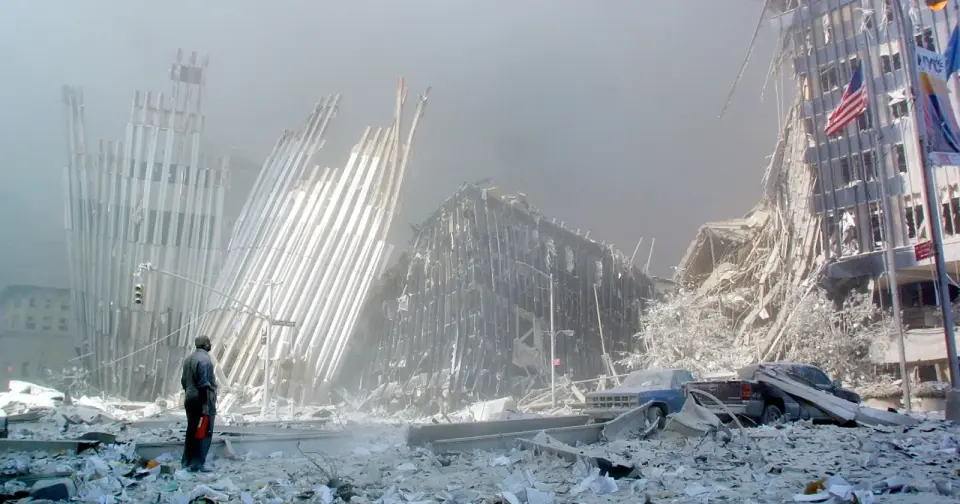
As the 25th anniversary of the September 11 attacks approaches, new evidence and testimony have reignited scrutiny over the FBI’s handling of Omar al-Bayoumi, a Saudi national who assisted two hijackers in San Diego. While the FBI long claimed his involvement was accidental, newly released videos and documents suggest he was a Saudi intelligence asset with ties to extremists. Families of victims are demanding transparency, arguing that the Justice Department has withheld critical evidence and failed to pursue charges against Bayoumi or Saudi officials.
Key points
- Omar al-Bayoumi, a Saudi graduate student, was arrested in the UK days after 9/11 at the FBI’s request. British police seized a trove of evidence, including a handwritten diagram of a plane’s descent trajectory and videos showing him with Anwar al-Awlaki, a future al-Qaida leader.
- The FBI’s leadership, including then-Director Robert Mueller, concluded that Bayoumi’s assistance to the hijackers was unwitting and that he was not a suspect. This stance was maintained for years, despite field agents in San Diego and London expressing skepticism.
- Newly declassified documents and videos, obtained by the BBC and ProPublica, show Bayoumi had extensive links to Saudi government officials and the Ministry of Islamic Affairs. The paintballing video, which shows him with Awlaki, was not shared with British interrogators or fully analyzed by the FBI.
- The 9/11 families’ lawsuit against Saudi Arabia has gained momentum after a federal judge ruled in 2025 that there was sufficient evidence to infer Saudi complicity. Families are demanding the release of unredacted files and are critical of the Trump administration’s close ties with Saudi Arabia.
- The FBI’s handling of the Bayoumi case has been criticized for a lack of transparency and coordination. Key evidence, such as the plane diagram, was not shared with all investigators, and the case was eventually closed in 2016 despite ongoing questions from field agents.
Background
The 9/11 attacks killed nearly 3,000 people and led to a massive investigation by the FBI and other agencies. Omar al-Bayoumi, a Saudi national, was identified as a potential suspect after he assisted two hijackers, Nawaf al-Hazmi and Khalid al-Mihdhar, in San Diego in 2000. The FBI’s initial investigation concluded that Bayoumi’s involvement was accidental, but this conclusion has been challenged by new evidence and testimony. The 9/11 families have been fighting for accountability through a civil lawsuit against Saudi Arabia, which has been ongoing for years. The Trump administration’s close ties with Saudi Arabia have raised concerns about the government’s commitment to pursuing the truth.
How outlets are covering it
ProPublica and the BBC emphasize the FBI’s failure to share critical evidence with investigators and the lack of transparency in the Bayoumi case. They highlight the new videos and documents that contradict the FBI’s long-standing claim that Bayoumi’s involvement was accidental. The Guardian focuses on the emotional toll on the 9/11 families and their demand for accountability, noting the recent federal judge’s ruling in their favor. Axios highlights the political dimension, with 9/11 widows criticizing the Trump administration for protecting Saudi Arabia and demanding the release of unredacted files. All sources agree that the Bayoumi case remains unresolved and that the evidence raises serious questions about Saudi involvement in the 9/11 attacks.
Why it matters
The unresolved questions surrounding Omar al-Bayoumi and the FBI’s handling of the case raise broader concerns about the transparency and effectiveness of the US government’s counter-terrorism efforts. The new evidence and testimony challenge the long-standing narrative that Bayoumi’s involvement was accidental and suggest that the FBI may have failed to pursue a significant lead. The 9/11 families’ demand for accountability and the release of unredacted files highlight the ongoing struggle for justice and truth. The case also raises questions about the US government’s relationship with Saudi Arabia and the potential for political influence on the investigation.
What to watch
The 9/11 families are expected to continue their push for the release of unredacted files and for the Trump administration to take a stronger stance against Saudi Arabia. The civil lawsuit against Saudi Arabia is expected to proceed to trial, with the 2025 federal judge’s ruling providing a significant boost to the plaintiffs’ case. The FBI and Justice Department are likely to face increased scrutiny over their handling of the Bayoumi case, and there may be calls for a new investigation or review of the evidence. The 25th anniversary of the 9/11 attacks will likely bring renewed attention to the unresolved questions surrounding the case.
- 25 Years After 9/11, Questions About the FBI’s Pursuit of Saudi Suspects in the Case Have Only Grown ProPublica
- 9/11 widow blasts Saudi Arabia in annual ceremony Axios
- New videos of man in 9/11 lawsuit reveal links to extremists and Saudi state BBC
- Victim families say it has ‘taken way too long’ to hold Saudi Arabia accountable for alleged support on 9/11 theguardian.com
- 9/11 families push Trump to release more evidence about alleged hijacker accomplice WSB-TV
Want the full story? Read the original reporting
Read on ProPublica