
Wendell Berry, Kentucky’s Agrarian Prophet, Dies at 92
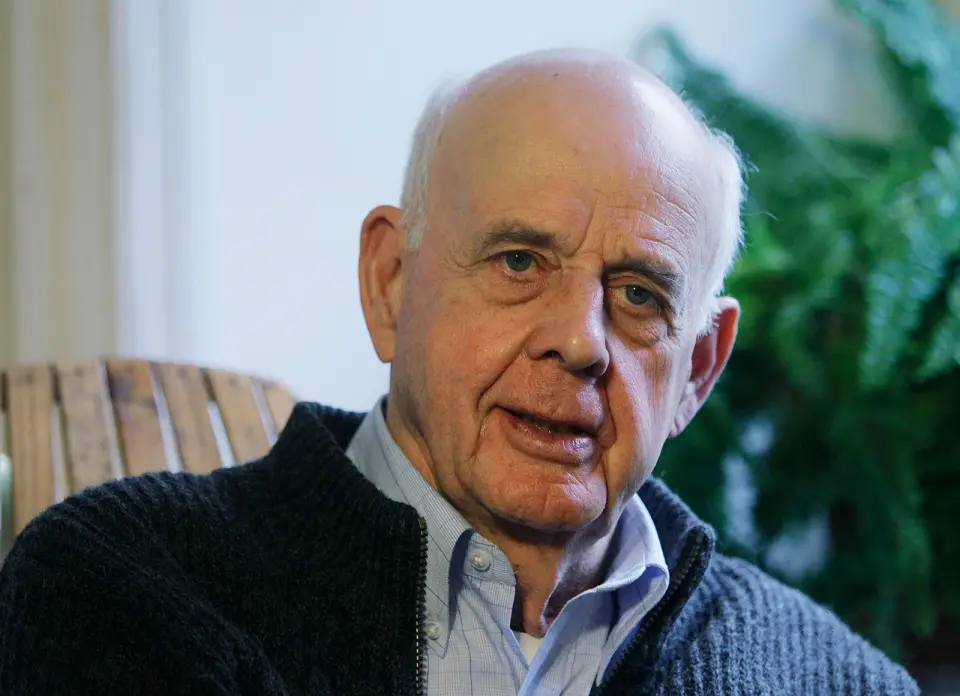
Wendell Berry, the acclaimed author, farmer, and environmentalist, died at age 92 on Aug. 31 in Port Royal, Kentucky. Known for his critique of industrial agriculture and his defense of rural community, Berry was celebrated by religious scholars as a 'modern-day prophet' who linked land stewardship to spiritual life. His work, including the Port William novels and essays like 'The Unsettling of America,' influenced fields from environmental studies to theology. Berry, a lifelong Baptist who often preferred solitary walks in the woods to church services, received the National Humanities Medal in 2011 and the Martin E. Marty Award in 2013. He is survived by his wife, Tanya, and two children.
Key points
- Wendell Berry died at age 92 on Aug. 31 at his home in Port Royal, Kentucky.
- He was a prolific writer of over 50 books, including novels, poetry, and essays focused on agrarian life and community.
- Religious scholars, such as Norman Wirzba of Duke Divinity School, described Berry as a 'prophet' who connected land preservation to community vitality.
- Berry was a lifelong Baptist but described himself as a 'forest Christian,' often preferring solitary walks to institutional worship.
- He received the National Humanities Medal from President Obama in 2011 and the Martin E. Marty Award in 2013.
- His legacy includes the Berry Farming Program, now led by The Berry Center in New Castle, Kentucky, directed by his daughter Mary.
Background
Wendell Berry (1934–2026) was a central figure in American agrarian literature and environmental activism. Born in Louisville but raised on a farm in Henry County, Kentucky, he returned to his ancestral land at age 30 after academic stints at Stanford and New York University. His work, particularly the Port William series and 'The Unsettling of America,' argued that sustainable farming is a cultural and spiritual discipline, not just an economic one. He influenced figures like Michael Pollan and Alice Waters, and his ideas on 'membership' and 'belonging' resonated across political and religious lines. Earlier coverage noted his death as a significant loss to rural literature and environmental thought, highlighting his role as a 'literary guardian' of Kentucky’s agrarian values.
How outlets are covering it
RNS emphasized Berry’s impact on religious scholarship, noting that theologians like Norman Wirzba and Ellen Davis saw his work as bridging environmental ethics and biblical theology. RNS highlighted his 2013 Martin E. Marty Award and his influence on the 'public understanding of religion.' Christianity Today, through Russell Moore, focused on Berry’s theological views, particularly his critique of the separation of body and soul, and his belief that heaven and earth are inseparable. Moore noted Berry’s 'grumpy' stance on traditional heaven talk but his deep belief in a 'love-made land.' Baptist News Global (BNG) portrayed Berry as a 'contrarian' and 'patron saint' for iconoclastic Baptists, highlighting his activism, including protests against nuclear power and the death penalty, and his unconventional relationship with institutional church. BNG noted his preference for a plow and mule over modern machinery, which led to him being labeled both a 'philistine' and a 'prophet.' All sources agreed on his death date, age, and his core advocacy for sustainable agriculture and community, but differed in emphasis: RNS on religious academia, CT on theological philosophy, and BNG on political activism and Baptist identity.
Why it matters
Wendell Berry’s death marks the end of an era for American agrarian thought. His insistence that environmental stewardship is inseparable from community and spiritual life has influenced environmental policy, religious ethics, and literary criticism. His legacy continues through The Berry Center, which advocates for farmers and sustainable economies. Berry’s work challenges modern industrialism and offers a model for 'membership' and 'belonging' that resonates in debates about rural life, environmental justice, and religious practice. His ability to appeal to both liberals and conservatives, while being criticized by both, underscores the complexity of his vision for a sustainable, humane society.
What to watch
The Berry Center, led by Mary Berry, will continue to advocate for farmers and sustainable agriculture. The annual Wendell Berry Lecture, scheduled for Sept. 10, was to be delivered by Ellen Davis, who had planned to honor Berry’s legacy. BSK Seminary, which partners with The Berry Center, will likely continue its collaboration. Berry’s estate, including his 50+ books and personal papers, will remain a resource for scholars and activists. His influence on environmental and religious thought is expected to persist through his writings and the institutions he supported.
- Wendell Berry, writer and farmer, was extolled by many as a modern-day prophet Religion News Service
- What Wendell Berry Taught Me About Heaven christianitytoday.com
- The Kentucky farmer who taught me how to live aleteia.org
- Wendell Berry dies at 92 Baptist News Global
- Died: Wendell Berry, Kentucky Poet and Novelist Who Loved God’s Creation christianitytoday.com
Want the full story? Read the original reporting
Read on Religion News Service