
Solicitor General Urges High Court to Overturn Ruling Blocking Transgender Troop Discharges
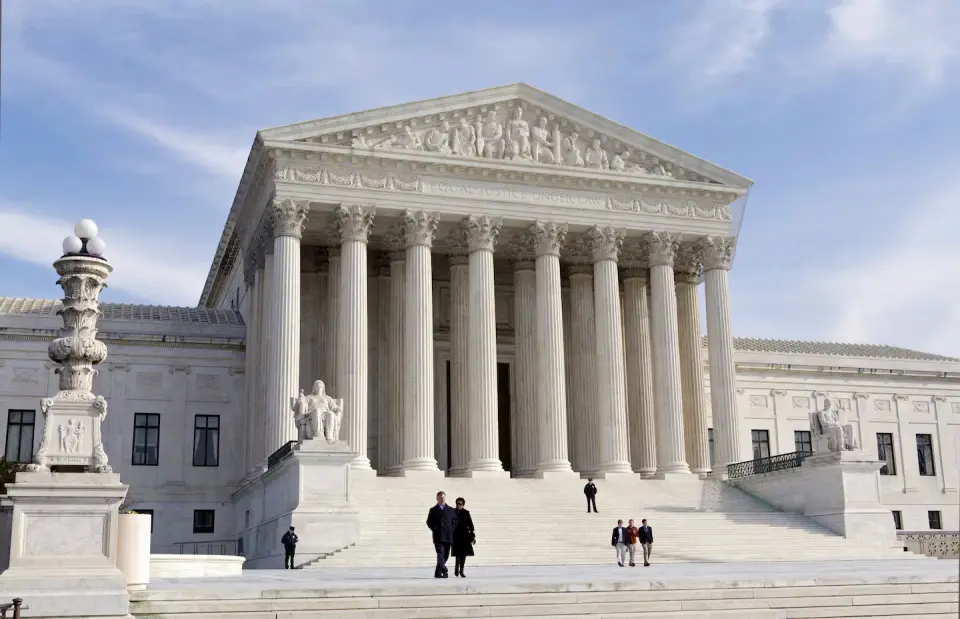
The Trump administration has petitioned the Supreme Court to review a lower court decision that blocked the discharge of approximately 28 transgender service members. Solicitor General D. John Sauer argues the ban is constitutionally valid and necessary for military readiness, while challengers contend the policy is motivated by animus and violates equal protection rights. The case, which stems from an executive order signed in 2025, could be heard in the term beginning in October.
Key points
- The petition seeks to overturn a D.C. Circuit ruling that prevented the military from discharging 28 transgender service members.
- Solicitor General D. John Sauer argues the ban is based on medical conditions rather than gender identity, warranting 'rational basis' review.
- Challengers argue the policy is 'soaked in animus' and fails to serve any legitimate government interest.
- The Supreme Court could decide whether to hear the case in the term starting in October 2026.
- A separate challenge in the 9th Circuit remains pending after a temporary freeze by the Supreme Court in May 2025.
Background
This legal battle follows the Trump administration's adoption of a transgender troop ban in 2025, shortly after the president's second-term inauguration. The policy, which disqualifies individuals with gender dysphoria or those who have undergone related medical interventions, has faced multiple legal challenges. Earlier this year, the Supreme Court temporarily froze a nationwide injunction in a separate Washington state case, while a D.C. district judge had previously blocked the ban's implementation, citing discriminatory intent.
How outlets are covering it
The Washington Post and CNN report that the administration is seeking to allow the discharge of roughly two dozen transgender troops, framing the issue as a test of the ban's constitutionality. SCOTUSblog provides detailed legal analysis, noting that Solicitor General D. John Sauer described the lower court's ruling as 'gravely erroneous' and an 'unprecedented intervention into military affairs.' Sauer argues that the policy classifies based on a medical condition, not gender, and thus should not face heightened scrutiny. Conversely, the challengers, including Judge Ana Reyes and the D.C. Circuit panel, emphasize that the ban is motivated by 'animosity' toward transgender people and lacks a legitimate government purpose. The outlets differ in emphasis: The Post and CNN focus on the immediate impact on service members, while SCOTUSblog details the legal standards and procedural history, including the 'rational basis' vs. 'heightened scrutiny' debate.
Why it matters
The outcome will determine whether the military can enforce a policy that excludes transgender individuals based on gender dysphoria, setting a precedent for the constitutionality of such bans. It also tests the limits of judicial deference to military decisions and the application of equal protection principles to gender identity. A Supreme Court ruling could impact thousands of current and prospective service members and influence future policies on gender identity in federal institutions.
What to watch
The challengers are expected to file a response to the petition within approximately one month. The Supreme Court will decide whether to grant certiorari and hear the case in the term beginning in October 2026. Meanwhile, a related case in the 9th Circuit remains pending, and the administration may continue to enforce the ban in areas not covered by existing injunctions.
- Trump asks Supreme Court to allow military to discharge transgender troops The Washington Post
- Trump asks Supreme Court to uphold military’s ban on transgender service members CNN
- Trump administration asks Supreme Court to allow military’s transgender ban The Hill
- Trump asks Supreme Court to intervene ahead of trial so the Pentagon can fire transgender troops Advocate.com
- Trump administration asks Supreme Court to consider ban on transgender persons in the military SCOTUSblog
Want the full story? Read the original reporting
Read on The Washington Post