
Dolores Huerta, UFW Co-Founder and Civil Rights Icon, Dies at 96
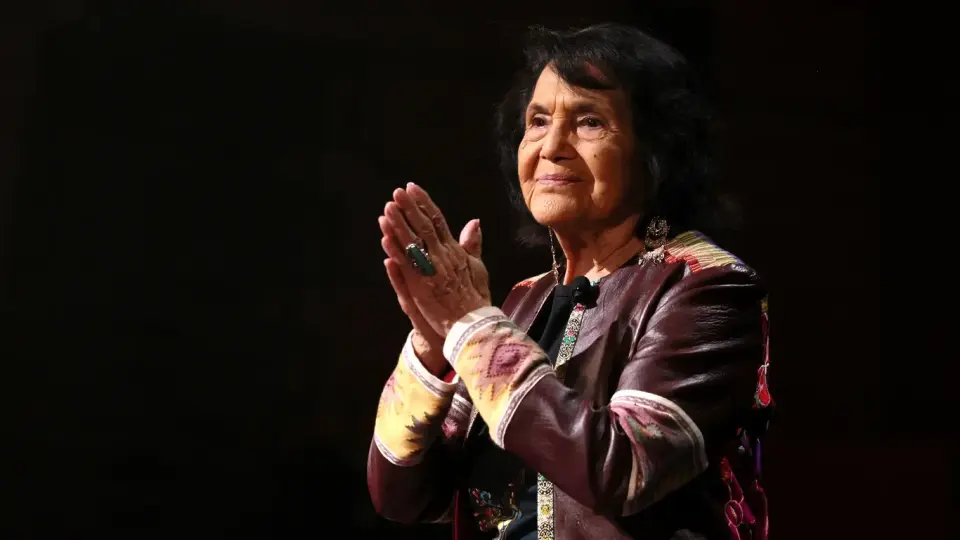
Dolores Huerta, the co-founder of the United Farm Workers (UFW) and creator of the slogan 'Sí, se puede,' has died at age 96 from cancer. She passed away at her home in Bakersfield, California, on Wednesday. Huerta was a pivotal figure in the 1960s and 1970s labor movement, leading strikes that secured health benefits and collective bargaining rights for farmworkers. Her legacy is complex, marked by her 2026 revelation that she was sexually abused by her longtime partner, Cesar Chavez, a secret she kept for decades to protect the movement. Tributes from political leaders and activists highlight her impact on labor, civil rights, and women's equality, while state officials have ordered flags to half-staff in her honor.
Key points
- Dolores Huerta died at 96 from cancer at her home in Bakersfield, California, on Wednesday, October 28, 2026.
- She co-founded the National Farm Workers Association in 1962 with Cesar Chavez and Gilbert Padilla, which later became the United Farm Workers (UFW).
- Huerta coined the slogan 'Sí, se puede,' which President Barack Obama later adapted for his 2008 campaign as 'Yes, we can.'
- In 2026, Huerta publicly revealed that Chavez sexually abused her in the 1960s, resulting in two children she kept secret for 60 years to protect the union's progress.
- North Carolina Governor Josh Stein ordered state and U.S. flags to half-staff from October 29 to November 2 in her honor.
Background
Our earlier coverage from late October 2026 established the core facts of Huerta's death and the ongoing debate surrounding her legacy. Previous reports noted that while she was celebrated as a labor icon, her 2026 disclosures regarding Chavez's abuse complicated her public image. The new information adds specific details about the cause of death, the family's request for privacy, and formal state mourning procedures.
How outlets are covering it
Axios emphasizes Huerta's role as a political kingmaker and her personal tragedy, noting her statement that she remained silent to protect her life's work. The New York Times highlights her strategic importance as the union's vice president and negotiator, contrasting her skills with Chavez's charismatic but abusive leadership. AP News provides a broader biographical context, detailing her 13 children, her injuries during a 1988 protest, and her recent encouragement for activists to 'stand up' against current injustices. The North Carolina government focuses on the formal recognition of her legacy through flag protocols, with officials praising her impact on Latino communities and women's rights.
Why it matters
Huerta's death marks the end of an era for the U.S. labor and civil rights movements. Her ability to negotiate contracts with agribusiness and her influence on Democratic politics shaped decades of policy. The public reckoning with her abuse by Chavez forces a re-evaluation of how society honors leaders who committed or enabled harm, balancing their contributions to justice with their personal failures. Her legacy continues to influence discussions on immigration, women's rights, and labor organizing.
What to watch
The family has requested privacy and indicated they will announce plans to celebrate her life and legacy in the coming days. State and local officials are expected to continue observing mourning periods, while activists and politicians may hold tributes honoring her work. The conversation around her complex legacy, particularly regarding the abuse she endured, will likely persist in media and academic discussions.
- Dolores Huerta, pioneering labor activist, dies at 96 Axios
- Dolores Huerta, Who Founded United Farm Workers With Cesar Chavez, Dies The New York Times
- Dolores Huerta, influential labor leader, feminist and civil rights icon, dies at 96 AP News
- Lowering U.S. and NC Flags to Half-Staff in Honor of Dolores Huerta NC Department of Administration (.gov)
- Contributor: Dolores Huerta was fearless about everything except her own flaws Los Angeles Times
Want the full story? Read the original reporting
Read on Axios