
Nevada, Virginia, and Pennsylvania compete for Trump’s $905M U.S. Space Academy
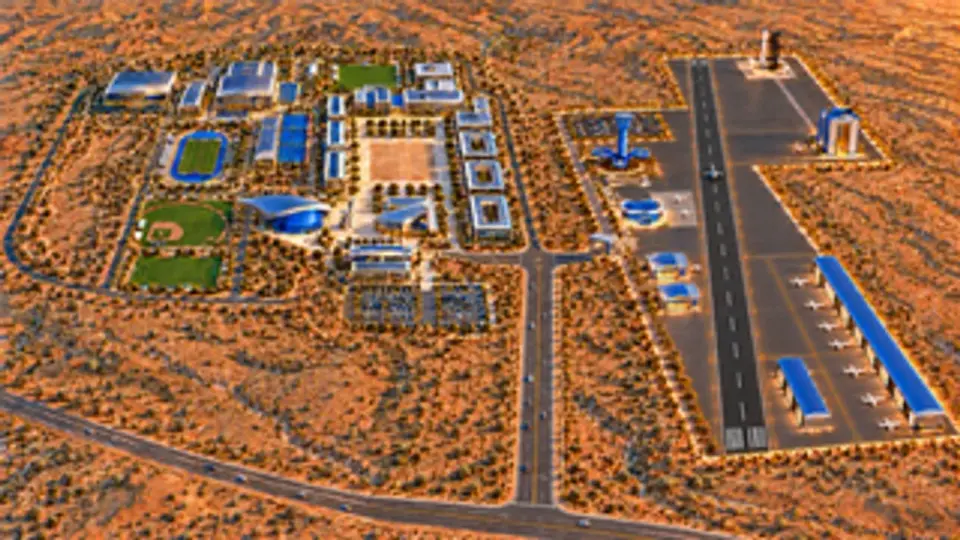
Multiple states are bidding to host a new U.S. Space Academy created by executive order. Nevada, Virginia, and Pennsylvania have submitted distinct proposals to NASA, with a federal decision expected by late December 2026.
Key points
- President Trump signed an executive order in August 2026 to establish a NASA-led U.S. Space Academy to train astronauts, scientists, and Space Force personnel.
- Nevada’s proposal, led by United Spaceports Corporation, targets a $905 million permanent campus in Clark County, utilizing 1,258 acres of federal land adjacent to a planned Las Vegas Spaceport.
- Virginia’s bid centers on a 600-acre campus in Hampton, integrating NASA Langley Research Center and Fort Monroe, with a satellite campus at the Mid-Atlantic Regional Spaceport.
- Pennsylvania’s proposal places the academy near Pittsburgh International Airport, backed by a consortium of major universities and a state pledge of up to $85 million in infrastructure funding.
- The federal government may spend up to $1 billion annually to operate the academy, with an initial class of approximately 300 cadets expected to begin training in 2028.
Background
The U.S. Space Force was established in 2019. In August 2026, President Trump signed an executive order directing NASA to create a civilian federal academic institution to train future leaders for the space sector. This follows a broader trend of states competing for federal aerospace investments, similar to recent infrastructure and research funding bids in Nevada and other regions.
How outlets are covering it
KSNV highlights Nevada’s proposal, emphasizing United Spaceports’ existing land holdings and the potential for commercial space innovation. WAVY and Axios focus on Virginia’s bid, stressing its existing aerospace infrastructure, including NASA Langley and Fort Monroe, and the support of the full congressional delegation. TribLIVE details Pennsylvania’s plan, noting the involvement of Penn State and other major universities, as well as the state’s financial commitment. While all proposals aim to attract federal funding and create jobs, they differ significantly in their reliance on existing military and NASA facilities versus new private development.
Why it matters
The selection of a host state will determine the location of a major federal educational and research institution, potentially shifting aerospace industry growth, job creation, and technological development toward one region. The academy’s establishment could influence the future of American space exploration and defense training, with implications for national security and economic competitiveness.
What to watch
NASA will review the state submissions and develop a recommendation for the permanent location, which will be reported to the president. A final decision is expected by late December 2026, with construction potentially beginning in 2027 and the first class of cadets enrolling in 2028.
- Southern Nevada emerges as contender for $905M U.S. space academy near Las Vegas Spaceport KSNV
- Shapiro, McCormick push for site near Pittsburgh to host U.S. Space Academy TribLIVE.com
- Maryland and Virginia compete to land Trump's new space academy Axios
- Arizona seeks to host US Space Academy with Flagstaff as a potential site 12News
- Could the United States Space Academy be established in Hampton? WAVY.com
Want the full story? Read the original reporting
Read on KSNV