
Trump and Netanyahu Reaffirm Iran Coordination Amid Renewed Regional Strikes
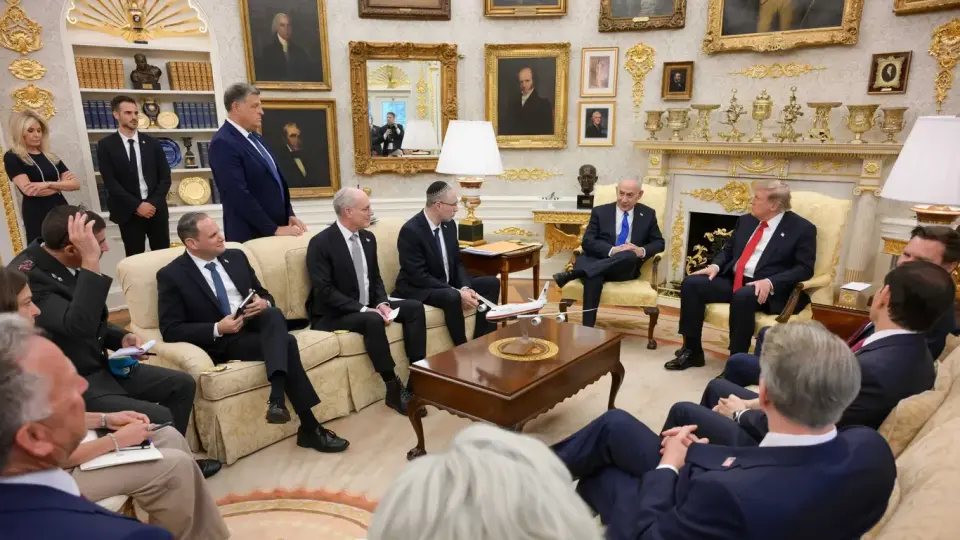
President Trump and Israeli Prime Minister Benjamin Netanyahu held a private, 90-minute meeting at the White House, describing it as productive despite recent public tensions. While they reaffirmed their shared goal of preventing Iran from acquiring nuclear weapons, the region saw immediate escalation, including US-Saudi strikes on Iranian proxies in Iraq and intercepted Iranian missile attacks.
Key points
- Trump and Netanyahu met privately in the Oval Office on Tuesday, with both sides describing the talks as positive and productive.
- The leaders discussed the ongoing Iran war, potential Saudi-Israel normalization, and the US sale of F-35s to Turkey, though the latter was reportedly not raised.
- US and Saudi forces conducted joint strikes against Iran-backed militias in Iraq, marking the first time Riyadh claimed responsibility for strikes inside Iraq.
- CENTCOM reported intercepting a surprise ballistic missile attack from Iran on US forces in the Middle East.
- Iranian state media claimed the Revolutionary Guards struck three oil tankers in the Strait of Hormuz.
Background
This meeting follows weeks of strained relations between Trump and Netanyahu, including public criticisms by the US president regarding the duration of the Iran war and Israel's actions in Lebanon. The conflict began in late February with Operation Epic Fury. Previous diplomatic efforts, including a tentative 14-point memorandum discussed at the G7, have not yet resulted in a formal peace agreement, and tensions remain high over the Strait of Hormuz and nuclear capabilities.
How outlets are covering it
Axios and CNN emphasized the diplomatic success of the meeting, noting that it resolved recent public tensions and reaffirmed coordination on Iran. However, they highlighted that the meeting occurred against a backdrop of significant military escalation. CNN and CBS News focused heavily on the immediate military developments, detailing joint US-Saudi strikes in Iraq and intercepted Iranian missiles, which contrasted with the diplomatic calm in Washington. CBS News also noted the human cost, reporting that at least 20 fighters were killed in the Iraqi strikes, while Axios focused more on the political dynamics between the two leaders.
Why it matters
The meeting signals a temporary stabilization in US-Israel relations, which is crucial for coordinating military and diplomatic strategies against Iran. However, the simultaneous escalation in Iraq and the Strait of Hormuz indicates that the conflict remains volatile. The joint US-Saudi strikes mark a significant shift in Saudi Arabia's involvement, moving from passive defense to active offensive operations, which could further complicate regional diplomacy and oil supply chains.
What to watch
Analysts will watch for further diplomatic progress between the US and Iran, particularly regarding the Strait of Hormuz and nuclear negotiations. Military operations in Iraq and the Red Sea are likely to continue, with potential for further retaliation from Iranian proxies. The outcome of the Saudi-Israel normalization discussions will also be a key indicator of broader regional shifts.
- Trump, Netanyahu tout "productive" meeting after weeks of tensions Axios
- Live updates: Trump and Netanyahu meet at White House as US president brushes off pressure to escalate Iran war CNN
- Trump, Netanyahu Meet at White House, US Dials Back Iran Threats Bloomberg.com
- Iran War Updates: Trump meets Israel's Netanyahu as his threat to resume bombing Iran looms over diplomacy CBS News
- Netanyahu: Trump meeting was ‘one of the best we’ve ever had’ The Times of Israel
Want the full story? Read the original reporting
Read on Axios