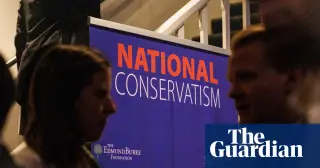
The National Conservatism conference in Jerusalem brings together US Christian nationalists, European far-right figures, and Israeli extremists, raising concerns about the normalization of antisemitic ideologies within mainstream conservative circles.
The US Senate blocked a resolution requiring the State Department to report on the deaths of nine American citizens in the West Bank and the detention of Palestinian children. The measure failed 47-53, with all Republicans voting against it and only one Democrat opposing it. The resolution cited a lack of accountability from both Israeli and US authorities regarding these deaths and ongoing human rights abuses.
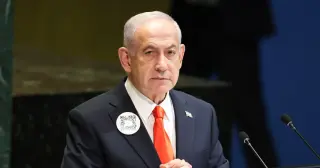
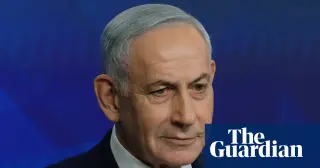
Benjamin Netanyahu is addressing the UN General Assembly on Thursday, but analysts suggest his primary audience is Israeli voters ahead of the October 27 election. The visit is marked by diplomatic isolation, including a lack of meetings with President Trump and protests from New York Mayor Zohran Mamdani. Netanyahu aims to project strength against international criticism, though his domestic support faces challenges from the right wing and recent electoral disqualifications.
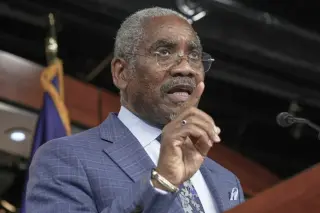
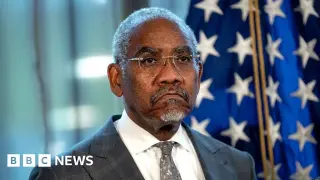
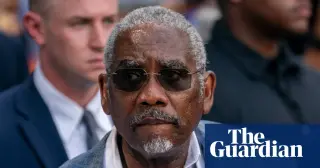
House Foreign Affairs Committee Democrat Gregory Meeks has placed an informal hold on a proposed $2.8 billion US arms sale to Israel, blocking the transfer of 40,000 heavy 2,000-pound bombs. The package, funded through Foreign Military Financing, includes MK-84 and BLU-117 bombs as well as I-2000 penetrator warheads. Meeks cited insufficient assurances that the weapons would be used in accordance with US law and international humanitarian standards. While the hold does not veto the sale, it delays the process and highlights growing congressional scrutiny of US military support for Israel amid ongoing conflicts in Gaza and Lebanon.
Rep. Gregory Meeks has placed an informal hold on a $2.8 billion US arms sale to Israel, citing insufficient assurances that 40,000 heavy bombs will be used lawfully. The move blocks the transfer of MK-84 and BLU-117 munitions but does not veto the deal, which the administration could fast-track via emergency declaration.
House Foreign Affairs Ranking Member Gregory Meeks has placed a hold on a $2.8 billion US arms sale to Israel, citing insufficient assurances that the weapons will be used in compliance with international law. The package includes 40,000 2,000-pound bombs, the largest single transfer of such munitions in recent years. While Meeks cannot unilaterally veto the deal, his move leverages informal review customs to delay the transfer. The administration has already expedited over $12 billion in arms to Israel since Trump took office, often bypassing standard congressional checks.
The Trump administration is preparing to approve a $2.8 billion arms sale to Israel, including 40,000 2,000-pound bombs, funded largely by US taxpayers. The package, which includes Mk84s and BLU-117s, has been informally notified to Congress but faces bipartisan opposition. Critics argue the weapons exacerbate civilian casualties in Gaza, while the administration cites strategic necessity amid depleted US stockpiles from the Iran conflict.
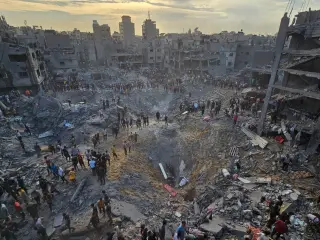
The Trump administration is preparing a $2.8 billion arms sale to Israel, the largest single transfer of 2,000-pound bombs in recent years. The package includes 40,000 munitions, split between MK-84 general-purpose bombs and BLU-117 naval variants, along with I-2000 Penetrator warheads for hardened targets. Funded through Foreign Military Financing, the deal uses US taxpayer money to purchase US weapons. Congressional committees have been informally notified, but the sale is not yet final. Critics argue the move risks mass civilian casualties in Gaza, while the administration maintains the process is standard. The sale occurs despite a fragile ceasefire and rising tensions between Washington and Jerusalem.
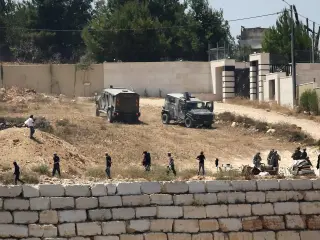
US Ambassador Mike Huckabee has explicitly labeled violent Israeli settlers as 'terrorists,' marking a significant escalation in diplomatic language regarding the West Bank. During a meeting with Palestinian American residents, Huckabee stated that while the US Embassy cannot investigate criminal activity, it must inform the Israeli government that specific crimes and acts of terror cannot continue without proper investigation and adjudication. This stance follows recent incidents of settler violence, including the siege of the Qusra outpost, where Huckabee previously condemned attackers as 'Israeli terrorists.' The comments highlight growing tensions between Washington and Jerusalem over the protection of Palestinian civilians and the expansion of settlements in occupied territories.
With Israeli elections scheduled for October 27, 2026, Prime Minister Benjamin Netanyahu faces a significant challenge from former IDF chief of staff Gadi Eisenkot. Netanyahu has adopted a strategy of continuous preemptive warfare, ignoring the $142 billion economic cost and international isolation. Eisenkot, leading a centrist coalition, promises to end the 'forever wars' in Gaza, Lebanon, and Syria, though he remains cautious on Palestinian statehood. The outcome hinges on whether a new government can restrain settler violence in the West Bank and navigate a shifting relationship with US President Donald Trump, who is increasingly frustrated with Netanyahu’s military failures.
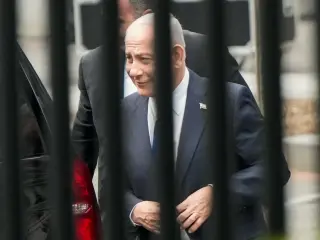
Israel’s Shin Bet security agency confirmed it urgently evacuated Prime Minister Benjamin Netanyahu’s son, Yair, from the United States due to a significant threat. The move followed reports of an alleged Iranian assassination plot in Florida. Netanyahu previously claimed Iran attempted to kill one of his sons, though he did not specify which. The incident heightens tensions amid ongoing US-Israeli military actions against Iran.
The White House is urging Israeli Prime Minister Benjamin Netanyahu to publicly condemn a wave of West Bank settler violence after criticism from US Ambassador to Israel Mike Huckabee; the pressure grows as Israeli forces block access to Palestinian families in Qusra, where settlers have surrounded homes and cut water and electricity, trapping about 15 Palestinians, including two children. The push comes as settlement expansion continues and Netanyahu weighs political costs ahead of elections, amid debates over whether civilian law enforcement should shift from the military to police under Minister Itamar Ben-Gvir.
Netanyahu publicly rejected a US-backed 15-point plan for Gaza, signaling a political balancing act between pressure from his far-right coalition and Washington’s push to end Gaza, Lebanon, and Iran operations ahead of Israel’s looming election; reports say he had been discussing withdrawal pilots with the military prior to the rejection, a move that risks straining US-Israel ties even as Washington treats it as electioneering.
With an election looming, Netanyahu hinted at unilateral moves to curb Iran’s nuclear ambitions as Washington and Tehran near an interim deal on the Strait of Hormuz; analysts say the war hasn’t achieved its aims and Netanyahu’s brinkmanship may be election-driven, while some officials warn unilateral Israeli action would be inconceivable while the US seeks a negotiated end to the conflict.
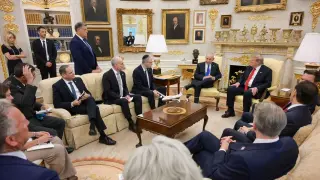
Netanyahu brought new intelligence about Iran’s underground site Pickaxe Mountain to Washington, but Trump downplayed it and suggested keeping details private, leaving no public decision on how to respond. Experts say the real split is Trump’s preference for diplomacy versus Netanyahu’s sense that more military action may be needed. The meeting produced little public alignment, while U.S. strikes on Iran and broader regional tensions continued, with ongoing debates over Lebanon/Hezbollah and potential Saudi-Israeli normalization.