
Trump Denies Hegseth Clash, Blames Leaks for Munitions Crisis
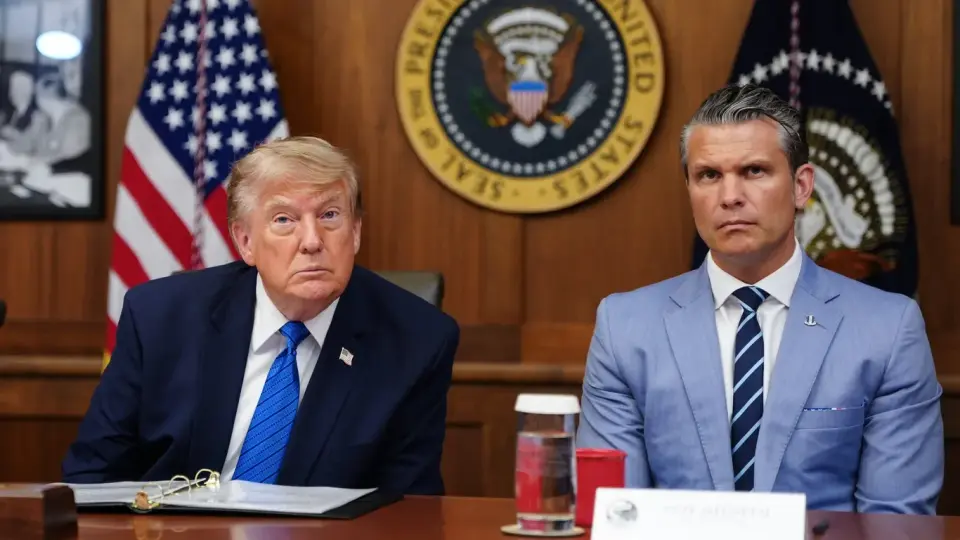
President Trump publicly defended Defense Secretary Pete Hegseth, calling reports of internal friction 'treasonous' and attributing the narrative to 'fake news.' The controversy stems from Washington Post reporting that Trump privately questioned Hegseth over dwindling U.S. missile stockpiles during a Camp David meeting. While the White House denies the confrontation, CNN and The Atlantic confirm severe shortages of Patriot and THAAD interceptors, which have limited military options against Iran and raised concerns among Gulf allies.
Key points
- Trump posted on Truth Social that he is 'extremely happy' with Hegseth, praising his removal of DEI initiatives and record recruitment levels.
- The Washington Post reported that Trump vented at Hegseth regarding munitions shortages, but the White House and Pentagon denied the exchange occurred.
- CNN sources indicate Trump was angry that leaks exposed weakness during Iran negotiations, not necessarily angry at Hegseth personally.
- The Atlantic notes that U.S. long-range weapon stockpiles are as low as 20% of desired levels, with some systems not meeting demand until 2030.
- Trump has tasked the Justice Department with investigating 'treasonous' leakers within the administration.
Background
This dispute follows weeks of tension regarding the U.S. war with Iran. Earlier coverage in July showed Trump defending Hegseth against concerns about wartime leadership and dismissing ammunition shortage claims. The current conflict escalates those earlier reassurances into a direct clash with the press, as the administration struggles to project strength while facing logistical constraints.
How outlets are covering it
Axios highlights Trump’s aggressive defense of Hegseth and his labeling of the Washington Post’s reporting as 'treasonous.' CNN provides a more nuanced view, suggesting Trump’s anger is directed at 'leakers' who exposed vulnerabilities during negotiations rather than at Hegseth himself. The Atlantic focuses on the structural reality of the munitions crisis, noting that contracts for replenishment will not yield results for years. NDTV mirrors the official denial, emphasizing the White House and Pentagon’s rejection of the reported Camp David confrontation.
Why it matters
The incident reveals a deepening rift between the administration and the press regarding the state of U.S. military readiness. It also underscores the strategic vulnerability created by depleted stockpiles, which may limit the U.S. ability to escalate against Iran or support allies in the Gulf and Ukraine.
What to watch
Expect continued pressure on defense contractors to accelerate production, though The Atlantic notes significant delays. The Justice Department’s investigation into leakers may lead to internal security reviews. Diplomatic tensions with Iran and Gulf states may intensify if the U.S. cannot project sufficient defensive capability.
- Trump backs Hegseth, calls reports to the contrary "treasonous" Axios
- How the U.S. Squandered Its Strategic Advantage The Atlantic
- EXCLUSIVE: US has used 'virtually all' of its long-range precision missiles during Iran war, sources say Reuters
- 'Extremely Happy With Him': Trump On "Treasonous" Report Of Clash With Hegseth NDTV
- Trump grows angry over reports on depleted munitions — believing it weakens him in Iran negotiations CNN
Want the full story? Read the original reporting
Read on Axios