
Johnson Ends House Session, Delaying Hegseth Impeachment Vote
Speaker Mike Johnson sent the House home early, delaying a vote on Pete Hegseth’s impeachment as lawmakers prepare final votes on a Russia sanctions bill backed by Lindsey Graham.

All articles tagged with #hegseth
Speaker Mike Johnson sent the House home early, delaying a vote on Pete Hegseth’s impeachment as lawmakers prepare final votes on a Russia sanctions bill backed by Lindsey Graham.
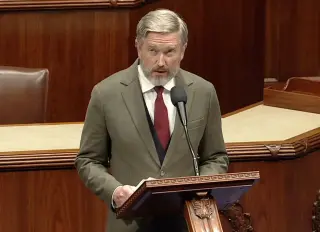
Rep. Thomas Massie introduced articles of impeachment against Defense Secretary Pete Hegseth, accusing him of waging war without congressional authorization, committing extrajudicial killings, and ignoring civilian harm; the measure, unlikely to pass in the GOP-led House, comes as Hegseth faces criticism of the US-Israel strategy on Iran, which the Pentagon backs; Massie has been a vocal critic of interventionist policy and recently lost a Trump-backed primary bid.
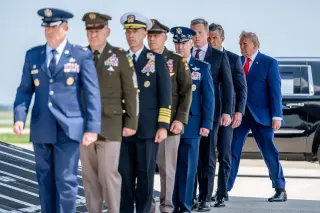
A critical analysis argues that Trump and Pentagon chief Pete Hegseth have hollowed out the U.S. military: purging senior officers, pushing an anti-DEI agenda, and meddling in promotions have undermined leadership and morale, while the Iran war has drained munitions (Patriot, THAAD, drones) and stretched force readiness across services, leaving the U.S. less capable of handling Asia- and Europe-scale contingencies.

The article argues that Pete Hegseth’s leadership has coincided with a wave of top-level firings and resignations in the U.S. military, most notably Army Secretary Daniel Driscoll’s resignation after raising concerns about leadership changes and readiness. Critics warn this churn risks hollowing out civilian oversight and undermining merit-based promotions, underscoring tensions over diversity and inclusion initiatives the Trump administration seeks to undo. The piece also notes broader staff shake-ups across the Joint Chiefs, a push to rebrand the DoD as the Department of War, and new policies like annual testosterone screening, arguing these changes may disrupt long-term force modernization and strategic planning centered on drones and missiles.
Sen. Thom Tillis renewed his call for Defense Secretary Pete Hegseth to be fired after Army Secretary Dan Driscoll’s resignation, accusing Hegseth of inept management and prioritizing culture-war issues over modernizing the Army. The dispute highlights ongoing tensions between Trump allies in the White House and defense leadership; the White House and Pentagon did not comment on Tillis’s accusation, and Tillis—who is not seeking reelection—has long clashed with Hegseth since he took the Pentagon helm in 2024.

Axios reports that Pete Hegseth has dramatically reshaped the Pentagon, firing or sidelining top officers and pressuring civilian leadership, leaving the department with few Senate-confirmed leaders as the Iran war tests readiness and weapon stocks, while the Pentagon denies disarray and critics argue deployments are straining forces.
Army Secretary Dan Driscoll resigned after clashing with Defense Secretary Pete Hegseth over modernizing the force, with Hegseth and acting Army Chief Gen. LaNeve pushing a focus on grooming, culture and appearance that undercut Driscoll’s tech-forward, leaner-force agenda. The White House backs Hegseth, framing his leadership as aligned with Trump-era priorities, while key modernization programs (AI adoption, private capital in the industrial base, counter-drone efforts) face uncertain futures as leadership changes and Senate confirmations loom and budget timing complicates replacements.

Defense Secretary Pete Hegseth has removed at least six Army officers from a list approved for two-star general promotions, continuing his pattern of personally intervening to halt promotions across the services, according to three U.S. officials familiar with the decision.
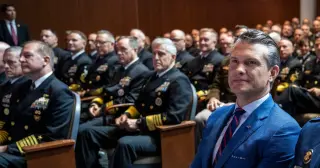
Defense Secretary Pete Hegseth has purged or blocked promotions of roughly 80 generals and admirals—about 10% of the top ranks—with seven more Army officers targeted as the Army secretary resigns, signaling deep Pentagon divisions.
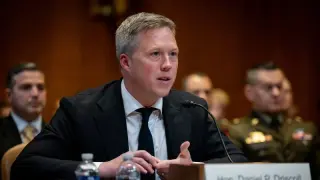
Army Secretary Dan Driscoll has submitted his resignation to President Trump after months of friction with Defense Secretary Pete Hegseth. The move, reported by the Wall Street Journal, follows clashes including the firing of Gen. Randy George earlier this year and comes six months into the Iran war.

Republican senators accuse the Pentagon of excluding Democrats from closed, classified briefings on the defense budget, warning that Pete Hegseth’s approach could jeopardize passage of Trump’s $1.5 trillion military package as Democrats threaten to boycott funding bills; lawmakers from both parties urge bipartisan engagement.

MSNBC's Michael Steele says the Trump administration’s Iran-war blame game has escalated, citing The Washington Post’s reporting of a Camp David clash between President Trump and Defense Secretary Pete Hegseth over munition shortages; the White House denies the confrontation, while The Wall Street Journal reports Trump’s irritability and a push to investigate leaks, signaling a crisis and scapegoating within the White House.

At a Senate Appropriations hearing on Iran, Sen. Jon Ossoff pressed Defense Secretary Pete Hegseth, repeatedly quoting his past claims that Iran’s military had been destroyed and combat-ineffective, as Sen. Gary Peters pressed for accountability and a clear strategy in the Iran war.
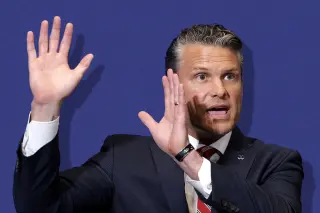
Slate's Fred Kaplan critiques Pete Hegseth's proposal to test all service members over 30 for testosterone and provide shots for those with low levels, arguing that hormone levels vary widely and lack a clear 'normal' baseline; higher muscle mass does not automatically translate to combat effectiveness; testosterone therapy carries risks like high blood pressure and mood changes; in Kaplan's view, modern warfare relies more on strategy, technology, and coordination than hormonal boosts, making the plan ill-informed and dangerous.

US Defence Secretary Pete Hegseth announced that active-duty and reserve personnel aged 30 and older will undergo annual testosterone-deficiency screening, with tests optional for those under 30. Those with low levels may be offered voluntary hormone replacement therapy. The plan aims to establish a health baseline and sustain readiness, though it remains unclear if screening will cover women. Experts note potential benefits for health and performance but caution about fertility and cardiovascular risks.