
54.5 Million Early Ballots Set Midterm Record as Democrats Lead in Key Battlegrounds
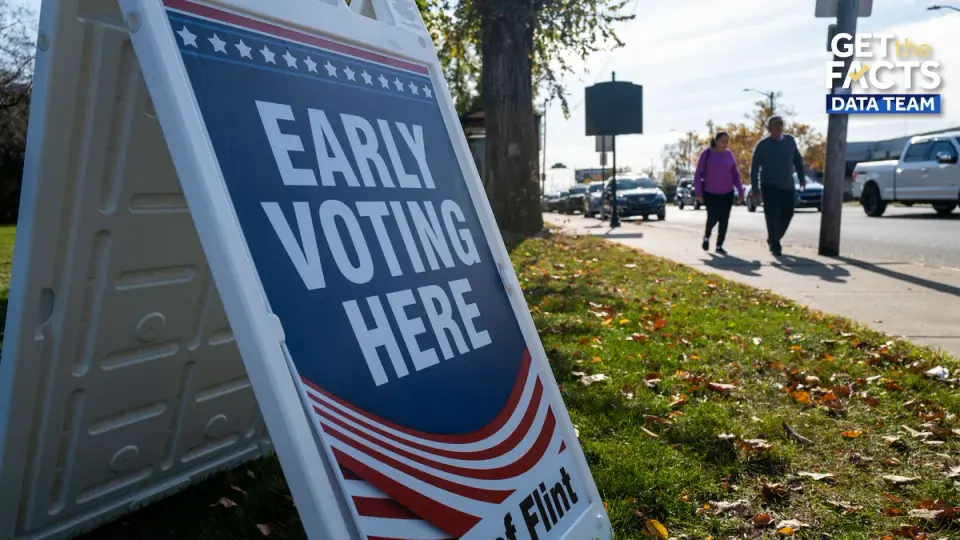
More than 54.5 million Americans have cast early ballots for the 2026 midterm elections, nearly matching the total from 2022 and setting a new record. Twenty-three states have already exceeded their previous early voting totals, with Texas leading at 138% of its 2022 figure. While early voting does not determine final outcomes, high turnout in competitive states like Georgia, Ohio, and Michigan suggests intense competition for control of Congress. Democrats have cast 43% of early ballots compared to 31% for Republicans, though party registration does not guarantee vote choice. The election will decide the balance of power in the Senate and House, with key races in Texas, Georgia, and Michigan closely watched.
Key points
- 54.5 million early votes cast, nearly matching 2022 totals and setting a new midterm record.
- 23 states have exceeded their 2022 early voting numbers, with Texas leading at 138% of its previous total.
- Democrats have cast 43% of early ballots, Republicans 31%, and unaffiliated voters 25%, per University of Florida data.
- High turnout is evident in competitive states like Georgia, Ohio, Michigan, and Texas, where Senate and governor races are closely contested.
- Early voting does not determine final results, but trends suggest strong Democratic enthusiasm and potential dissatisfaction with current Republican leadership.
Background
The 2026 midterms are being watched as a potential referendum on President Trump's policies, with early voting surging past 50 million by late October. Previous coverage noted record turnout in Texas and South Carolina, and national polls showing Democrats leading by 8.4 points. The election will determine control of Congress, with key races in Texas, Georgia, and Michigan closely monitored for their impact on the balance of power.
How outlets are covering it
WESH and The Guardian emphasize the record-breaking nature of early voting and the strong Democratic turnout, framing it as a potential referendum on Trump. No Labels provides a more cautious analysis, noting that early voting does not determine final outcomes and that party registration does not guarantee vote choice. NPR highlights the strong turnout among Black voters and young people, groups that typically support Democrats, while also noting the unexpected endorsement of Republican Mike Rogers by Michigan Democratic Rep. Haley Stevens, which could impact the Michigan Senate race. The sources agree on the high turnout but differ on its implications, with some emphasizing Democratic enthusiasm and others cautioning against overinterpreting early numbers.
Why it matters
The 2026 midterms will determine control of Congress, with key races in Texas, Georgia, and Michigan closely watched for their impact on the balance of power. High early voting turnout suggests strong voter engagement and potential dissatisfaction with current Republican leadership, which could influence the outcome of the election. The results will also have implications for future policy and the political landscape in the United States.
What to watch
Election Day is on November 3, 2026, with early voting ending in most states by then. Final results will be determined after all ballots are counted, including mail ballots that may arrive after Election Day in some states. The outcome of key races in Texas, Georgia, and Michigan will be closely watched for their impact on the balance of power in Congress.
- 2026 Midterm Election: How many people have voted early in the US? WESH
- Early Voting Breaks the Midterm Record: What 46 Million Ballots Tell Us About 2026 No Labels
- Early Voting Turnout Offers Promising Signs for Democrats The New York Times
- Three key takeaways from early voting in midterm elections The Guardian
- What early voting numbers tell us about the midterms : Here & Now Anytime NPR
Want the full story? Read the original reporting
Read on WESH