
AI Bubble Fears and Tariffs Threaten US Economy Ahead of Midterms
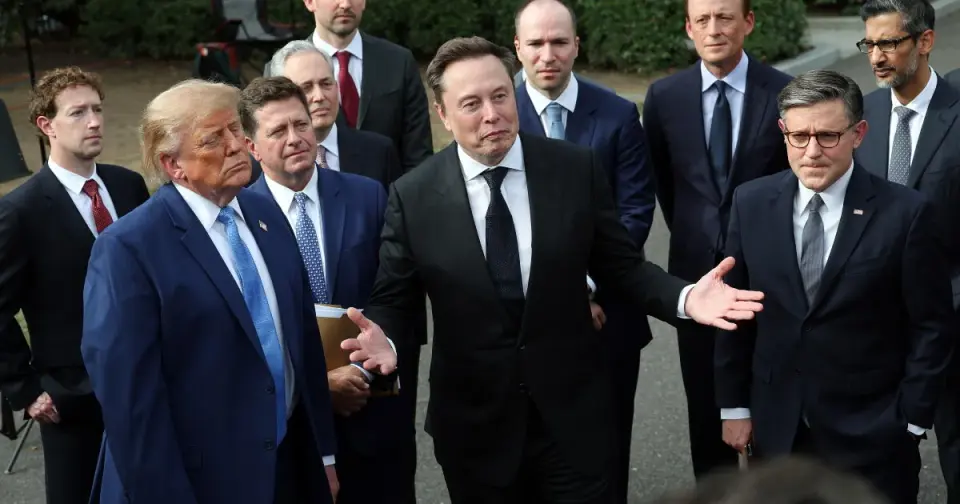
As the 2026 midterm elections approach, President Trump is campaigning on a promise of AI-driven prosperity, but economists and financiers warn that his policies have created significant financial instability. The US economy is heavily dependent on AI data center construction, which accounted for nearly all recent growth, yet rising costs from tariffs and visa restrictions are squeezing the sector. Major investors like Ray Dalio and Ken Griffin are warning of an impending AI bubble, while the Federal Reserve maintains high interest rates due to persistent inflation. This creates a precarious situation where a market crash could trigger a recession, with limited government tools to respond due to high national debt.
Key points
- Trump is vowing to expand a 'golden age' of prosperity through AI, but experts warn his policies have increased economic risk.
- AI data center spending accounted for nearly all US economic growth in the previous winter and spring, masking underlying stagnation.
- The Nasdaq 100 is 70% weighted toward AI-dependent companies, creating systemic vulnerability to a market correction.
- Trump’s tariffs on chips and servers, along with visa restrictions, are raising costs and limiting talent for the AI sector.
- High national debt and elevated interest rates limit the government's ability to bail out the financial sector if a crisis occurs.
- Inflation has risen to 3.7% under Trump, up from 2.9% at the end of the Biden administration, driving up costs for energy and housing.
Background
This story follows a period of declining approval ratings for President Trump, which hit historic lows of 32-36% in October 2026. Voters are deeply pessimistic about the economy, with 77% rating it fair or poor. Previous coverage highlighted that Trump’s midterm strategy involved promising $5,000 dividends to voters, a move criticized for fiscal irresponsibility. Additionally, high diesel prices and inflation have been key drivers of public dissatisfaction, contributing to a record-low 32% approval rating among Republicans.
How outlets are covering it
The Los Angeles Times presents a critical view, arguing that Trump’s AI policies have set the stage for a financial crisis, citing warnings from Harvard economist Kenneth Rogoff and Bridgewater founder Ray Dalio. Bloomberg Tax highlights that AI safety and data center concerns have become a major flashpoint in the midterm elections, with nearly $17 million spent on related TV ads. Punchbowl News notes that California candidates are actively engaging with voters on tech and AI safety issues, suggesting a shift in political discourse. GZERO Media offers a broader geopolitical context, describing the 'AI race' as a multi-front competition where the US leads in model capability, China in global diffusion, and Europe in regulation, noting that this dynamic influences domestic policy and investment decisions.
Why it matters
The concentration of the US economy in AI-related sectors creates a systemic risk that could trigger a recession if the current bubble bursts. With limited fiscal tools due to high debt and interest rates, the government may be unable to mitigate a downturn, potentially leading to widespread financial distress. This economic uncertainty is likely to influence voter behavior in the upcoming midterms, where control of Congress could shift to Democrats, altering the trajectory of AI and economic policy.
What to watch
The 2026 midterm elections will determine the balance of power in Congress, potentially shifting control to Democrats and increasing oversight of AI and economic policy. Anthropic is planning an initial public offering next month, and OpenAI expects to go public next year, which could further impact market sentiment. The outcome of the elections will also influence the future of AI regulation and the government's ability to respond to potential financial crises.
- As vote nears, Trump’s AI gamble fuels economic uncertainty Los Angeles Times
- EXCLUSIVE: US political candidates tailor messages for AI models used by voters Reuters
- AI Safety Emerges as Midterm Flashpoint in Battleground Races Bloomberg Tax
- How California candidates are talking about AI Punchbowl News
- What is the “AI race” anyway? GZERO Media
Want the full story? Read the original reporting
Read on Los Angeles Times