
Midterm Focus Shifts to State Races as Data Center Backlash Threatens AI Economy
State and local elections may determine the future of the US AI economy more than federal races, as growing public backlash against data centers forces political recalibration. While federal candidates debate AI, local officials control the permits, power grids, and zoning laws essential for construction. Recent polls show a sharp rise in opposition to nearby data centers, prompting even Republican leaders to pivot from support to caution. This shift threatens to slow the massive infrastructure buildout that currently drives significant GDP growth, though analysts note that existing construction momentum will sustain economic investment for several years regardless of election outcomes.
Key points
- State and local officials hold more power over data center construction and energy infrastructure than federal lawmakers, making midterm results in these races critical for the AI economy.
- Amazon canceled a $427 million data center plan in Loudoun County, Virginia, after local backlash, agreeing to repurpose the land for residential and community use instead.
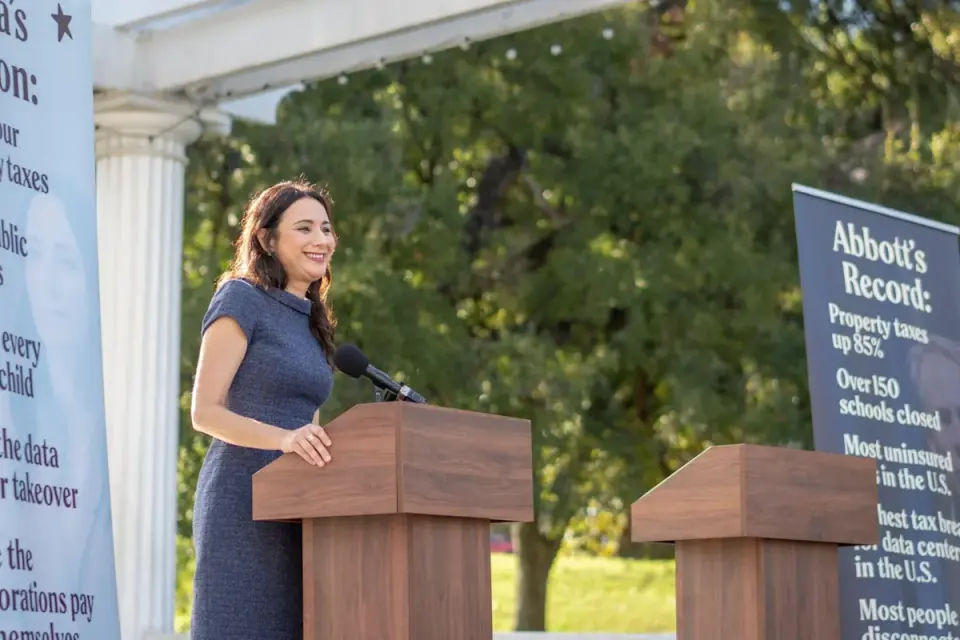
- Texas Governor Greg Abbott has shifted from supporting data centers to halting permits pending environmental and grid reviews, a move influenced by his re-election race against Democrat Gina Hinojosa.
- A CNBC survey found 63% of registered voters oppose a data center within 10 miles of their home, with only 13% in support, a sentiment that has intensified since January.
- JPMorgan estimates AI-related investment accounted for one-fifth of GDP growth in the past year, while ING projects AI will drive a third of growth in 2026.
- Analysts warn that a 'blue wave' at the state level could usher in lawmakers opposed to data centers, potentially impacting the stock market and the broader AI boom.
Background
This development follows earlier coverage indicating that Democrats are competitive in key red-state Senate races, including Texas and Ohio, driven by economic discontent. Previous reports noted that Republicans are reallocating funds to salvage losing races, while Democrats focus on flipping the House majority. The current focus on data centers adds a new dimension to these midterm dynamics, as local opposition to AI infrastructure becomes a central campaign issue in states like Texas, Ohio, and the Carolinas.
How outlets are covering it
Outlets emphasize different aspects of the data center debate. Yahoo Finance and Fortune highlight the economic implications, noting that state-level governance matters more than federal control for AI infrastructure, and that a 'blue wave' could disrupt the AI boom. BBC provides global context, noting that data centers consume more electricity than France and that opposition is growing in countries like the UK and Mexico, while also mentioning potential alternatives like space-based data centers. CNBC focuses on the political tension, revealing that while Republican voters support AI development, many oppose local data centers, forcing GOP strategists to recalibrate their messaging. Politico underscores the rapid shift in public opinion, noting that opposition to nearby data centers has nearly doubled since January, making pro-data center candidates politically toxic. All sources agree that local backlash is reshaping the political landscape, but they differ in emphasis: Yahoo and Fortune focus on economic risk, BBC on global and environmental impact, CNBC on voter sentiment, and Politico on the speed of opinion change.
Why it matters
The outcome of state and local midterm races could determine the pace and scale of AI infrastructure development, which is a major driver of US economic growth. If voters elect officials opposed to data centers, it could slow construction, impact energy grids, and potentially disrupt the AI boom. Conversely, the existing construction momentum may sustain economic investment for years, regardless of political shifts. This issue also has implications for the 2028 presidential election, as data center regulation may become a central campaign topic. The backlash also highlights a broader tension between national AI strategy and local community concerns, with voters demanding that companies cover their own costs and provide local benefits.
What to watch
Election Day is in just over a week, with early voting underway in many states. The results in Texas, the Carolinas, and Midwest states like Ohio, Illinois, and Wisconsin will be critical for data center policy. If anti-data center candidates win, it could lead to moratoriums, stricter environmental reviews, and grid bottlenecks. However, analysts expect the current construction surge to continue supporting business investment for several years. The political landscape may also shift, with data center regulation becoming a key issue in the 2028 presidential campaign. Companies may also explore alternatives, such as space-based data centers or on-device AI processing, to mitigate local opposition.
- Forget the House and the Senate, the economy may hinge on state and local races in the midterm elections Yahoo Finance
- Data centre backlash grows ahead of US midterms - here's what you need to know BBC
- 'Lightning in a bottle': The unlikely election issue aligning Trump voters with Democrats SBS
- Trump is pushing a massive AI buildout. His own voters are wary of what comes with it CNBC
- Poll: Data center backlash builds as midterms near Politico
Want the full story? Read the original reporting
Read on Yahoo Finance