
Alito Steps Aside in Boulder Climate Case, Setting Stage for 4-4 Supreme Court Split
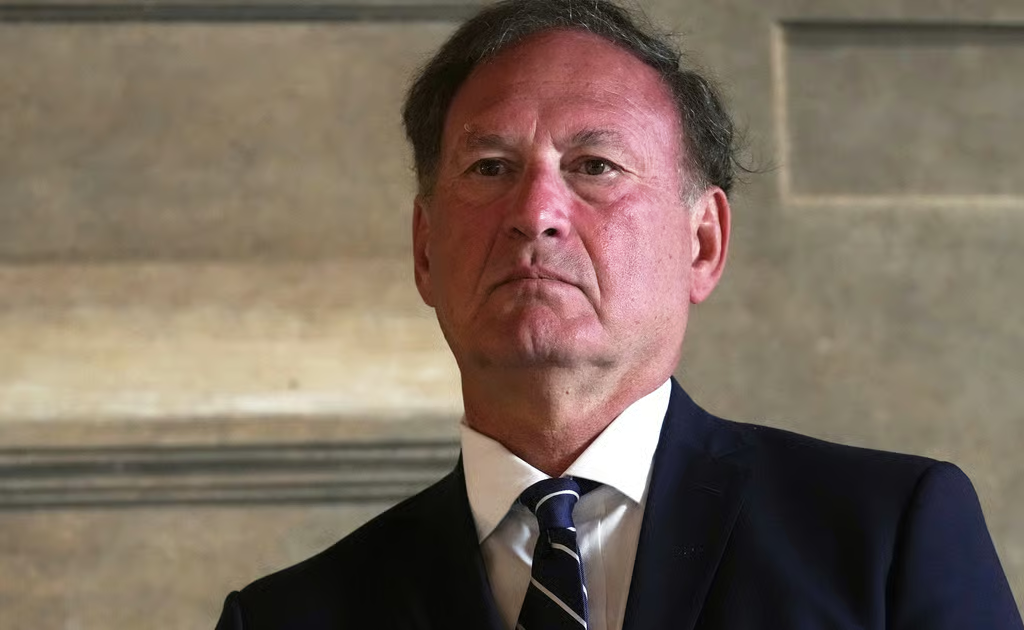
Justice Samuel Alito has recused himself from Suncor v. Boulder, a landmark climate lawsuit pitting the city of Boulder against ExxonMobil and Suncor. The decision, announced via a one-sentence letter from the court clerk, comes one week before oral arguments begin on October 5. Alito’s recusal follows intense scrutiny over his stock holdings in other oil companies, including ConocoPhillips and Phillips 66, which could benefit from a ruling that shields the fossil fuel industry from liability. With Alito stepping aside, the court faces a potential 4-4 split, which could leave the legal questions unresolved and allow similar state-level climate lawsuits to proceed.
Key points
- Alito recused himself from Suncor v. Boulder, a case that could impact roughly two dozen similar climate lawsuits nationwide.
- The recusal was announced via a one-sentence letter from the court clerk, with no explanation provided.
- Alito holds stock in ConocoPhillips and Phillips 66, which have warned shareholders about the financial risks of climate litigation.
- The case could result in a 4-4 split on the Supreme Court, leaving lower-court rulings intact.
- The Supreme Court is set to hear the case on October 5, at the start of its new term.
Background
The Boulder case has been in litigation since 2018, when the city and county sued ExxonMobil and Suncor for deceiving consumers about the harms of burning fossil fuels. The case has bounced between various courts, with the Colorado Supreme Court paving the way for a trial in May 2025. The U.S. Supreme Court stepped in in February 2026 to review the case, asking whether federal law pre-empts Boulder’s arguments and whether it is too early to hear the case. Alito had previously recused himself from the case in 2023, but the court spokesperson said at the time that it was an 'inadvertent' recusal. The case has been a source of controversy, with watchdog groups calling for Alito to recuse himself due to his stock holdings in other oil companies.
How outlets are covering it
Colorado Public Radio, Inside Climate News, Politico, and NBC News all report on Alito’s recusal, but they emphasize different aspects of the story. Colorado Public Radio focuses on the lack of explanation for the recusal and the potential impact on similar climate lawsuits. Inside Climate News highlights the ethical concerns surrounding Alito’s stock holdings and the broader question of whether Supreme Court justices should hold individual stocks. Politico emphasizes the reversal of Alito’s earlier stance and the potential 4-4 split on the court. NBC News focuses on the pressure from environmental groups and the potential impact on the fossil fuel industry. All four outlets agree that the recusal is a significant development, but they differ in their emphasis on the ethical, legal, and political implications of the case.
Why it matters
The recusal of Justice Alito from Suncor v. Boulder is significant because it could result in a 4-4 split on the Supreme Court, which would leave the legal questions unresolved and allow similar state-level climate lawsuits to proceed. The case could have a broad impact on the fossil fuel industry, which is hoping for a ruling that would prevent cases like the one in Colorado from moving forward in state courts. The recusal also raises questions about the ethics of Supreme Court justices holding individual stocks, particularly in industries that are likely to appear before the court. The case is a test of the court’s commitment to its 2023 code of conduct, which requires justices to recuse themselves if they have a financial interest in the subject matter in controversy.
What to watch
The Supreme Court is set to hear the case on October 5, at the start of its new term. The court will decide whether federal law pre-empts Boulder’s arguments and whether it is too early to hear the case. If the court issues a 4-4 split, the lower-court rulings will remain intact, and similar state-level climate lawsuits will likely proceed. The case could have a broad impact on the fossil fuel industry, which is hoping for a ruling that would prevent cases like the one in Colorado from moving forward in state courts. The recusal of Justice Alito could also lead to further scrutiny of the ethics of Supreme Court justices holding individual stocks.
- Justice Alito recuses himself from major Boulder climate lawsuit Colorado Public Radio
- Alito’s Recusal From Climate Case: Too Little, Too Late? Inside Climate News
- Alito bows out of blockbuster Supreme Court climate case Politico
- In reversal, Justice Samuel Alito steps aside from major climate case NBC News
- Justice Alito Recuses Himself Days Before Major Climate-Change Case The New York Times
Want the full story? Read the original reporting
Read on Colorado Public Radio