
Black Voter Surge Drives Historic Democratic Gains in the South
Democratic candidates achieved unprecedented victories across the Southern United States in the 2026 midterm elections, driven by a massive surge in Black voter turnout. Key Senate seats in North Carolina, South Carolina, and Texas flipped to Democrats, while Georgia and Texas saw sweeping statewide wins. The results directly challenged recent Republican redistricting efforts following the Supreme Court’s Callais decision, which had weakened the Voting Rights Act. Although some races in Mississippi, Louisiana, and Florida remained close or were won by Republicans, the overall shift marked a significant reversal of the region’s recent political trajectory.
Key points
- Democrats won Senate seats in North Carolina, South Carolina, and Texas, with Georgia’s Keisha Lance Bottoms becoming the first Black woman governor.
- Black voter turnout surged significantly; in Louisiana, Black voters shifted to 94% support for Democrats, and in Tennessee, they voted 89% for Democratic House candidates.
- The Supreme Court’s Callais decision, which gutted parts of the Voting Rights Act, prompted Republican-led redistricting that was largely rejected by voters in this election.
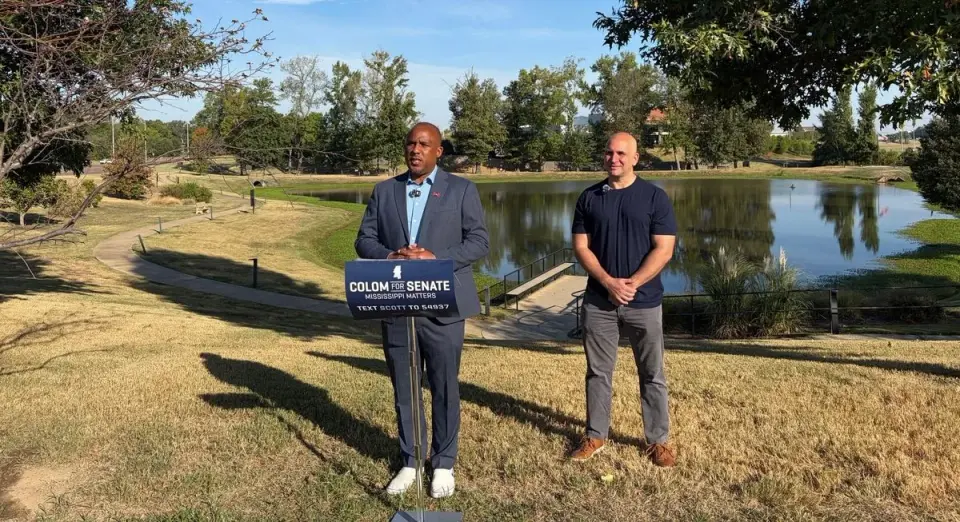
- Mississippi’s Senate race remains too close to call, with Democrat Scott Colom leading incumbent Cindy Hyde-Smith by fewer than 1,200 votes.
- Democrats gained control of state legislatures and statewide offices in Georgia, Texas, and North Carolina, ending Republican supermajorities in Florida and South Carolina.
Background
Prior to the election, early voting records exceeded 50 million votes, with Democrats leading national polls by over 8 points. This surge was attributed to dissatisfaction with the Trump administration, rising costs, and concerns over ICE abuses. The 2026 midterms followed the Supreme Court’s Callais decision earlier in the year, which had weakened the Voting Rights Act, leading to aggressive redistricting by Republicans in Southern states.
How outlets are covering it
Liberal Currents frames the results as a 'Callais backlash,' emphasizing that Black voters defied anti-democratic redistricting efforts to push the South forward. NPR highlights the 'blue tsunami' led by Black voters, noting that while Democrats won key Senate seats, Republicans retained some seats in Florida and Louisiana, and the redistricting efforts in Alabama and Tennessee largely failed. MS NOW focuses on the strategic reassessment of the South, citing Sen. Raphael Warnock’s argument that the road to a sustainable Democratic majority now runs through the Deep South, contrasting with historical skepticism about investing in the region.
Why it matters
The 2026 midterms signal a potential long-term shift in Southern politics, challenging the Republican dominance that has persisted since the 1960s. The success of Black voter mobilization and the rejection of restrictive redistricting could reshape the electoral map for the 2028 presidential cycle, as Texas, Florida, Georgia, and North Carolina collectively hold over a third of the electoral votes needed to win the White House.
What to watch
The final outcome of the Mississippi Senate race will be determined after a drawn-out vote count, with Scott Colom potentially becoming the first Black man elected to the Senate from Mississippi since Reconstruction. Democrats are expected to invest further in Southern states to consolidate their gains, while Republicans will likely focus on retaining control in Florida and contesting the results in close races. The 2028 presidential campaign will likely center on the South as a critical battleground for both parties.
- Callais Backlash: The South Votes to Escape the Past Liberal Currents
- Southern Democrats Now Have a Chance to Lead. What Will They Do With It? The New York Times
- The South flexes political power in midterms, sets regional influence in 2028 election NPR
- The Red Wall Falls: Democrats Shatter Decades of GOP Dominance Across the South WSJ
- After the midterm elections, it’s time for Democrats to reassess the South MS NOW
Want the full story? Read the original reporting
Read on Liberal Currents