
Cindy Holscher wins Kansas governorship, extending Democratic hold in red state
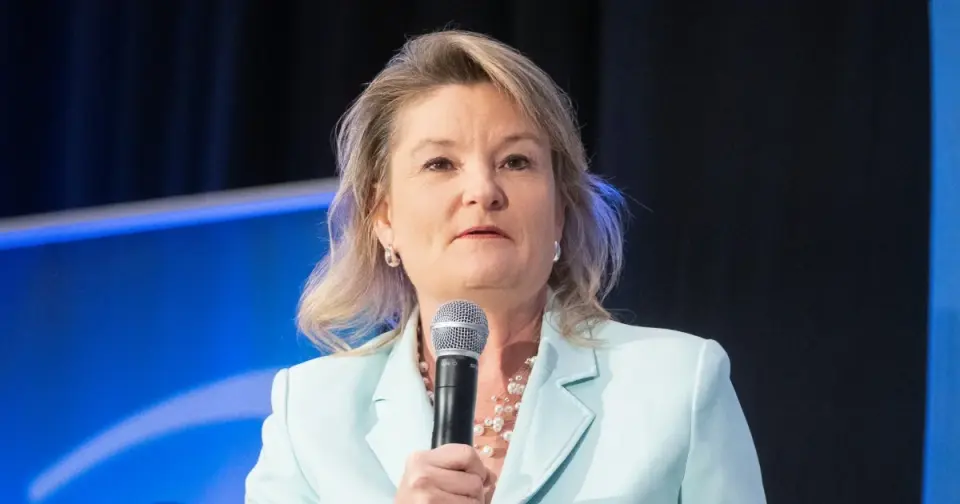
Democratic state senator Cindy Holscher has won the Kansas governor’s race, defeating Republican Ty Masterson in a narrow victory. This result extends Democratic control of the office in a traditionally red state, succeeding term-limited Governor Laura Kelly. Holscher’s win is part of a broader Democratic surge in the 2026 midterms, where the party now controls 29 governorships. The outcome reflects voter frustration with the current administration and economic conditions, despite a significant Republican advertising advantage.
Key points
- Holscher defeated Masterson, who was endorsed by President Donald Trump, in a closely contested race.
- The victory extends Democratic control of the Kansas governorship for a third consecutive term.
- Holscher campaigned on populist issues, including a moratorium on new data centers and cannabis legalization.
- Masterson faced a nearly 3-to-1 Republican ad spending advantage but lost due to voter dissatisfaction with the administration.
- Holscher’s win follows a primary where she overcame opposition from outgoing Governor Laura Kelly, who initially backed a more moderate candidate.
Background
Kansas has historically voted Republican, with registered Republicans outnumbering Democrats nearly 2 to 1. The state’s governorship had been held by Democrats for two terms under Laura Kelly, who was term-limited after serving eight years. Kelly’s moderate approach contrasted with Holscher’s more progressive populist platform. The 2026 midterms saw a broader Democratic surge, with the party gaining control of 29 governorships nationwide. Kansas’s Senate race also tightened, with Democrat Adam Hamilton defeating incumbent Republican Roger Marshall.
How outlets are covering it
NBC News and CNN emphasized the narrow nature of the race and the broader Democratic gains, noting that Holscher’s win means three-quarters of Americans will have Democratic governors. NPR highlighted Holscher’s populist campaign, including her opposition to data centers and support for cannabis legalization. The Kansas City Star focused on the contrast between Holscher’s progressive platform and Kelly’s moderate approach, noting that Holscher may face a more favorable legislative environment due to Democratic gains in the state House. All sources agreed that voter frustration with the administration and economic conditions played a key role in the outcome, despite a significant Republican advertising advantage.
Why it matters
Holscher’s victory signals a shift in Kansas’s political landscape, with Democrats maintaining control of the governorship in a traditionally red state. Her populist platform and potential for a more combative approach in the legislature could influence state policy on issues like data centers, cannabis, and healthcare. The result also reflects broader voter dissatisfaction with the current administration and economic conditions, contributing to a wider Democratic surge in the 2026 midterms.
What to watch
Holscher will take office as Kansas’s next governor, succeeding Laura Kelly. She is expected to work with a Republican-controlled legislature, though Democratic gains in the state House may provide more flexibility than Kelly had. Holscher has already begun transition meetings with Kelly’s team. Her agenda may include pushing for a data center moratorium, cannabis legalization, and other populist policies, though she will need to navigate a divided legislature.
- Democrat Cindy Holscher defeats Republican Ty Masterson in Kansas governor’s race NBC News
- Three quarters of Americans will have Democratic governors with Holscher projected to win in Kansas CNN
- Cindy Holscher wins in Kansas, holding governor’s office for Democrats NPR
- Cindy Holscher isn’t Laura Kelly-style moderate. How may she lead Kansas differently? Kansas City Star
- Holscher Wins Kansas Governor Race, Retaining Seat for Democrats The New York Times
Want the full story? Read the original reporting
Read on NBC News