
Congress reaches partial deal on aviation safety tech after deadly 2025 crash
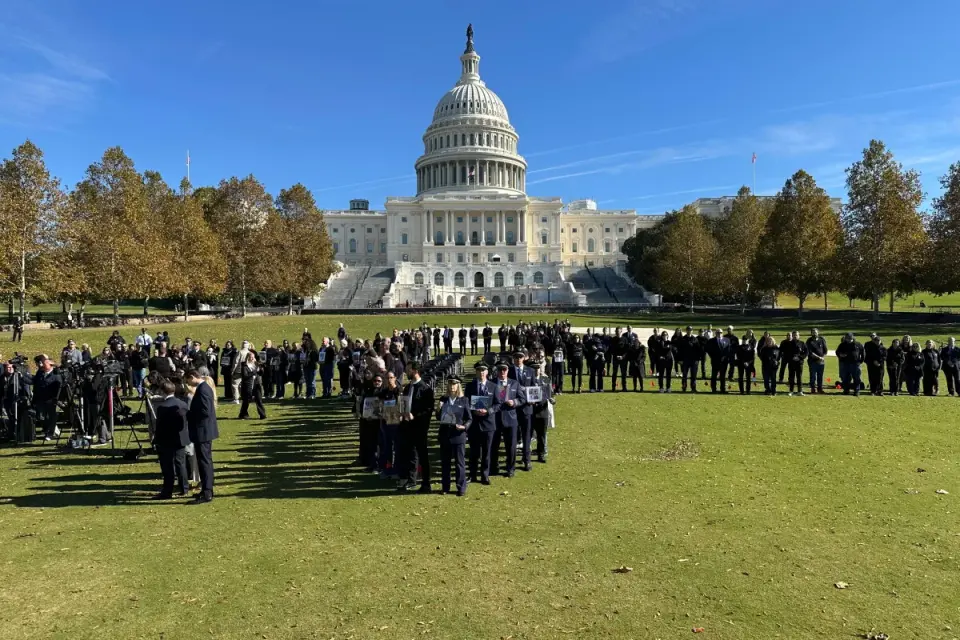
Lawmakers have reached a tentative agreement to mandate ADS-B In technology for civilian aircraft, a system that alerts pilots to nearby planes. This breakthrough follows the January 2025 midair collision that killed 67 people. While civil provisions are largely settled, negotiations over military aircraft requirements remain unresolved. The deal aims to pass legislation before the end of the year, though a recent nationwide ground stop has intensified scrutiny on FAA funding and infrastructure.
Key points
- Senate Commerce Chair Ted Cruz and Ranking Member Maria Cantwell announced an agreement in principle to require ADS-B In systems on civilian flights in crowded airspace.
- ADS-B In allows aircraft to receive location data from nearby planes, a technology the National Transportation Safety Board has recommended since 2008 but the FAA has not mandated.
- The January 29, 2025, collision between an American Airlines jet and an Army Black Hawk helicopter near Washington, D.C., killed 67 people, including 28 figure skaters.
- The Army helicopter involved in the crash was on a training flight and did not have its ADS-B Out broadcast system active due to security concerns.
- Negotiations remain stalled regarding military aircraft provisions, with the House Armed Services Committee yet to agree on how to handle non-sensitive military missions.
- The agreement comes amid a nationwide ground stop caused by a technical failure in FAA communication infrastructure, prompting Transportation Secretary Sean Duffy to request $50 billion for modernization.
Background
This legislative push follows the deadliest U.S. plane crash since 2001, which occurred on January 29, 2025. The collision between a PSA Airlines jet and an Army Black Hawk helicopter near Ronald Reagan National Airport killed 67 people. In response, the NTSB issued 50 safety recommendations. Competing bills, the ROTOR Act in the Senate and the ALERT Act in the House, have been stalled since spring due to disagreements over military accountability and technology mandates. Recent incidents, including a nationwide ground stop on November 13, 2026, caused by router failures, have heightened public and congressional focus on aviation infrastructure and safety reforms.
How outlets are covering it
AP News and CBS News emphasize the bipartisan agreement on civilian aircraft technology, highlighting the emotional appeals from victims' families and the urgency to pass the bill before year-end. Politico notes that while the civil provisions are agreed upon, significant details regarding military aircraft remain unresolved, with Cruz acknowledging 'a couple of details to negotiate.' The Seattle Times provides a broader context, linking the safety legislation to the recent FAA funding crisis and the $50 billion modernization request by Transportation Secretary Sean Duffy. It highlights Democratic skepticism of the funding request due to previous unspent allocations, contrasting with Republican support for increased investment. All sources agree that the ADS-B In mandate is a critical step, but they differ on the immediacy of the military provisions and the broader infrastructure challenges facing the FAA.
Why it matters
The potential passage of this legislation could prevent future midair collisions by ensuring all aircraft in shared airspace can detect and avoid one another. It addresses a long-standing gap in aviation safety where pilots could not see nearby military or civilian aircraft that lacked ADS-B In. The outcome will determine whether the U.S. aviation system adopts a unified standard for situational awareness, potentially saving lives and restoring public trust in air travel safety. Additionally, the resolution of this bill may influence broader discussions on FAA funding and infrastructure modernization, which are critical for maintaining safe and efficient air traffic control.
What to watch
Lawmakers aim to finalize the aviation safety bill before the end of 2026, potentially through the National Defense Authorization Act or as a standalone measure. Negotiations with the House Armed Services Committee on military aircraft provisions are expected to continue. The FAA has paused the installation of new routers following the November 13 ground stop, and investigators are working to determine the root cause of the data overload. Congress is also expected to scrutinize the $50 billion modernization request from Transportation Secretary Sean Duffy, with Democrats demanding accountability for previous unspent funds. The final text of the bill is expected to be ready by Thanksgiving, with a vote potentially occurring in the lame-duck session.
- Congress agrees on civilian plane locator mandate after deadly 2025 Washington, DC, midair collision AP News
- Cruz announces partial deal on aviation safety overhaul Politico
- Families of Flight 5342 victims push Congress to pass aviation safety bills WUSA9
- Lawmakers advance aviation safety legislation, amid FAA funding debacle The Seattle Times
- Deal on stalled airline safety bill announced by Cruz with families of D.C. plane crash victims CBS News
Want the full story? Read the original reporting
Read on AP News