
Supreme Court clears path for White House ballroom, citing lack of standing
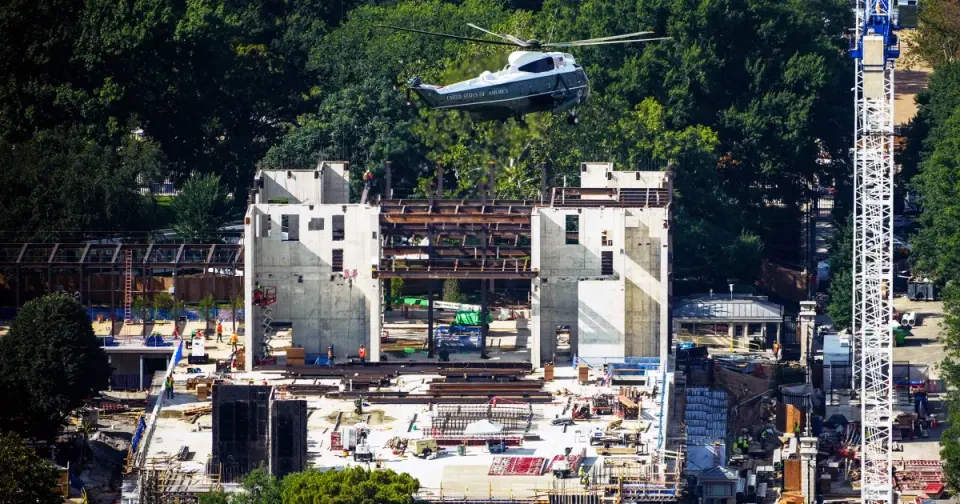
The Supreme Court ruled 5-4 to allow President Trump to continue construction of a new White House ballroom, blocking a challenge from the National Trust for Historic Preservation. The court found the trust likely lacks legal standing but did not rule on the project's legality. Construction is 65% complete, with a 250-person crew working around the clock.
Key points
- The Supreme Court granted an emergency request from the Trump administration, blocking lower court rulings that would have halted the aboveground portion of the White House ballroom project.
- The court ruled 5-4 that the National Trust for Historic Preservation likely lacks legal standing to challenge the project, but did not decide whether the president has the authority to build without congressional approval.
- Chief Justice John Roberts and the three liberal justices dissented, with Roberts calling the construction 'likely unlawful' and arguing the trust member had standing.
- The administration claims the $400 million project is 65% complete, with a 250-person crew working 20 hours a day, seven days a week, and is funded entirely by private donations.
- The National Trust for Historic Preservation argued that the president did not have unilateral authority to proceed with construction, citing a federal law requiring 'express authority of Congress' to build on federal land in Washington, D.C.
Background
The White House ballroom project has been a contentious issue, with the Trump administration seeking to move forward with construction despite legal challenges. The project is a $400 million, 90,000-square-foot structure that includes an extensive underground component, including secure locations and medical facilities that the administration has argued are needed for security. The project has been funded by private donations, though this has been widely disputed. The National Trust for Historic Preservation has challenged the project, arguing that the president did not have unilateral authority to proceed with construction. The Supreme Court has previously issued a temporary stay, allowing construction to continue while the court reviewed the president's emergency appeal.
How outlets are covering it
The Supreme Court's majority, in an unsigned ruling, found that the National Trust for Historic Preservation likely lacks legal standing to challenge the project, but did not reach any conclusion on whether Trump has authority to carry out construction without congressional approval. Chief Justice John Roberts and the three liberal justices dissented, with Roberts calling the construction 'likely unlawful' and arguing that the trust member had standing. The National Trust for Historic Preservation argued that the president did not have unilateral authority to proceed with construction, citing a federal law requiring 'express authority of Congress' to build on federal land in Washington, D.C. The Trump administration countered that other provisions of federal law allow the president to undertake improvements on the White House grounds. The administration has also claimed that the project is funded entirely by private donations, an assertion that has been widely disputed.
Why it matters
The Supreme Court's ruling allows the Trump administration to continue construction of the White House ballroom, a project that has been a contentious issue and has faced legal challenges. The ruling could have implications for the separation of powers and the authority of the president to undertake construction on federal land without congressional approval. The project is a $400 million, 90,000-square-foot structure that includes an extensive underground component, and its completion could have significant implications for the White House and the surrounding area.
What to watch
The National Trust for Historic Preservation has indicated that it will continue to challenge the project, and the litigation over the ballroom will likely continue in lower courts. The administration has claimed that the project is 65% complete and will continue to work around the clock to finish the structure. The project is expected to be completed in the summer of 2028, according to the Trump administration.
- Supreme Court allows Trump to move forward with White House ballroom construction NBC News
- Supreme Court allows Trump to continue building White House ballroom CNN
- Supreme Court says Trump can build White House ballroom as lawsuit continues cnbc.com
- SCOTUS greenlights White House ballroom construction ABC News - Breaking News, Latest News and Videos
- Supreme Court allows Trump's ballroom to proceed Axios
Want the full story? Read the original reporting
Read on NBC News