
GOP Candidates Pivot on Data Centers as Trump Defends Infrastructure Amid Midterm Pressure
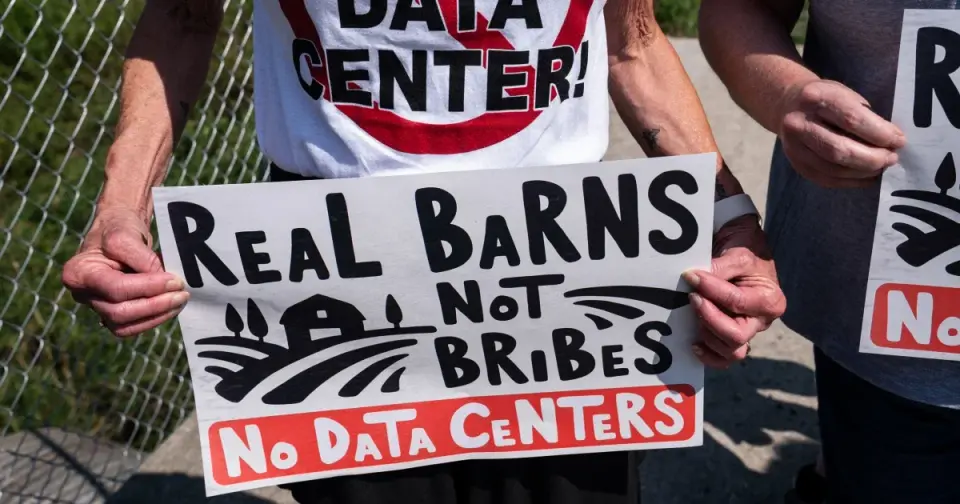
Republican candidates are increasingly opposing data center expansion to address voter concerns, even as President Trump defends the facilities as economically beneficial. This divergence highlights a growing tension between national tech policy and local political realities ahead of the 2026 midterms.
Key points
- Former Rep. Mike Rogers, the GOP Senate nominee in Michigan, supports a one-year moratorium on new data center development.
- Ohio gubernatorial nominee Vivek Ramaswamy proposed that future data centers must pay specific taxes and bills to local residents.
- Texas Governor Greg Abbott ordered an audit of existing data centers in the state, reversing his previous welcoming stance.
- President Trump stated it is acceptable for Republicans to oppose data centers, acknowledging that not every location is suitable for such facilities.
- Trump emphasized that data centers should generate their own electricity, claiming this will lower local utility costs and provide surplus power to the grid.
Background
The debate over data centers has intensified since July 2026, when 23 Republican governors signed Trump’s Ratepayer Protection Pledge to prevent households from bearing energy costs. This pledge was non-binding but aimed to shield consumers from rising utility bills associated with AI infrastructure. Recent developments show a shift from broad support to localized resistance, particularly in states with active moratoriums like New York and Brookhaven Town.
How outlets are covering it
NBC News reports that Republicans are rapidly aligning with voter skepticism, with candidates in key races embracing moratoriums or audits. In contrast, USA Today and The South Shore Press highlight Trump’s defense of data centers, noting his argument that they create jobs and lower taxes. Trump’s stance creates a unique challenge for GOP candidates, who must balance local opposition with the president’s national tech agenda. Axios coverage, though limited in the provided text, likely reflects the broader industry advocacy for data centers as essential for innovation, contrasting with environmental and community concerns over resource consumption.
Why it matters
The data center debate has become a pivotal issue in the 2026 midterms, influencing voter sentiment and candidate positions. The tension between federal support and local opposition could reshape energy policy, AI infrastructure development, and the political landscape, particularly in states with significant tech investments. This issue also intersects with broader concerns about energy costs, environmental impact, and technological competition with China.
What to watch
Expect continued pressure on Republican candidates to address data center concerns, potentially leading to more moratoriums or audits. Trump may further refine his stance to balance national tech goals with local political realities. The outcome of the midterms could influence future federal and state policies on AI infrastructure and energy consumption.
- How the GOP is approaching data center backlash and why Trump is pivoting to North Korea: Morning Rundown NBC News
- Trump says rejecting data centers is "a mistake" Axios
- Trump says 'OK' if Republicans oppose contentious data centers USA Today
- Trump Defends AI Data Centers—Says Opposing Them Is A ‘Mistake’ And ‘Smart Ones’ Want Them Forbes
- Trump Makes Economic Case For Data Centers The South Shore Press
Want the full story? Read the original reporting
Read on NBC News