
State Legislatures Flood with 375 Data Center Bills as Public Backlash Intensifies
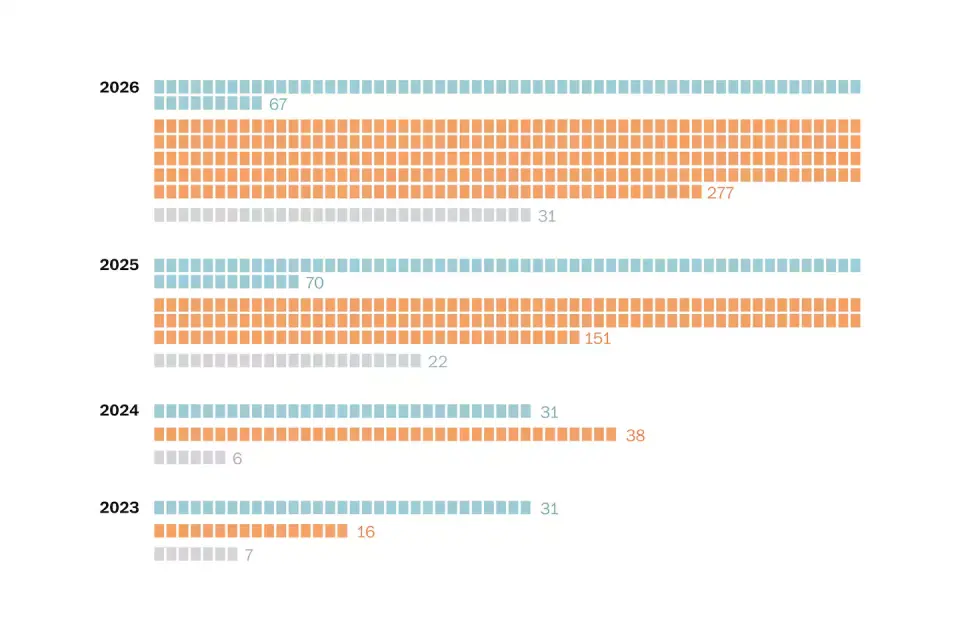
U.S. state legislatures are introducing data center bills at a record pace, with 375 proposals filed in 2026 alone, reflecting growing public opposition to AI infrastructure and shifting political priorities.
Key points
- 375 data center-related bills were introduced in state legislatures in 2026, up from 243 in 2025 and 75 in 2024, according to LegiScan data cited by The Washington Post.
- The surge in legislation spans the political spectrum, with lawmakers across the country proposing measures to restrict or regulate tech giants' data center expansion.
- Public backlash against data centers is driving legislative action, as communities express concerns over energy costs, environmental impact, and infrastructure strain.
- AI companies are racing to build new facilities to power their platforms, creating a direct conflict with state lawmakers seeking to impose limits.
- The trend reflects a broader shift in political views, with more proposals aimed at curbing the influence of tech companies on local resources and budgets.
Background
This surge follows earlier state-level actions, such as California’s 2026 deadline-driven bills regulating data center electricity use and Oklahoma’s HB 2992 requiring data centers to cover infrastructure costs. Additionally, a 2026 White House initiative, the Ratepayer Protection Pledge, sought to prevent data centers from passing energy costs to consumers, though it faced criticism from some states like New York, which enacted a temporary ban. The current legislative wave builds on these prior efforts, indicating a sustained and expanding regulatory response to AI infrastructure growth.
Why it matters
The rapid increase in state-level data center legislation signals a fundamental shift in how U.S. governments are responding to the AI boom. As public concern over energy costs and environmental impact grows, state lawmakers are moving from passive observers to active regulators, potentially reshaping the landscape for tech companies and AI development across the country.
What to watch
Expect continued legislative activity as state legislatures debate and potentially pass these 375 bills, with outcomes likely varying by state and political alignment. Tech companies may face new restrictions on expansion, energy use, and cost-sharing, while AI firms could adjust their infrastructure strategies in response to regulatory pressures. Federal-state tensions may also emerge as states pursue divergent policies, potentially conflicting with national AI competitiveness goals.
Want the full story? Read the original reporting
Read on The Washington Post