
Democrats secure 14-point House victory, largest in 50 years
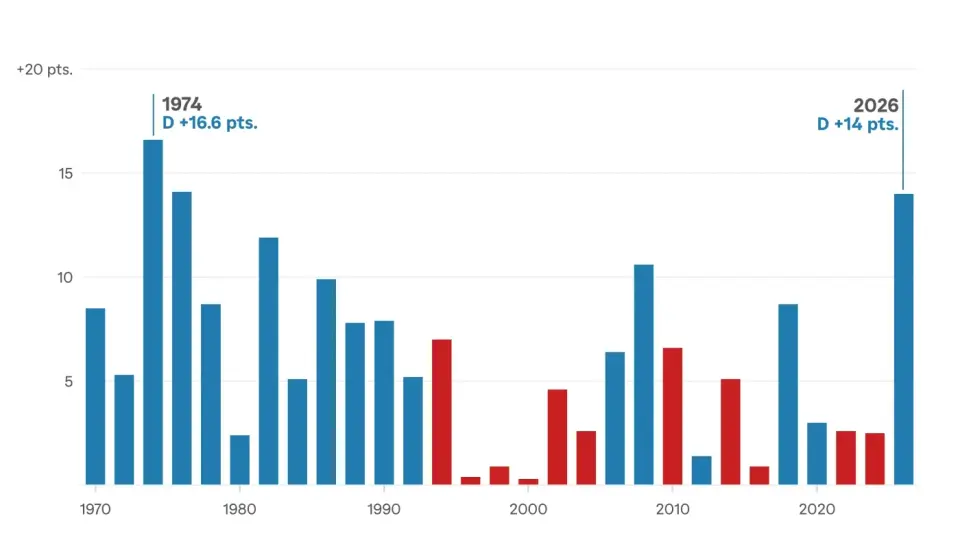
Democrats achieved a historic 14-point victory margin in House races, the largest for either party in 50 years. They flipped nearly 50 seats from Republicans, securing the largest House majority since the early 1990s. This result marks the fifth change of House control in 20 years, returning GOP influence to pre-1994 levels.
Key points
- Democrats won 56% of House votes versus 42% for Republicans, a 14-point spread.
- This margin is the largest for any party in 50 years, surpassing the 2008 presidential election.
- Democrats flipped 46 House seats, with potential to reach 49 as remaining races are called.
- The party is projected to hold 260 seats, the largest majority since the 102nd Congress (1991-1993).
- House control has changed hands five times in the last 20 years, a record for the era.
Background
Prior forecasts indicated Democrats could win up to 240 seats, but final results exceeded these projections. Recent redistricting efforts by Republicans, particularly in Texas, failed to secure majorities, contributing to the Democratic surge. The 2026 results also saw a historic expansion of Democratic Socialists of America-backed candidates, complicating the party's legislative agenda. This victory follows a decade of Republican dominance under President Trump and marks a significant shift in congressional power.
Why it matters
This election result fundamentally alters the balance of power in Congress, ending a decade of Republican control. The large majority grants Democrats significant legislative leverage, while the rapid change in House control highlights increasing political volatility. The outcome also signals a potential shift in party dynamics, with the rise of progressive candidates influencing future policy directions.
What to watch
Democrats will likely assume control of the House in January, with the Speaker's race potentially contested by progressive members. The party will face challenges in passing legislation due to internal divisions, particularly regarding progressive priorities. Republicans will need to regroup and strategize for future elections, as their current influence mirrors pre-1994 levels.
Want the full story? Read the original reporting
Read on NPR