
Democrats Warn Trump’s Election Interference Threat Isn’t Over
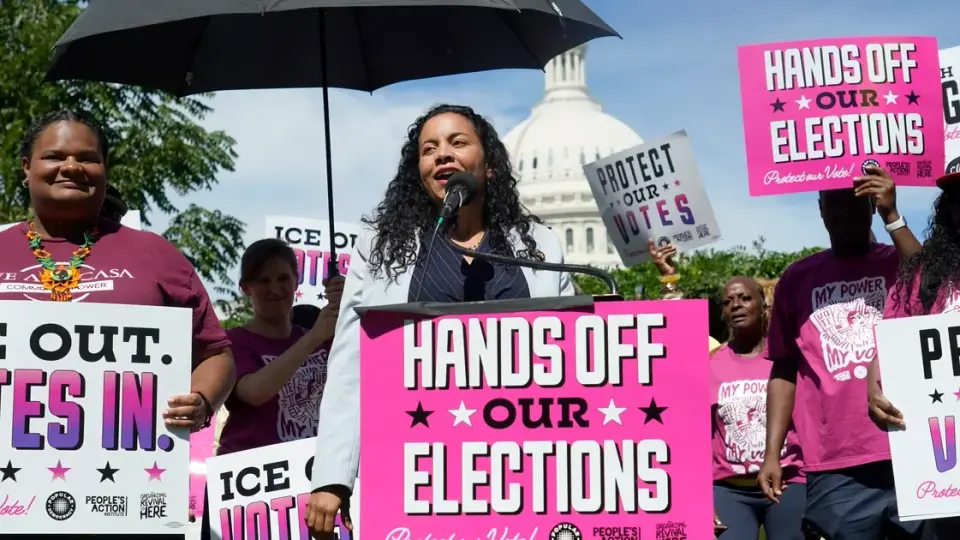
Following a Supreme Court ruling that blocked President Trump’s attempt to restrict mail-in voting, Democratic leaders warned that the threat to the November 3 midterms remains active. While the court upheld state control over mail ballots, officials cited ongoing efforts by the administration to access voter data, deploy federal agents, and sow confusion among voters. Democrats are mobilizing volunteers and legal resources to counter potential intimidation and misinformation, emphasizing that the administration’s popularity decline may drive further attempts to influence the election outcome.
Key points
- The Supreme Court upheld a lower court order blocking a Trump administration rule that would have allowed the Postal Service to refuse delivery of certain mail ballots, a move election officials said would have disenfranchised millions.
- Democratic lawmakers, including Sen. Chris Van Hollen and Sen. Jeff Merkley, held a rally on Capitol Hill to mobilize voters and warn of continued attempts by the administration to rig the election.
- The administration has pursued other strategies, including demanding voter registration lists from states, launching lawsuits against states that refused to comply, and assigning employees to search voter rolls for alleged noncitizens.
- A whistleblower report alleged that the administration’s 'Unlawful Voter Initiative' is rushed and likely to improperly flag U.S. citizens as noncitizens, threatening their ability to vote.
- The Democratic National Committee launched the 'New Battlefield Project,' training at least 10,000 volunteers to monitor polling places for intimidation and misinformation, with a focus on high-traffic precincts and areas with high immigrant populations.
Background
This development follows a series of legal and political battles over election integrity in 2026. Earlier in the year, the Trump administration signed an executive order directing the Postal Service to control mail-in voting through new envelope standards and voter list requirements. Courts blocked several of these efforts, including a March 2026 order that would have forced states to adopt uniform mail ballot envelopes. The current Supreme Court ruling is part of a broader pattern of judicial pushback against federal attempts to override state election administration, a trend that has intensified as the administration’s approval ratings have declined due to policy controversies, including immigration and the Iran War.
How outlets are covering it
HuffPost and Time Magazine emphasize the Democratic response to the Supreme Court ruling, focusing on voter mobilization and the perceived threat of federal interference. HuffPost highlights the rhetoric of Democratic lawmakers, while Time details the logistical efforts of the 'New Battlefield Project' to train volunteers. Al Jazeera and Slate Magazine provide a broader analysis of the administration’s strategy, noting that while the mail ballot rule was blocked, the administration continues to pursue other avenues, such as accessing voter data and challenging states in court. Al Jazeera cites a Reuters investigation showing that election officials are hiring lawyers and expanding outreach to counter misinformation, while Slate notes that the administration’s efforts may depress public confidence in the election even if they do not succeed legally. The White House has denied plans to deploy federal agents to polling places, but Democrats and experts remain concerned about the potential for intimidation and confusion.
Why it matters
The outcome of the 2026 midterms could determine the balance of power in Congress and influence the administration’s ability to implement its agenda. The ongoing legal and political battles over election integrity have raised concerns about the fairness of the election and the potential for voter suppression. The Supreme Court’s ruling on mail-in voting is a significant victory for Democrats, but the administration’s continued efforts to access voter data and challenge states in court suggest that the threat to the election is not over. The mobilization of volunteers and legal resources by Democrats is a response to the perceived threat of federal interference, and the outcome of the midterms could have significant implications for the administration’s future policies and the balance of power in Congress.
What to watch
The next steps will likely involve further legal challenges and political maneuvering as the administration seeks to influence the election. The Supreme Court is expected to rule on the administration’s petition to stay a lower court decision blocking the Department of Homeland Security from using Social Security Administration data to search voter rolls for noncitizens. The outcome of this case could have significant implications for the administration’s ability to access voter data and challenge states in court. Additionally, the Democratic National Committee’s 'New Battlefield Project' will continue to train volunteers and monitor polling places for intimidation and misinformation. The outcome of the midterms will likely depend on the ability of both parties to mobilize voters and counter the other side’s efforts to influence the election.
- Democrats Warn Trump’s Election Interference Threat Isn’t Over — And Point To ‘The Single Greatest Danger’ This November HuffPost
- Why are election officials in the US preparing for chaos before midterms? Al Jazeera
- How Democrats Are Mobilizing to Counter Potential Election Interference Amid Trump Concerns Time Magazine
- Despite the Supreme Court’s Ruling, Trump’s Still Trying to Tip the Midterms Slate Magazine
- 6 other ways Trump is meddling in the midterms vox.com
Want the full story? Read the original reporting
Read on HuffPost