
DOJ abandons California ballot lawsuit after Supreme Court rejection and Republican midterm losses
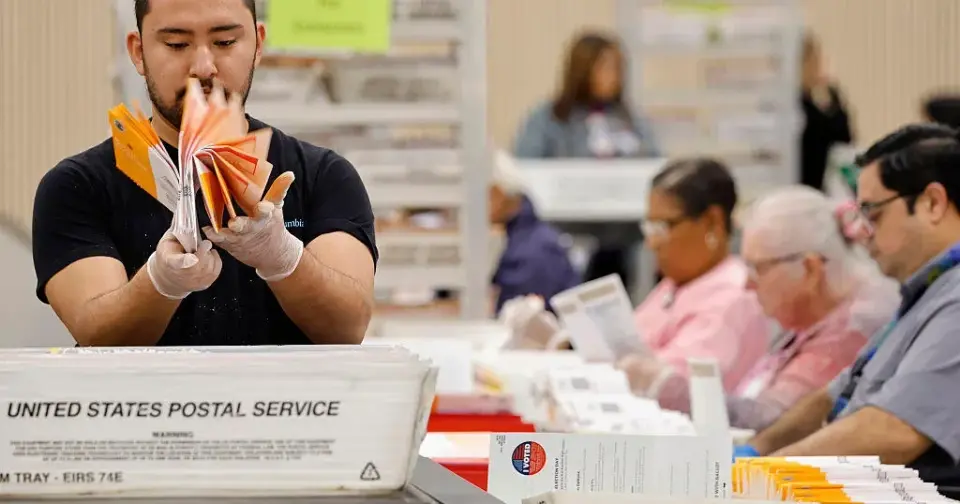
The U.S. Department of Justice moved to dismiss its lawsuit against California on November 6, 2026, ending a bid to set aside approximately 20,000 ballots alleged to belong to noncitizens. The withdrawal follows a unanimous Supreme Court denial of an emergency appeal and significant Republican losses in the midterm elections. Federal prosecutors acknowledged that processed ballots could no longer be separated, rendering the legal relief unavailable. This marks a retreat from the administration's broader strategy to intervene in state-run elections, though related litigation in Alaska and criminal investigations in California continue.
Key points
- The DOJ filed a motion to voluntarily dismiss its lawsuit against California on November 6, 2026, citing the inability to separate already-processed ballots.
- The Supreme Court rejected the DOJ's emergency appeal on November 2, 2026, via a one-line, unsigned order that did not require California to file a response.
- The dismissal occurs days after Republicans suffered significant losses in the 2026 midterm elections, including the Senate race in Alaska.
- U.S. District Judge David O. Carter previously denied the federal request, warning that late-stage ballot separation would risk disenfranchising citizens and disrupt the election.
- California officials maintain that the list of 20,000 alleged noncitizens is outdated and includes legitimate voters, a view echoed by the presiding judge.
Background
This dispute began in mid-October 2026 when the DOJ sued California, demanding the state verify the citizenship status of 20,000 individuals before counting their mail-in ballots. The action was part of a broader federal effort to intervene in state elections, including similar demands in Washington state and Alaska. California officials rejected the list as legally baseless and factually flawed, while federal prosecutors threatened criminal prosecution for election workers who did not comply. The Supreme Court's recent denial of the emergency appeal marked a pivotal moment in this multi-state legal battle.
How outlets are covering it
CBS News and NBC News report the DOJ's dismissal as a strategic retreat following the Supreme Court's rejection and the Republican midterm losses, emphasizing that the relief sought is no longer available because ballots have been commingled. MS NOW highlights the Supreme Court's rare, unanimous, and unexplained denial of the emergency application, noting that the justices did not even require California to respond, signaling that the request was viewed as legally and factually dubious. While all sources agree on the dismissal, MS NOW frames the Supreme Court's action as a significant rebuke of the administration's voter suppression efforts, contrasting with the more procedural focus of the wire services. The DOJ did not respond to requests for comment on the dismissal.
Why it matters
The dismissal signals a shift in the federal government's approach to state election integrity, moving away from aggressive litigation that sought to override state election processes. It underscores the Supreme Court's reluctance to intervene in state-run elections during the 2026 cycle, despite the administration's claims of widespread illegal voting. The outcome may influence future federal-state conflicts over voter eligibility and sets a precedent for the limits of federal power in election administration. Additionally, the continued criminal investigations in California, including arrests of over 30 individuals accused of illegal voting, suggest that while the ballot-sequestration strategy has failed, the administration may pursue other legal avenues to address alleged voter fraud.
What to watch
The DOJ is expected to continue litigation with immigrant and voting rights groups regarding the use of the noncitizen list. The administration is appealing a federal judge's dismissal of its lawsuit in Alaska, though it has not yet filed a full brief with the Ninth Circuit Court of Appeals. In California, grand jury proceedings are scheduled to convene in November, with elections clerks having been subpoenaed to testify. The outcome of these proceedings and the appellate process in Alaska will determine the next steps in the federal government's strategy to challenge state election practices.
- DOJ moves to drop its lawsuit asking California to set aside alleged noncitizen ballots CBS News
- Why a Merciless Supreme Court Rebuke on Election Eve Matters The New York Times
- Justice Department drops bid to force California to set aside ballots from alleged noncitizens NBC News
- Supreme Court justices cast their own crucial votes this week MS NOW
- Trump administration ends California balloting lawsuit Reuters
Want the full story? Read the original reporting
Read on CBS News