
Expanded Suit Cites ICE Detentions and FBI Statements to Block Armed Agents at 2026 Polls
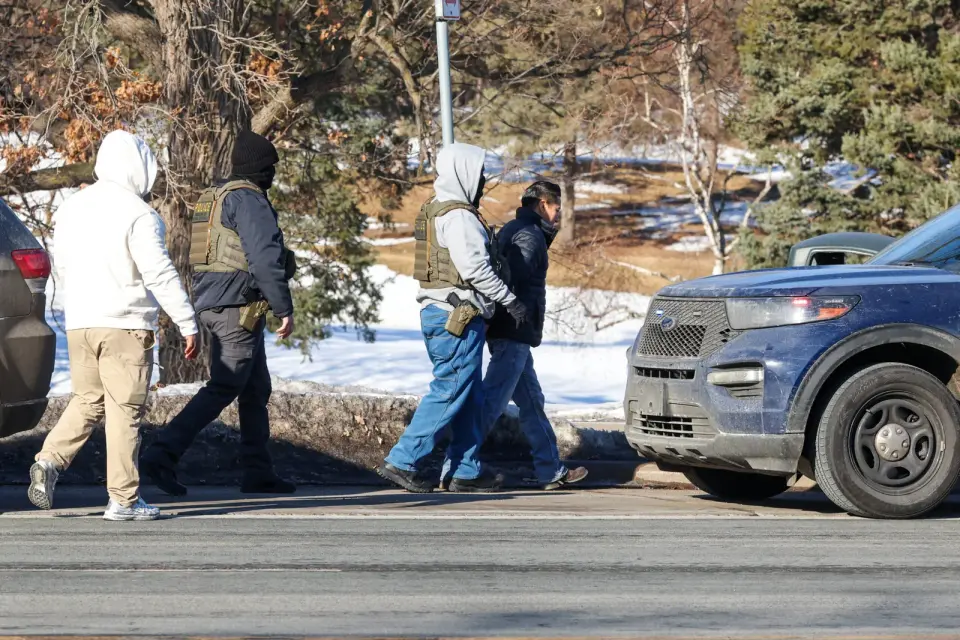
Voting rights groups have expanded a federal lawsuit to block armed immigration and FBI agents from polling places during the 2026 midterms. The amended complaint cites recent ICE detentions near ballot drop boxes in California and increased security measures in Minnesota as evidence of voter intimidation. Plaintiffs argue these actions violate the Voting Rights Act and a Civil War-era statute prohibiting armed troops at elections. While the administration denies a formal policy to station agents at polls, officials have not ruled out targeted enforcement, prompting states like Pennsylvania to propose legislative barriers. Multiple lawsuits now seek to ensure voters can participate without fear of federal interference.
Key points
- An amended complaint filed Wednesday adds Hennepin County, Minnesota, to a lawsuit originally brought by LULAC, Common Cause, UnidosUS, and Denver.
- The case now includes the Department of Justice, FBI Director Kash Patel, and Attorney General Todd Blanche as defendants.
- Plaintiffs cite an ICE detention at Allan Hancock College in Santa Maria, California, where agents operated in a parking lot adjacent to an active ballot drop box.
- Hennepin County reports that DHS investigators entered election spaces three times in five months, leading to over 100 hours of staff training on de-escalation and evacuation.
- The complaint adds a claim under Section 11(b) of the Voting Rights Act, alleging that the threat of armed agents constitutes prohibited intimidation.
- FBI Director Kash Patel testified in September that the bureau would not shy away from election integrity efforts, which plaintiffs interpret as a policy allowing armed agents at polls.
Background
This development follows an initial lawsuit filed in September 2026 by Latino civil rights groups and Denver, which invoked a Civil War-era statute prohibiting armed men at election sites. Earlier in 2026, Maine GOP candidate Bobby Charles sparked controversy by proposing ICE presence at polls, while the administration issued mixed signals, with some officials calling such presence disinformation and others leaving the door open for targeted enforcement. The current legal challenge builds on these tensions as early voting begins in several states ahead of the November 3 midterms.
How outlets are covering it
Democracy Docket and Democracy Forward emphasize the tangible impact of federal presence, citing specific incidents in California and Minnesota where voter behavior and election worker safety were compromised. They argue that the mere possibility of armed agents creates a chilling effect, evidenced by a sharp decline in door-knock response rates in Hennepin County. Baptist News Global highlights the broader legal strategy, noting that multiple lawsuits, including one from the NAACP and unions, are converging on the issue, with plaintiffs pointing to a sweeping voter fraud investigation as context for the intimidation. Spotlight PA focuses on the legislative response, noting that while the administration denies a formal plan to station ICE at polls, inconsistent statements from officials like Karoline Leavitt and Todd Blanche have fueled uncertainty. Pennsylvania advocates argue that legislative clarification is necessary to protect immigrant communities, even if the likelihood of actual deployment is debated. The government maintains it is not planning operations targeting polling places, but acknowledges the possibility of targeted enforcement if public safety threats arise.
Why it matters
The expansion of this lawsuit could set a precedent for the legality of federal law enforcement presence at polling places during the 2026 midterms. If the court rules in favor of the plaintiffs, it would enforce a strict interpretation of the Voting Rights Act and the Civil War-era statute, potentially barring all armed federal agents from voting sites. This outcome would directly impact voter confidence, particularly among immigrant and naturalized citizen communities who have reported heightened fear of federal interference. Conversely, if the court rejects the claims, it could allow for more flexible enforcement actions near polls, potentially leading to further disputes over voter access and safety. The case also highlights the growing tension between federal immigration enforcement and election administration, a dynamic that may influence future legislative and judicial interpretations of voting rights protections.
What to watch
The federal court must now review the amended complaint and determine whether to issue an injunction preventing armed federal agents from operating near polling places before Election Day. Plaintiffs are seeking immediate intervention as early voting is already underway in some states. The government is expected to respond to the new claims, particularly regarding the FBI’s alleged policy and the Voting Rights Act intimidation provisions. In Pennsylvania, the state legislature may consider the bill introduced by Rep. Kenyatta, though its passage before November is unlikely. Other states may follow suit with similar legislative or legal measures to clarify the status of federal agents at polls. The outcome of this case will likely influence how other jurisdictions handle potential federal interference in the 2026 midterms and could set a precedent for future election cycles.
- ICE is already showing up near voting sites, bolstering lawsuit against armed agents at polls Democracy Docket
- New Marion County policy tells poll workers how to handle federal law enforcement WTHR
- Pennsylvania voting advocates are preparing for ICE to disrupt the 2026 election Spotlight PA
- More lawsuits seek to prevent federal agents at polling places Baptist News Global
- Voting Rights Organizations and Local Governments Expand Challenge to Trump-Vance Administration’s Plans for Armed Federal Agents at Polling Places Democracy Forward
Want the full story? Read the original reporting
Read on Democracy Docket