
Ford Retaliates Against Trump’s Personal Attacks Amid Escalating US-Canada Tariff War
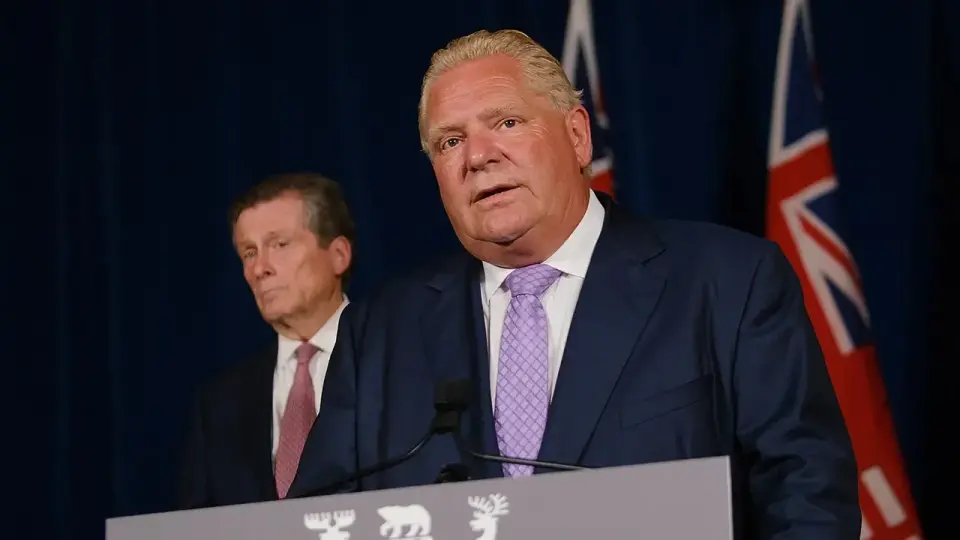
Ontario Premier Doug Ford responded to President Trump’s personal insults with profanity, vowing to fight back as US tariffs on Canadian goods reached 50%. The dispute, which began in late 2024, has expanded to include autos, steel, and consumer goods, with Canada preparing retaliatory measures in September.
Key points
- Ford told a Toronto radio station that Canada buys 400% more cars than any other nation and vowed to confront Trump 'full steam' after the president mocked him as less impressive than his late brother, Rob Ford.
- US tariffs of 50% on certain Canadian goods took effect on August 22, 2026, following the collapse of trade negotiations. Canada is scheduled to retaliate on September 8 with tariffs on nearly 900 US products.
- Trump threatened to raise tariffs on Canadian autos and auto parts to 50% starting January 1, 2027, if no deal is reached. He also floated renaming Lake Ontario to 'Lake America' to further pressure Canada.
- Canadian Prime Minister Mark Carney criticized the tariffs, warning they will burden consumers, while US Trade Representative Jamieson Greer insisted the dispute will not affect US consumers.
- The conflict includes specific sectors like dairy, where Canada imposed a 50% tariff on US dairy products, and paper products, where Canada targets toilet paper stock in retaliation for US levies.
Background
This escalation follows a simmering trade rift that began in late 2024, when Trump first threatened 25% tariffs on Canadian goods. Recent weeks have seen heightened rhetoric, including Trump’s proposal to rename Lake Ontario to 'Lake America' on August 17, 2026, which sparked cross-border backlash. The current dispute is part of a broader pattern of Trump using trade leverage and personal attacks to pressure Canadian leaders, including Prime Minister Mark Carney and Premier Doug Ford.
How outlets are covering it
Fox News emphasizes Ford’s profane response and his 'Captain Canada' persona as a direct counter to Trump’s personal insults, framing the conflict as a high-stakes political clash. The Guardian focuses on the economic impact, highlighting how the trade war is driving up prices for everyday items like toilet paper and liquor, and noting the deep interdependence of the two economies. The Independent, while its text was largely obscured by technical code, suggests a broader narrative of Trump’s declining power as Canada’s firm response challenges his trade tactics. The outlets differ in emphasis: Fox centers on the personal feud, The Guardian on consumer costs, and The Independent on geopolitical power dynamics.
Why it matters
The US-Canada trade war threatens to disrupt supply chains for autos, steel, and consumer goods, potentially raising prices for Americans and Canadians alike. The personal attacks between Ford and Trump signal a breakdown in diplomatic norms, which could complicate future negotiations. As Canada prepares retaliatory tariffs in September, the dispute may have lasting effects on North American trade relationships and consumer inflation.
What to watch
Canada is expected to implement retaliatory tariffs on nearly 900 US goods starting September 8, 2026. Trump has threatened to raise tariffs on Canadian autos and auto parts to 50% by January 1, 2027, if no deal is reached. The outcome of these measures will depend on whether negotiations resume or if the trade war escalates further, potentially affecting sectors like dairy, paper, and liquor.
- ‘Captain Canada’ firebrand unloads on Trump with profane one-liner as trade war escalates Fox News
- Wiped out: US faces surging toilet paper prices amid trade war with Canada The Guardian
- How U.S.-Canada Tariff Negotiations Turned Into an All-Out Trade War The New York Times
- The Canadian Bad Cop on the Front Lines of the U.S. Trade War WSJ
- Trump’s power fades away every week – Canada is proving it The Independent
Want the full story? Read the original reporting
Read on Fox News