
Trump's Renaming Spree Sparks Global Naming Crisis
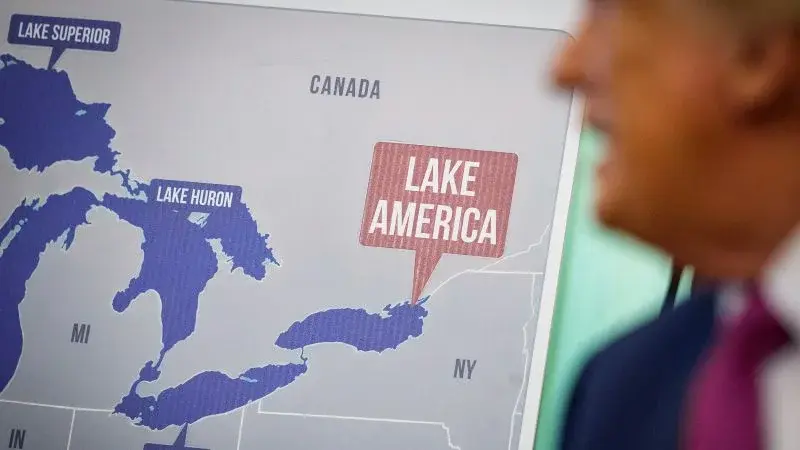
President Trump's recent executive orders renaming the Gulf of Mexico and Lake Ontario have created a fragmented global naming landscape. While US federal databases and some digital maps now display 'Lake America' and 'Gulf of America,' Canada, international bodies, and many private mapping services retain the original names. This divergence highlights the limits of unilateral geographic renaming and exacerbates diplomatic tensions with Canada.
Key points
- Trump ordered the renaming of Lake Ontario to 'Lake America' and the Gulf of Mexico to 'Gulf of America' following trade disputes.
- The US Board on Geographic Names updated federal records, but the Associated Press and many international entities continue using original names.
- Digital maps show different names depending on the user's location, with US users seeing new names and Canadian users seeing old ones.
- Private mapping services like MapQuest have refused to adopt the new names, leading to a surge in app downloads.
- Local US entities, including the Seneca Nation and Oswego County, have rejected the changes, citing historical and indigenous significance.
Background
This follows a broader trend of Trump's geographic branding, including earlier suggestions to rename New Mexico to 'New America.' Historically, 'America' referred to the entire hemisphere, but the US has increasingly claimed the term for itself, a shift that began after the 1898 Spanish-American War. Latin American leaders have long resisted this appropriation, viewing it as a symbol of US hegemony.
How outlets are covering it
CNN emphasizes the historical context of the name 'America' and its recent co-opting by the US, noting that Trump's actions are part of a larger pattern of linguistic jingoism. The Washington Post highlights the Associated Press's decision to continue using 'Lake Ontario,' underscoring the resistance from media and international bodies. The BBC focuses on the practical and diplomatic consequences, noting that the name change creates confusion in digital maps and exacerbates US-Canada tensions. The BBC also points out that private mapping services like MapQuest have refused to comply, leading to a surge in app downloads. The sources agree that the renaming is unpopular and has significant diplomatic implications, but they differ in their emphasis on historical context, media response, and practical consequences.
Why it matters
The renaming dispute highlights the limits of unilateral geographic changes and the importance of international consensus in naming conventions. It also underscores the symbolic power of names in geopolitical relations and the potential for such disputes to exacerbate diplomatic tensions. The fragmented naming landscape could have practical implications for navigation, tourism, and international relations.
What to watch
The US government may continue to push for the new names in federal contexts, but international and private resistance is likely to persist. The diplomatic fallout with Canada may continue to affect trade relations. The long-term impact on the name 'America' and its perception globally remains uncertain, but the dispute is likely to remain a point of contention in US-Canada relations.
- When did the United States claim the name ‘America’? CNN
- Associated Press will refer to Lake Ontario by its original name, despite order The Washington Post
- MapQuest posts billboard in Chicago with directions to Lake Ontario in response to Trump's executive order CBS News
- Lake Ontario/Lake America: What happens when a place has two different names? BBC
- What app surged in downloads after Trump's 'Lake America' change? The quiz knows NPR
Want the full story? Read the original reporting
Read on CNN