
Georgia’s 2026 Democratic sweep hinges on Black and Latino voter mobilization
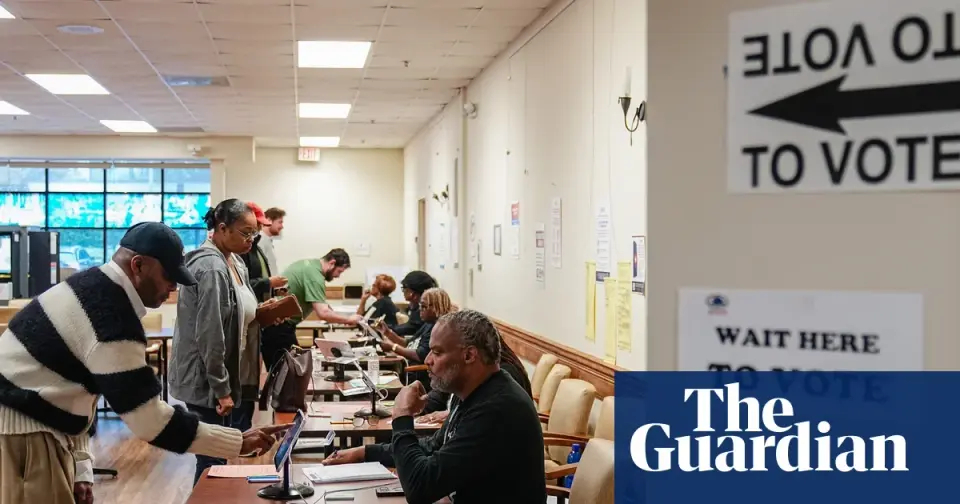
Georgia’s historic 2026 Democratic victory was driven by record turnout among Black and Latino voters. Black voters, particularly in suburbs like Stonecrest, expect economic equity and representation. Latino voters, who surged 78% from 2022, shifted sharply to Democrats due to immigration enforcement and cost-of-living concerns. While Black voters view this as a long-term structural shift, analysts warn Latino support may be temporary if economic promises are not met.
Key points
- Keisha Lance Bottoms became the first Black woman to serve as a US governor, winning Georgia’s top office after a 24-year Republican streak.
- Black voters in Stonecrest, a suburb with over 90% non-Hispanic Black population, turned out at high rates and expect their government to address wealth gaps and microbusiness support.
- Latino voter turnout in Georgia reached a record 198,000, a 78% increase from 2022, with support for Democratic Senator Jon Ossoff rising to 72%.
- Young Latinas in Georgia turned out at 45%, outpacing young white women at 33%, driven by frustration with immigration enforcement and economic hardship.
- Democrats won nearly all statewide offices, including the speaker of the house, but remain one seat short of controlling both legislative chambers.
Background
Georgia had been a Republican stronghold at the state level since 1998, despite becoming a swing state federally. Previous Democratic efforts, including Stacey Abrams’ gubernatorial runs, laid the groundwork for this 2026 shift. The state had restrictive abortion and gun laws and had not expanded Medicaid, but recent foreign investment in manufacturing largely benefited rural and white areas, leaving urban Black communities economically marginalized.
How outlets are covering it
The Guardian emphasizes the long-term infrastructure building by Black-led organizations and the expectation of economic justice for Black voters. The Atlanta Journal-Constitution and Daily Kos highlight the Latino surge as a critical swing factor, noting that 78% of Latino voters supported Democrats in 2026 compared to 54% in 2024. However, GALEO’s Jerry Gonzalez cautions that this is a 'misalignment' rather than a realignment, meaning Latino voters may shift again if Democrats fail to address cost-of-living issues. American Community Media notes that young Latinas outvoted their white peers in Georgia and Texas, driven by immigration enforcement and economic anxiety, but warns that this support is contingent on Democratic performance in the new Congress.
Why it matters
This election marks a potential shift in Georgia’s political landscape, with Black and Latino voters demanding economic equity and representation. The success of the Democratic agenda will depend on whether they can deliver on promises of affordability and immigration reform, or if these coalitions will fracture in the next cycle.
What to watch
Democrats must navigate a split legislature and deliver on economic promises to retain Black and Latino support. The next election cycle will test whether the 2026 surge is a permanent realignment or a temporary misalignment, particularly among Latino voters who may shift back to Republicans if economic conditions do not improve.
- Black voters helped Democrats win in Georgia. Now they expect to be heard The Guardian
- A Latino voting surge is reshaping Georgia’s political map The Atlanta Journal-Constitution
- Black Turnout Rose in Georgia, Powered by Younger Voters The New York Times
- Georgia’s Latinos shift toward Democrats—for now Daily Kos
- Young Latinas Outvoted Their White Peers in Texas and Georgia American Community Media
Want the full story? Read the original reporting
Read on The Guardian